Helmet liners and skull caps, and why thin is the only spec that matters
Your helmet was sized to your head, not to your head plus a hat. That single fact decides this entire category, and it rules out most of what people wear under a helmet.
By Sawyer V. · Published
We have not tested this gear. Everything below is compiled from published specifications and published safety standards, and the arithmetic is public so you can check it. This page carries affiliate links: if you buy through one we earn a commission at no extra cost to you, and it does not change the order of the picks. Full disclosure.
The short answer
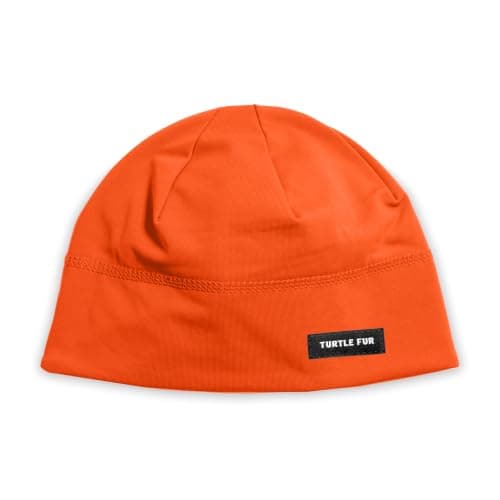
Buy a low-profile liner, never a normal beanie. A helmet's fit system has about one size band of adjustment, and a knitted hat uses all of it - so the helmet either will not go on or sits high and moves on impact. The Turtle Fur Brain Shroud is the pick: published as a low-profile sweat-wicking skull cap built as a helmet liner rather than as a hat that happens to fit. Choose the merino skull cap instead if you want wool that keeps insulating when damp, at under half the price. The Comfort Shell UV Frost Liner is a spring layer, not a cold one. And nothing here publishes a fabric weight, so “thin” is a claim rather than a number. Prices below are live; published figures as of October 11, 2026.
| # | Pick | Best for | Score | Price |
|---|---|---|---|---|
| 1 | Turtle Fur Brain Shroud Low Profile Skull Cap A cold day under a helmet that already fits correctly | Not publishedon snow | 0.0/10 | $27.00 - View on Amazon |
| 2 | menique 100% Merino Wool Skull Cap A cold day, and anyone who already prefers merino next to skin | Not publishedon snow | 0.0/10 | $14.95 - View on Amazon |
| 3 | Turtle Fur Comfort Shell UV Frost Liner Spring days when the helmet is still on but the warmth is not needed | Not publishedon snow | 0.0/10 | $30.00 - View on Amazon |
Prices last verified October 19, 2026. Prices move constantly; the figure on Amazon at the moment you click is the real one.
The constraint that decides everything here
A snow helmet is sized to a head circumference, and its dial or pad system adjusts across roughly one size band - a centimeter or two, not five. What size ski helmet you need, and how it should fit covers the measurement; the consequence for this page is simple arithmetic.
Add a 10 mm knitted beanie under a helmet that was correctly fitted and you have used the whole adjustment range on fabric. Two things follow, and both are bad. The helmet sits higher, which lifts the brim away from the goggles and opens the forehead gap. And the helmet is now held off your skull by compressible wool - so in an impact it moves before the liner starts absorbing anything, which is the opposite of what the shell is certified to do.
Which is why the only specification that matters in this category is thickness, and why a product sold as a helmet liner is a genuinely different thing from a hat you own. Our guide on what goes under a helmet ranks the options; this is the shopping half of it.
Who each of these is for, and who should skip it
- Cold midwinter days, synthetic: the Brain Shroud. Published as low-profile and sweat-wicking, built for the job.
- Cold days, and you prefer wool: the merino skull cap. Keeps insulating damp, resists odor over a season, and costs under half.
- Spring skiing: the Comfort Shell UV Frost Liner. Sun and sweat rather than warmth.
- Skip all three if your ears are the problem. Helmet ear pads already cover ears; if they are cold, the fix is the pads or a thin balaclava, not a cap - which balaclava, and why most of them fog your goggles.
- Skip all three if your face and neck are the problem. A skull cap does nothing below the hairline. Covering your face without fogging your goggles.
- Skip for a child whose helmet already fits snugly. There is less adjustment range on a junior shell and a growing head uses it up anyway - re-measure instead.
What this page ranks on, and the number that does not exist
- 1. Published as an under-helmet liner. Not as a beanie. It is a design intent, it is stated on the product, and it is the single best predictor of whether a helmet will still fit.
- 2. Published fabric and what it is for. Synthetic fleece for warmth and fast drying; merino for insulating damp and resisting odor; a UV-rated shell fabric for sun. Three different jobs.
- 3. Ear coverage without crown bulk. The useful shape covers the ears under the helmet pads and stays flat at the crown, where the shell sits closest.
- 4. Not fabric weight, because nobody publishes one. We looked. Not one of these states a gsm figure, which is frustrating on a site that ranks mid layers on exactly that number. So this page ranks on stated design intent and fabric type, and says plainly that the thickness comparison you want is not available.
The three, compared
| Brain Shroud | Merino skull cap | UV Frost Liner | |
|---|---|---|---|
| Published as | Low-profile helmet liner | Thin under-helmet liner | Under-helmet performance liner |
| Fabric | Synthetic, sweat-wicking | 100% merino wool | Comfort Shell, UV rated |
| Built for | Cold days | Cold days | Sun and sweat, spring |
| Keeps insulating when damp | Partly | Yes, merino | Not a warmth layer |
| Odor resistance over a season | Lower | Higher, merino | Lower |
| Fabric weight published | Not published | Not published | Not published |
| Covers ears | Yes | Yes | Yes |
| Warranty | Not published | Not published | Not published |
| Maker's published price | Not published | Not published | Not published |
An unusually blank table, and the blanks are the finding. This is a category where every maker sells on adjectives - “low profile”, “thin”, “lightweight” - and not one publishes the gram weight that would let you check. Buy on stated intent and fabric, keep the receipt, and try the helmet on over it before the tags come off.
The picks
Turtle Fur Brain Shroud Low Profile Skull Cap
The pick, and the reason is the name rather than the fabric: Turtle Fur publishes it as a low profile sweat-wicking helmet liner beanie. In a category where the failure mode is bulk, a product designed around not being bulky is the one to start with.
The sweat-wicking claim matters more than the warmth claim, which is counter-intuitive. What actually makes you cold under a helmet is not thin fabric - it is damp fabric, because a helmet traps the moisture your scalp produces climbing into a lift queue and then you sit still for ten minutes on a chairlift. A liner that moves that moisture is warmer in practice than a thicker one that holds it.
Turtle Fur is also a known quantity on this site rather than a brand we have just met - the ledger already carries its Comfort Shell neck tubes and two of its balaclavas, including the youth sizes.
Honest cons. No fabric weight published, so it cannot be compared numerically with the merino option. No MSRP published and colorway pricing moves. A synthetic liner holds odor more than merino does across a season of damp mornings. And it covers the head only - nothing for the face or the neck gap, which on a cold day is where most of the heat is actually going.
menique 100% Merino Wool Skull Cap
The value pick and the fabric pick, at well under half the Turtle Fur price. Published as 100% merino wool in a thin under-helmet cut, which buys the one property synthetic fleece does not have: merino keeps insulating when it is wet, and under a helmet everything is wet by lunch.
The same argument this site makes for merino base layers applies with more force to a skull cap, because a cap gets damper than a torso layer and dries less - it is sealed under a shell all day. Merino also resists odor far better over a season, which is a real consideration for something worn against your scalp fifteen days a winter and washed approximately never.
Honest cons. No gram weight published, so “thin” is unverified - and on this page that is the one figure that matters. No MSRP, no warranty term, and no reachable spec page of its own: this is an Amazon-native brand. Merino is slower to dry than thin synthetic, which counts against it on a multi-day trip where you cannot wash anything. And wool wears through at the crown sooner than fleece.
Turtle Fur Comfort Shell UV Frost Liner, and why it carries the skip
Published as an under-helmet performance liner in Turtle Fur's UV-rated Comfort Shell - the same fabric whose UPF 50+ rating this site already cites for the Comfort Shell neck tube. Note the direction of that: Turtle Fur publishes the UPF figure for the fabric, not specifically for this liner.
It is on the page because spring is a real and separate problem, and it is the skip because most people buying a helmet liner are buying for January. In April the scalp issue reverses: you are not cold, you are sweating, and the sun is at its most punishing with maximum reflection off snow - what to change for spring skiing and the places people actually burn. A thin UV layer under a vented helmet is the right answer then and the wrong one in midwinter.
Honest cons. Thin by design, so it is not a warm-day-in-January purchase. No fabric weight and no MSRP published. The UPF rating is published for the Comfort Shell fabric generally rather than for this product. And being synthetic, it needs washing more often than the merino.
What not to wear under a helmet
- A normal knitted beanie. The thing almost everybody does. Thick, compressible, and it uses the whole fit range - the guide has the full table of options.
- Anything cotton. A cotton cap holds scalp sweat against your head and then cools it, which is the exact mechanism that makes people cold in mid-afternoon.
- A hood. Bulky, uneven and it moves. A hood goes over a helmet if it goes anywhere.
- Earbuds, under anything. A hard object between your ear and the liner is a pressure point and a concentrated load - drop-in speakers go in the ear pad pocket instead.
- A balaclava pulled up over the crown as well. Pick one or the other; doubling up at the crown is the same bulk problem by another route.
Where the heat is actually going
Worth saying on a page selling head layers: the head is not where most ski-day heat is lost, and a liner is a small fix. The big gaps on a cold day, in order:
- The face and neck. The only skin exposed by design - face and neck coverage compared.
- Hands. The fixes in order of how much they help - and glove fit beats insulation.
- Feet, usually via a sock that is too thick. Why feet get cold skiing.
- The mid layer, or the absence of one. What to wear by the number on the forecast puts the whole system in order, and a skull cap is one line of it.
Every pick, with the working
Each entry shows the published inputs, the axis scores they produce, and what you give up. The order is the computed order, not a commercial one, and the arithmetic is open underneath each score.
1 · A cold day under a helmet that already fits correctly
Turtle Fur Brain Shroud Low Profile Skull Cap
The pick, because it is the only one of these published as low-profile for the job. A helmet is sized to your head, not to your head plus a hat, so the whole specification that matters under a shell is thinness - and Turtle Fur publishes this as a low-profile sweat-wicking skull cap built as a helmet liner rather than as a beanie that happens to fit.
- Published price
- Not published
- Cost per day on snow
- Not published
- Amortized over
- 3 seasons (15 days)
- Certified to
- Not published
- Published sizes
- One size, published as a low-profile under-helmet fit
- Warranty
- No term published on the product page
Turtle Fur lists this across colorways rather than publishing one MSRP we could read, so the cost-per-day axis is not scored.
What it gets right
- Published as a low-profile helmet liner, which is the only claim that matters under a sized shell
- Published as sweat-wicking, and the thing that actually makes you cold under a helmet is damp fabric
- Turtle Fur already appears in this ledger for two neck tubes and two balaclavas, so the construction is a known quantity
- Covers the ears under the helmet pads without adding bulk at the crown
What you give up
- No fabric weight published, so it cannot be compared numerically with a merino cap
- No MSRP published, and colorway pricing moves
- A synthetic liner holds odor more than merino does over a season
- Covers the head only - it does nothing for the face or neck gap
The working behind the 0.0
- Cost per day on snow: not scored
- No manufacturer-published price, so this axis is not scored.
- Published protection: not scored
- This category carries no protective standard.
- Size availability: not scored
- Sold in one size, so size availability does not apply.
- Warranty and support: 0.0
- no published term (0 of 6); no published crash replacement (+0); no published repair route (+0)
Axes with unpublished inputs are dropped and the remaining weights re-normalized, so a product is not punished for a manufacturer’s silence. Specifications compiled October 11, 2026 from Turtle Fur published Brain Shroud description.
2 · A cold day, and anyone who already prefers merino next to skin
menique 100% Merino Wool Skull Cap
The merino option, and the cheapest thing on this page by a wide margin. It is published as 100% merino wool in a thin under-helmet cut, which buys the one property synthetic liners do not have: merino keeps insulating when it is damp, and under a helmet everything is damp by lunch. What it does not publish is a gram weight, so 'thin' is a claim rather than a number.
- Published price
- Not published
- Cost per day on snow
- Not published
- Amortized over
- 3 seasons (15 days)
- Certified to
- Not published
- Published sizes
- One size, published as a thin under-helmet liner
- Warranty
- No term published on the product page
menique publishes no US MSRP we could read, so the cost-per-day axis is not scored.
What it gets right
- Published as 100% merino wool, which keeps insulating damp where synthetics stop
- Published as a thin under-helmet liner rather than a beanie
- Merino resists odor over a season far better than synthetic fleece
- The least expensive liner here, at well under half the Turtle Fur options
What you give up
- No gram weight published, so 'thin' cannot be compared with the Turtle Fur liners numerically
- No MSRP and no warranty term published
- Merino is slower to dry than a thin synthetic, which matters on a multi-day trip
- An Amazon-native brand with no reachable spec page of its own
The working behind the 0.0
- Cost per day on snow: not scored
- No manufacturer-published price, so this axis is not scored.
- Published protection: not scored
- This category carries no protective standard.
- Size availability: not scored
- Sold in one size, so size availability does not apply.
- Warranty and support: 0.0
- no published term (0 of 6); no published crash replacement (+0); no published repair route (+0)
Axes with unpublished inputs are dropped and the remaining weights re-normalized, so a product is not punished for a manufacturer’s silence. Specifications compiled October 11, 2026 from menique published merino skull cap description.
3 · Spring days when the helmet is still on but the warmth is not needed
Turtle Fur Comfort Shell UV Frost Liner
Skip this one. Skip it as a cold-weather liner, because it is not one. Turtle Fur publishes it in its UV-rated Comfort Shell fabric as an under-helmet performance liner, which makes it a sun-and-sweat layer rather than a warmth layer - exactly right for a bright April afternoon and the wrong purchase for a January morning. Buy it as a second liner for spring if you ski late season, not as your only one.
The spring-skiing answer, and the same Comfort Shell fabric this site already ranks in its neck-tube and balaclava roundups. Turtle Fur publishes it as an under-helmet performance liner in its UV-rated Comfort Shell - so the sell is sun and sweat rather than warmth, which on a bright April afternoon is the correct problem to be solving.
- Published price
- Not published
- Cost per day on snow
- Not published
- Amortized over
- 3 seasons (15 days)
- Certified to
- Not published
- Published sizes
- One size, published as an under-helmet performance liner
- Warranty
- No term published on the product page
Turtle Fur lists this across colorways rather than publishing one MSRP we could read, so the cost-per-day axis is not scored.
What it gets right
- Published in Turtle Fur's Comfort Shell fabric, the same material whose UPF 50+ rating this ledger already cites for the Comfort Shell tube
- Published as an under-helmet performance liner rather than a cold-weather hat
- Thin enough not to change a helmet's fit, which is the whole constraint
- Doubles as a sun layer for the scalp, which matters more on snow than people expect
What you give up
- Thin by design, so it is the wrong pick for a January morning
- No fabric weight and no MSRP published
- Turtle Fur publishes the UPF figure for the Comfort Shell fabric generally rather than for this liner specifically
- Synthetic, so it needs washing more often than merino
The working behind the 0.0
- Cost per day on snow: not scored
- No manufacturer-published price, so this axis is not scored.
- Published protection: not scored
- This category carries no protective standard.
- Size availability: not scored
- Sold in one size, so size availability does not apply.
- Warranty and support: 0.0
- no published term (0 of 6); no published crash replacement (+0); no published repair route (+0)
Axes with unpublished inputs are dropped and the remaining weights re-normalized, so a product is not punished for a manufacturer’s silence. Specifications compiled October 11, 2026 from Turtle Fur published Comfort Shell UV Frost Liner description.
Prices last verified October 19, 2026. Prices move constantly; the figure on Amazon at the moment you click is the real one.
Questions people actually ask
What should you wear under a ski helmet?
A thin skull cap or liner published as low-profile, or nothing at all - a helmet is already insulating. Not a normal knitted beanie: a helmet's fit system adjusts across roughly one size band, and a thick compressible hat uses all of it, which lifts the shell away from your goggles and lets it move on impact.
Can you wear a beanie under a ski helmet?
A thin low-profile one designed as a helmet liner, yes. A normal knitted beanie, no - it changes where the shell sits and how it behaves in an impact. And if your helmet only fits properly with a beanie underneath, the helmet is a size too big, which is a replacement rather than an accessory problem.
Merino or synthetic for a helmet liner?
Merino if you want wool that keeps insulating when damp and resists odor over a season, which under a sealed helmet is a real advantage. Synthetic if you want faster drying on a multi-day trip. Neither publishes a fabric weight, so the thickness comparison you actually want is not available in this category - buy on stated intent and try the helmet on over it.
Do helmet liners keep your ears warm?
They help, but a helmet's own ear pads are doing most of that work already. If your ears are specifically cold, check the ear pads are fitted and consider a thin balaclava instead - it covers the ears, face and neck, which is where more of the heat is actually being lost on a cold day.
What do you wear under a helmet for spring skiing?
A thin UV-rated liner rather than a warm one, or nothing with the helmet vents open. In spring the problem reverses: you are sweating rather than cold, and the sun is at its worst with maximum reflection off snow. A sun layer for the scalp matters more than warmth then.
Will a helmet liner affect my helmet's safety rating?
A thin liner that does not change where the shell sits, no. A thick compressible hat, in practice yes - it holds the helmet off your skull so the shell moves before the energy-absorbing liner starts working, and it lifts the brim away from your goggles. The certification assumes the helmet sits where it was fitted to sit.
Sources
- Turtle Fur published Brain Shroud description: low-profile sweat-wicking skull cap helmet liner beanie
- menique published merino skull cap description: 100% merino wool, thin under-helmet liner
- Turtle Fur published Comfort Shell UV Frost Liner description: under-helmet performance liner in UV-rated Comfort Shell