How long ski gear lasts, item by item
Some of this outlives you and some of it is quietly finished after four seasons. Knowing which is which is how you decide what to buy and what to keep renting.
By Sawyer V. · Published
We have not tested this gear. Everything below is compiled from published specifications and published safety standards, and the arithmetic is public so you can check it. This page carries affiliate links: if you buy through one we earn a commission at no extra cost to you, and it does not change the order of the picks. Full disclosure.
The short answer
Rough lifespans for a household skiing five days a year: socks, indefinitely if they carry a lifetime guarantee; outerwear, 5 to 10 years with washing and reproofing; helmets, replace after any hard impact and otherwise on maker guidance; goggles, until the inner lens is damaged; boots, 5 to 8 years or one liner replacement; skis, effectively indefinitely - but the bindings age out at roughly 8 to 12 years, and that is what retires the pair.
| # | Pick | Best for | Score | Price |
|---|---|---|---|---|
| 1 | Smith Cache Mips A head at the edges of the size range, or one between two sizes | $5 a dayon snow | 6.7/10 | $160.00 - View on Amazon |
| 2 | The Original PEET Shoe & Boot Dryer Drying boots overnight, silently | $4.00 a dayon snow | 6.6/10 | $49.99 - View on Amazon |
| 3 | Darn Tough Alpine Over-the-Calf Lightweight Ski Socks The one piece of ski gear worth buying before anything else | $2 a dayon snow | 6.4/10 | $30.95 - View on Amazon |
| 4 | Rossignol Experience 76 skis with Xpress 10 bindings A smaller adult or a tall teenager on groomed runs | $18.00 a dayon snow | 2.3/10 | $479.95 - View on Amazon |
Prices last verified October 22, 2026. Prices move constantly; the figure on Amazon at the moment you click is the real one.
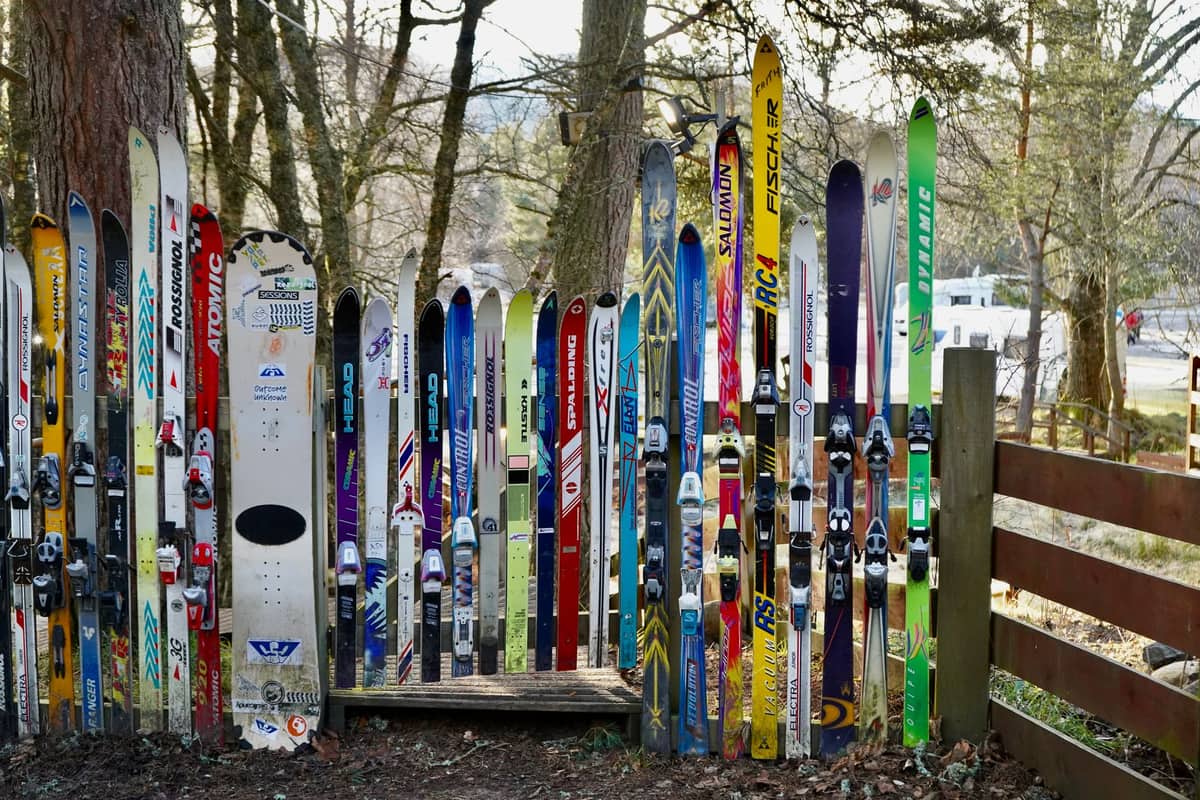
Everything here runs on two clocks
Ski gear does not wear out the way most equipment does. Almost nothing on this list fails from use at five days a year. What retires it is one of two other things: a material degrading with age regardless of use, or a support decision made by somebody else.
A ski base can be ground and a ski edge can be sharpened almost indefinitely, but the binding drops off the manufacturer’s service list after about a decade and no shop will touch it. A helmet may look perfect and have absorbed an impact you cannot see. That is why the answers below are rarely about how worn something looks.
Item by item
| Item | Typical life | What retires it |
|---|---|---|
| Ski socks | Years, or indefinitely | Holes; one pair here publishes an unconditional lifetime guarantee |
| Base layers | 5-10 years | Thinning at the elbows and shoulders; merino wears faster than synthetic |
| Jacket and pants | 5-10 years with care | Delaminated membrane, failed taping, or a finish that cannot be revived |
| Gloves | 3-5 years | Split palm seams and a liner pulling loose at the fingertips |
| Goggles | Until the inner lens is damaged | A wiped or scratched inner lens; compressed foam; slack strap |
| Helmet | Maker guidance, or immediately after a hard impact | Any impact, visible damage, or a shell that no longer fits |
| Boot liners | 3-5 years | Packed out: heel lifts, and you buckle tighter than you used to |
| Boot shells | 5-8 years, sometimes far longer | Cracks, worn sole blocks, or the liner no longer being replaceable |
| Skis and boards | Indefinitely, with tuning | Delamination, edge separation, or a base too thin to grind again |
| Bindings | 8-12 years | Falling off the manufacturer's indemnification list |
What a published warranty actually tells you
A warranty term is not a lifespan, but it is one of the few genuinely comparable signals a maker gives about what they expect to fail. It is worth reading as a statement of confidence rather than as a promise.
The spread across this site is instructive. A pair of socks publishes an unconditional lifetime guarantee. A boot dryer publishes 25 years, which fits its engineering: with no fan there is nothing to wear out. A helmet publishes three years at the long end and one year at the short. Most outerwear and most goggles publish no term at all.
Helmets: the one where age is not the main question
The rule that matters is not a number of years, it is an event: replace a helmet after any hard impact, including being dropped onto a hard surface from a car roof. A helmet manages an impact by permanently crushing, and a liner that has done that looks identical to one that has not.
Beyond that, follow what the maker publishes for that model, and treat visible damage, a cracked shell or a fit that no longer works as replacement signals. The helmet care and replacement page covers this properly, and it is also the reason a used helmet is the one absolute no on this site.
Bindings: the clock nobody knows about
This is the fact that surprises people most. Binding manufacturers publish an annual indemnification list of the models they will stand behind if a shop mounts, adjusts or tests them. Models typically stay listed for roughly eight to twelve years, and drop off sooner if they fail release testing at higher rates.
Once a binding is off that list, a shop servicing it takes on the liability itself, so most decline. The practical result is that a perfectly good pair of skis becomes unusable, because nobody will set the release value for you and doing it yourself is not a reasonable substitute. The bindings page explains what that setting is, and it is the single most important thing to check before buying used skis.
Outerwear: mostly a maintenance question
A jacket rarely wears out. What happens is that the durable water repellent finish on the face fabric wears off, the fabric then wets out, and it stops breathing even though the membrane underneath is intact. People conclude the jacket has failed and buy another one.
Washing and reproofing revives it, and it is genuinely the cheapest performance upgrade in the category. The washing page has the method. The things that do finish a jacket are delamination, where the membrane separates from the face fabric, and seam tape lifting from the inside - both visible, both effectively unrepairable at home.
Skis: why they outlive everything else
A ski is wood or foam, laminated, with a plastic base and steel edges. All the surfaces are renewable: bases can be ground flat and re-structured, edges can be sharpened, gouges filled. The repair page covers what is fixable.
Three things do finish a ski. Delamination, where the layers separate - usually visible as an edge lifting away from the sidewall, and usually terminal. A base worn so thin that a shop will not grind it again. And the bindings aging out, which is the common one.
Skis also age in a subtler way: the camber relaxes over many seasons, so an old ski is softer and less lively than it was. That is a real effect and it is invisible on a five-days-a-year clock. For most families it never becomes the deciding factor.
What actually extends the life of all of it
- Dry everything, every night, without heat. Wet gear stored wet is the single largest cause of premature failure across every category here. The method costs nothing.
- Store it properly in April. Skis waxed, boots unbuckled with liners out, nothing damp, nothing in a bag. The full routine.
- Wash outerwear and reproof it. Roughly annually, and more often if you ski a lot.
- Never wipe the inside of a goggle lens. It is the fastest way to destroy something that would otherwise last a decade. Why.
- Rinse edges after a salted drive. Salt on steel is the most avoidable damage in the sport.
What this means for buying
The lifespans above are the missing half of the rent-or-buy arithmetic. An item that lasts a decade divides its cost over a decade of days, which is why the buying order starts with socks and outerwear rather than with hardware.
And it is why the two items with the shortest effective life for a casual family - children’s hardware, which is outgrown, and bindings, which age out - are exactly the two that a seasonal lease handles better than ownership does.
Every pick, with the working
Each entry shows the published inputs, the axis scores they produce, and what you give up. The order is the computed order, not a commercial one, and the arithmetic is open underneath each score.
1 · A head at the edges of the size range, or one between two sizes
Smith Cache Mips
The widest published head range of any helmet on this page and the only one certified to both the US and European standards while carrying a rotational-impact liner, a dial adjuster and a three-year warranty. It is also the second most expensive, and 550 g is not light.
- Published price
- $125
- Cost per day on snow
- $5 a day
- Amortized over
- 5 seasons (25 days)
- Certified to
- ASTM F2040, CE EN 1077:2007 Class B
- Rotational system
- Mips
- Published sizes
- 51-67 cm across S, M, L and XL
- Weight
- 550 g
- Warranty
- Smith 3-year limited warranty
What it gets right
- Certified to ASTM F2040 and CE EN 1077:2007 Class B
- Four published sizes covering 51-67 cm, so odd-sized heads are actually catered for
- Three-year warranty, the longest published term in this group
- Eleven vents, five of them adjustable, which matters more than it sounds on a warm spring afternoon
What you give up
- 550 g in size medium is the heaviest here, and a child or a light adult will notice it
- No published crash-replacement program
The working behind the 6.7
- Cost per day on snow: 7.4
- $125 over 5 seasons at 5 days each = 25 days = $5 a day
- Published protection: 9.0
- ASTM F2040 (+4); CE EN 1077 (+2); Mips rotational system (+3)
- Size availability: 6.6
- 4 published sizes (5.1 of 8.5); continuous in-size adjuster published (+1.5); range: 51-67 cm across S, M, L and XL
- Warranty and support: 2.5
- 3 yr (2.5 of 6); no published crash replacement (+0); no published repair route (+0)
Axes with unpublished inputs are dropped and the remaining weights re-normalized, so a product is not punished for a manufacturer’s silence. Specifications compiled September 3, 2026 from Smith published specifications.
2 · Drying boots overnight, silently
The Original PEET Shoe & Boot Dryer
A two-boot convection dryer with no fan and no moving parts, drawing a published 36 watts and carrying a published 25-year warranty. PEET does not publish a drying time and says to leave footwear on overnight, which is the honest answer for convection: it is slow, silent and almost impossible to break.
- Published price
- $59.99
- Cost per day on snow
- $4.00 a day
- Amortized over
- 3 seasons (15 days)
- Certified to
- Not published
- Published sizes
- One size
- Warranty
- 25 years, published
What it gets right
- 25-year published warranty, by a distance the longest term in this category
- 36 published watts and no fan, so it can run all night in a hallway
- Made in the USA, published on the product page
What you give up
- No published drying time; PEET's own guidance is to leave gear on it overnight
- Two ports only, so a family of four dries in shifts
- Convection alone struggles with a soaked liner in a cold garage
The working behind the 6.6
- Cost per day on snow: 8.1
- $59.99 over 3 seasons at 5 days each = 15 days = $4.00 a day
- Published protection: not scored
- This category carries no protective standard.
- Size availability: not scored
- Sold in one size, so size availability does not apply.
- Warranty and support: 4.0
- 25 yr (4 of 6); no published crash replacement (+0); no published repair route (+0)
Axes with unpublished inputs are dropped and the remaining weights re-normalized, so a product is not punished for a manufacturer’s silence. Specifications compiled September 4, 2026 from PEET published specifications.
3 · The one piece of ski gear worth buying before anything else
Darn Tough Alpine Over-the-Calf Lightweight Ski Socks
The only item in this entire ledger with an unconditional lifetime guarantee. It is a $30 sock that the maker will replace forever, which over any realistic number of ski days is the cheapest thing on the site.
- Published price
- $30
- Cost per day on snow
- $2 a day
- Amortized over
- 3 seasons (15 days)
- Certified to
- Not published
- Published sizes
- S through XL
- Warranty
- Unconditional lifetime guarantee
What it gets right
- Unconditional lifetime guarantee, published without qualifying conditions
- Lightweight merino, which is correct for a modern ski boot: a thick sock makes boots colder, not warmer
- Over-the-calf length, so the boot cuff never touches bare skin
What you give up
- $30 for one pair of socks reads as absurd until the replacement policy is read
- Lightweight is the right choice but feels wrong to anyone expecting a thick ski sock
The working behind the 6.4
- Cost per day on snow: 9.6
- $30 over 3 seasons at 5 days each = 15 days = $2 a day
- Published protection: not scored
- Socks carry no protective standard, so this axis does not apply.
- Size availability: 5.1
- 4 published sizes (5.1 of 8.5); no continuous adjuster published (+0); range: S through XL
- Warranty and support: 2.0
- no published term (0 of 6); no published crash replacement (+0); repair or replacement parts published (+2)
Axes with unpublished inputs are dropped and the remaining weights re-normalized, so a product is not punished for a manufacturer’s silence. Specifications compiled September 3, 2026 from Darn Tough published specifications.
4 · A smaller adult or a tall teenager on groomed runs
Rossignol Experience 76 skis with Xpress 10 bindings
The narrower, cheaper sibling of the 78, at $449.95 with bindings, and the shortest published length here at 136 cm. Six lengths starting that short is what makes it work for a smaller adult or a tall teenager.
- Published price
- $449.95
- Cost per day on snow
- $18.00 a day
- Amortized over
- 5 seasons (25 days)
- Certified to
- Not published
- Published sizes
- 136, 144, 152, 160, 168 and 176 cm
- Warranty
- No term published on the product page
What it gets right
- $449.95 with Xpress 10 bindings included, $130 under the 78
- Six lengths from 136 cm, the shortest adult ski here
- A 76 mm waist is narrow, which makes edge-to-edge turns quicker to learn
What you give up
- A narrow ski is less forgiving in soft snow than a wider one
- The binding release setting still needs a shop, as with any ski
The working behind the 2.3
- Cost per day on snow: 0.0
- $449.95 over 5 seasons at 5 days each = 25 days = $18.00 a day
- Published protection: not scored
- Skis carry no protective standard of their own. The binding release setting does, and a shop sets it.
- Size availability: 8.5
- 6 published sizes (8.5 of 8.5); no continuous adjuster published (+0); range: 136, 144, 152, 160, 168 and 176 cm
- Warranty and support: 0.0
- no published term (0 of 6); no published crash replacement (+0); no published repair route (+0)
Axes with unpublished inputs are dropped and the remaining weights re-normalized, so a product is not punished for a manufacturer’s silence. Specifications compiled September 3, 2026 from Rossignol published specifications.
Prices last verified October 22, 2026. Prices move constantly; the figure on Amazon at the moment you click is the real one.
Questions people actually ask
How long do skis last?
Effectively indefinitely with tuning, because bases can be ground and edges sharpened. What retires a pair is usually the bindings, which typically stay on the manufacturer’s service list for about eight to twelve years, or delamination where the edge lifts away from the sidewall.
How often should you replace a ski helmet?
Immediately after any hard impact, including being dropped onto a hard surface, because a helmet manages impact by permanently crushing and a used liner looks identical to a new one. Otherwise follow the maker’s published guidance, and replace it if the shell is damaged or it no longer fits.
How long do ski boots last?
The shell for five to eight years and often much longer; the liner for three to five. When the boot starts to feel vague and you find yourself buckling tighter than you used to, that is a packed-out liner rather than a worn-out boot, and a replacement liner is far cheaper than a new pair.
When should I replace my ski jacket?
Usually later than people think. A jacket that has stopped working is normally one whose water-repellent finish has worn off, which washing and reproofing revives. What genuinely ends a jacket is delamination or seam tape lifting from the inside, both of which are visible and effectively unrepairable at home.
Do old bindings need replacing even if they work?
Effectively yes, once they fall off the manufacturer’s indemnification list, which typically happens after roughly eight to twelve years. A shop that services an unlisted binding takes the liability itself, so most decline - which makes the skis unusable even though nothing has broken.