The best base layers for kids, and the half everyone forgets
Parents buy the top and put leggings on the bottom. The leggings are usually cotton, and cotton under snow pants is why the afternoon goes wrong.
By Sawyer V. · Published
We have not tested this gear. Everything below is compiled from published specifications and published safety standards, and the arithmetic is public so you can check it. This page carries affiliate links: if you buy through one we earn a commission at no extra cost to you, and it does not change the order of the picks. Full disclosure.
The short answer
Buy merino or synthetic, never cotton, and buy the bottoms as well as the top. For most children a midweight around 250 gsm is right: warm enough for standing still in a lesson, breathable enough for a magic carpet. The published gsm figure is the only comparable number in this category - if a maker does not state one, you cannot compare it to anything.
| # | Pick | Best for | Score | Price |
|---|---|---|---|---|
| 1 | MERIWOOL Merino Kids 250 Base Layer The layer that decides whether a child is cold all afternoon | Not publishedon snow | 2.6/10 | Check price on Amazon |
| 2 | MERIWOOL Merino 250 Base Layer Top The layer that decides whether a beginner is cold all day | $3.25 a dayon snow | 5.9/10 | $65.00 - View on Amazon |
| 3 | Darn Tough Alpine Over-the-Calf Lightweight Ski Socks The one piece of ski gear worth buying before anything else | $2 a dayon snow | 6.4/10 | $30.64 - View on Amazon |
Prices last verified October 19, 2026. Prices move constantly; the figure on Amazon at the moment you click is the real one.
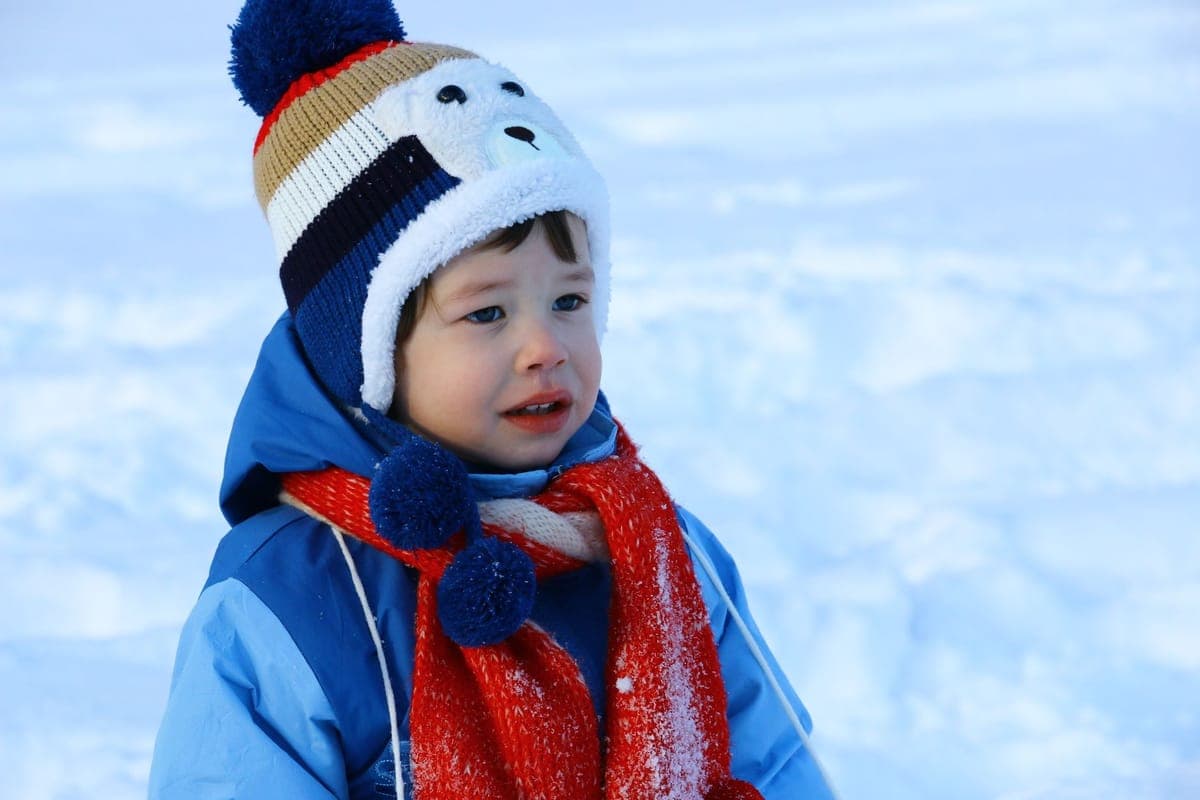
The half that gets forgotten
Ask a parent what their child wore under their snow pants and the answer is usually leggings, or tights, or "just their normal trousers". All three are typically cotton, and cotton is the one material that makes a cold day actively worse.
The mechanism is simple. Cotton absorbs sweat and holds it against the skin instead of moving it outward. A child who has been sidestepping up a slope for twenty minutes is damp; a child who then sits on a chairlift in the wind with a wet layer against their legs is being refrigerated. Wool and synthetics move that moisture out and keep insulating while damp.
So the recommendation on this page is a set. The top is the half people buy and the bottoms are the half that decides the afternoon. The page on what goes under snow pants covers the adult version of the same mistake.
The one number that is comparable
Base layers are published by fabric weight in grams per square meter. It is the only figure in this category that means the same thing across brands, which is why this site ranks on it.
| Weight | What it suits | For a child |
|---|---|---|
| Lightweight, roughly 150 gsm | High output, mild days, or as a second layer | Usually too thin on its own for a lesson |
| Midweight, roughly 200-250 gsm | The default for alternating effort and standing still | The right answer for almost every child |
| Heavyweight, 300 gsm and up | Severe cold, low activity | Usually too warm under an insulated jacket, and bulky |
| Unpublished | Unknown | Cannot be compared; treat the absence as information |
A child on a learning slope alternates between working hard and standing in a line doing nothing, which is precisely the case midweight exists for. That is why the 250 gsm figure published for the kids layer here is the pick rather than a compromise.
Merino against synthetic, for a child specifically
| Merino wool | Synthetic | |
|---|---|---|
| Warm when damp | Yes, this is its main argument | Yes |
| Dries | Slowly | Fast |
| Smell after three days | Barely | Noticeably |
| Durability at knees and elbows | Wears faster | Wears better |
| Itch on sensitive skin | Fine-gauge merino, rarely; coarse wool, yes | No |
| Price | Higher | Lower |
| Best for | A trip with one suitcase | A child hard on clothing |
For a family on a week-long trip, merino wins on the smell row alone - it can be worn several days running, which matters when you are washing nothing. For a child who destroys clothing, synthetic is the pragmatic answer and loses very little. Both beat cotton by a wide margin, and that is the decision that actually matters.
The picks
MERIWOOL Merino Kids 250
The same published 250 gsm interlock knit as the adult layer this site already recommends, in a kids cut and published in both tops and bottoms - which is the part that matters, because the bottoms are the half that is usually missing. Sizes run XS through L.
The practical bonus parents discover: it doubles as pajamas, which is why families end up buying two sets rather than one. The honest cons are that merino dries slowly, needs cool washing, and four sizes across the whole kids range makes the bands coarse.
The adult MERIWOOL 250, for comparison
Listed so the weight can be checked rather than trusted: identical published weight, adult cut. It is the right buy for the parent standing at the bottom of the slope, who is generating no heat at all and is usually the coldest person there - and the wrong buy for the child, because a loose base layer cannot do its job.
And the socks, which are part of the same system
One thin pair, wool, never two and never cotton. Bulk inside a boot restricts circulation and makes feet colder, which is the single most counterintuitive thing on this site and the reason socks have their own page. The pair here publishes an unconditional lifetime guarantee, which over any number of ski days makes it the cheapest item in a gear bag.
Fitting a base layer on a child
- Snug, not tight. It has to touch the skin to move sweat off it. A loose base layer is just a thin sweater.
- Long enough in the body. It should stay tucked when a child bends over, which they do constantly.
- Long sleeves and long legs. Wrists and ankles are where the system leaks.
- No seams under the boot cuff. A thick seam at the calf is a pressure point once a boot is buckled.
- One size of growing room at most. The growing-room page draws the line, and a base layer is nearer the strict end than the generous one.
Where it sits in the system
Three layers, never four: base, one fleece, waterproof shell. Adding a fourth compresses the others and squeezes out the trapped air doing the insulating. The kids layering page has the whole system and, more usefully, the physical checks that beat asking a child how they feel.
And once the layers are right, the mid-layer page covers the middle piece, which is the one people get wrong after cotton.
Every pick, with the working
Each entry shows the published inputs, the axis scores they produce, and what you give up. The order is the computed order, not a commercial one, and the arithmetic is open underneath each score.
1 · The layer that decides whether a child is cold all afternoon
MERIWOOL Merino Kids 250 Base Layer
The same published 250 gsm midweight merino as the adult layer on this site, in a kids cut and in both tops and bottoms. Midweight is the right answer for a child who alternates between standing still in a lesson and overheating on a magic carpet, and wool keeps insulating when the child inevitably gets damp.
- Published price
- Not published
- Cost per day on snow
- Not published
- Amortized over
- 1 season (5 days)
- Certified to
- Not published
- Published sizes
- XS through L in kids sizing, tops and bottoms sold separately
- Warranty
- No term published on the product page
MERIWOOL prices tops and bottoms separately and by size, so the cost-per-day axis is not scored.
What it gets right
- 250 gsm published, so the weight is directly comparable against any other merino layer
- 100% merino interlock knit; wool keeps working damp, which is the entire argument against a cotton vest
- Tops and bottoms both published, and the bottoms are the half families forget
- Doubles as pajamas on a trip, which is genuinely why parents buy two
What you give up
- No single published price, so cost per day cannot be computed
- Merino needs cool washing and dries slowly, which matters on a multi-day trip
- Four published sizes across the whole kids range, so the bands are coarse
The working behind the 2.6
- Cost per day on snow: not scored
- No manufacturer-published price, so this axis is not scored.
- Published protection: not scored
- Base layers carry no protective standard, so this axis does not apply.
- Size availability: 5.1
- 4 published sizes (5.1 of 8.5); no continuous adjuster published (+0); range: XS through L in kids sizing, tops and bottoms sold separately
- Warranty and support: 0.0
- no published term (0 of 6); no published crash replacement (+0); no published repair route (+0)
Axes with unpublished inputs are dropped and the remaining weights re-normalized, so a product is not punished for a manufacturer’s silence. Specifications compiled September 9, 2026 from MERIWOOL published specifications.
2 · The layer that decides whether a beginner is cold all day
MERIWOOL Merino 250 Base Layer Top
Skip this one. The adult version of the same 250 gsm layer, here so the weights can be compared directly rather than taken on trust. It is the right buy for a parent and the wrong buy for a child: an adult small on a nine-year-old is loose through the body, and a base layer that does not sit against the skin cannot move sweat off it.
250 g per square meter of merino is the midweight number, and midweight is the right answer for a beginner who alternates between standing still in a lesson and sweating on a magic carpet. Wool keeps working when it is damp; cotton does the opposite.
- Published price
- $65
- Cost per day on snow
- $3.25 a day
- Amortized over
- 4 seasons (20 days)
- Certified to
- Not published
- Published sizes
- S through XXL
- Warranty
- No term published on the product page
What it gets right
- 250 gsm published, so the weight can be compared against any other merino layer
- Wool retains warmth when damp, which is the entire argument against a cotton shirt
- Wearable for several days, which matters on a trip with one suitcase
What you give up
- $65 for a single top is more than a pair of snow pants here
- Merino needs cool washing and takes a long time to dry
The working behind the 5.9
- Cost per day on snow: 8.7
- $65 over 4 seasons at 5 days each = 20 days = $3.25 a day
- Published protection: not scored
- Base layers carry no protective standard, so this axis does not apply.
- Size availability: 6.8
- 5 published sizes (6.8 of 8.5); no continuous adjuster published (+0); range: S through XXL
- Warranty and support: 0.0
- no published term (0 of 6); no published crash replacement (+0); no published repair route (+0)
Axes with unpublished inputs are dropped and the remaining weights re-normalized, so a product is not punished for a manufacturer’s silence. Specifications compiled September 3, 2026 from MERIWOOL published specifications.
3 · The one piece of ski gear worth buying before anything else
Darn Tough Alpine Over-the-Calf Lightweight Ski Socks
The only item in this entire ledger with an unconditional lifetime guarantee. It is a $30 sock that the maker will replace forever, which over any realistic number of ski days is the cheapest thing on the site.
- Published price
- $30
- Cost per day on snow
- $2 a day
- Amortized over
- 3 seasons (15 days)
- Certified to
- Not published
- Published sizes
- S through XL
- Warranty
- Unconditional lifetime guarantee
What it gets right
- Unconditional lifetime guarantee, published without qualifying conditions
- Lightweight merino, which is correct for a modern ski boot: a thick sock makes boots colder, not warmer
- Over-the-calf length, so the boot cuff never touches bare skin
What you give up
- $30 for one pair of socks reads as absurd until the replacement policy is read
- Lightweight is the right choice but feels wrong to anyone expecting a thick ski sock
The working behind the 6.4
- Cost per day on snow: 9.6
- $30 over 3 seasons at 5 days each = 15 days = $2 a day
- Published protection: not scored
- Socks carry no protective standard, so this axis does not apply.
- Size availability: 5.1
- 4 published sizes (5.1 of 8.5); no continuous adjuster published (+0); range: S through XL
- Warranty and support: 2.0
- no published term (0 of 6); no published crash replacement (+0); repair or replacement parts published (+2)
Axes with unpublished inputs are dropped and the remaining weights re-normalized, so a product is not punished for a manufacturer’s silence. Specifications compiled September 3, 2026 from Darn Tough published specifications.
Prices last verified October 19, 2026. Prices move constantly; the figure on Amazon at the moment you click is the real one.
Questions people actually ask
What base layer should a child wear skiing?
Merino or synthetic, in a midweight around 250 gsm, as a set - top and bottoms. Never cotton: it holds sweat against the skin and a damp child on a chairlift is being refrigerated. The published gsm figure is the only number that compares across brands.
Can kids wear leggings under ski pants?
Only if they are wool or synthetic. Most children’s leggings are cotton, which is the single most common clothing mistake on a family ski day - it absorbs sweat, holds it against the skin, and stays cold all afternoon. Check what is actually under the snow pants before you leave.
Merino or synthetic base layers for kids?
Merino for a trip with one suitcase, because it can be worn several days running without smelling. Synthetic for a child who is hard on clothing, because it dries faster and wears better at the knees and elbows. Both are far better than cotton, which is the decision that actually matters.
What weight base layer do kids need?
Midweight, roughly 200 to 250 gsm. A child on a learning slope alternates between working hard and standing still in a line, which is exactly what midweight is for. Lightweight is usually too thin on its own and heavyweight is too warm under an insulated jacket.
How should a kids' base layer fit?
Snug but not tight - it has to touch the skin to move sweat off it, so a loose one is just a thin sweater. Long in the body so it stays tucked when they bend over, with long sleeves and legs. At most one size of growing room.