Ski helmets with a visor: who they are actually for
A visor helmet solves two real problems and creates two others. Here is the honest split, and why our picks below are a helmet and goggles instead.
By Sawyer V. · Published
We have not tested this gear. Everything below is compiled from published specifications and published safety standards, and the arithmetic is public so you can check it. This page carries affiliate links: if you buy through one we earn a commission at no extra cost to you, and it does not change the order of the picks. Full disclosure.
The short answer
A visor helmet is a ski helmet with a lens hinged to the brow instead of separate goggles. It genuinely wins for two groups: people who wear prescription glasses, because the visor clears them entirely, and anyone who dislikes goggle foam pressing on their face. It loses on lens choice, on cost when a lens is damaged, and on the fact that flipping a visor up in falling snow lets snow onto the inside of the lens.
| # | Pick | Best for | Score | Price |
|---|---|---|---|---|
| 1 | Smith Cache Mips A head at the edges of the size range, or one between two sizes | $5 a dayon snow | 6.7/10 | $160.00 - View on Amazon |
| 2 | Bolle Y7 OTG A skier who wears glasses and does not want contacts | $3.60 a dayon snow | 5.5/10 | Check price on Amazon |
| 3 | Smith Squad ChromaPop Anyone who skis in more than one kind of light | $6.20 a dayon snow | 5.3/10 | $119.95 - View on Amazon |
Prices last verified October 19, 2026. Prices move constantly; the figure on Amazon at the moment you click is the real one.
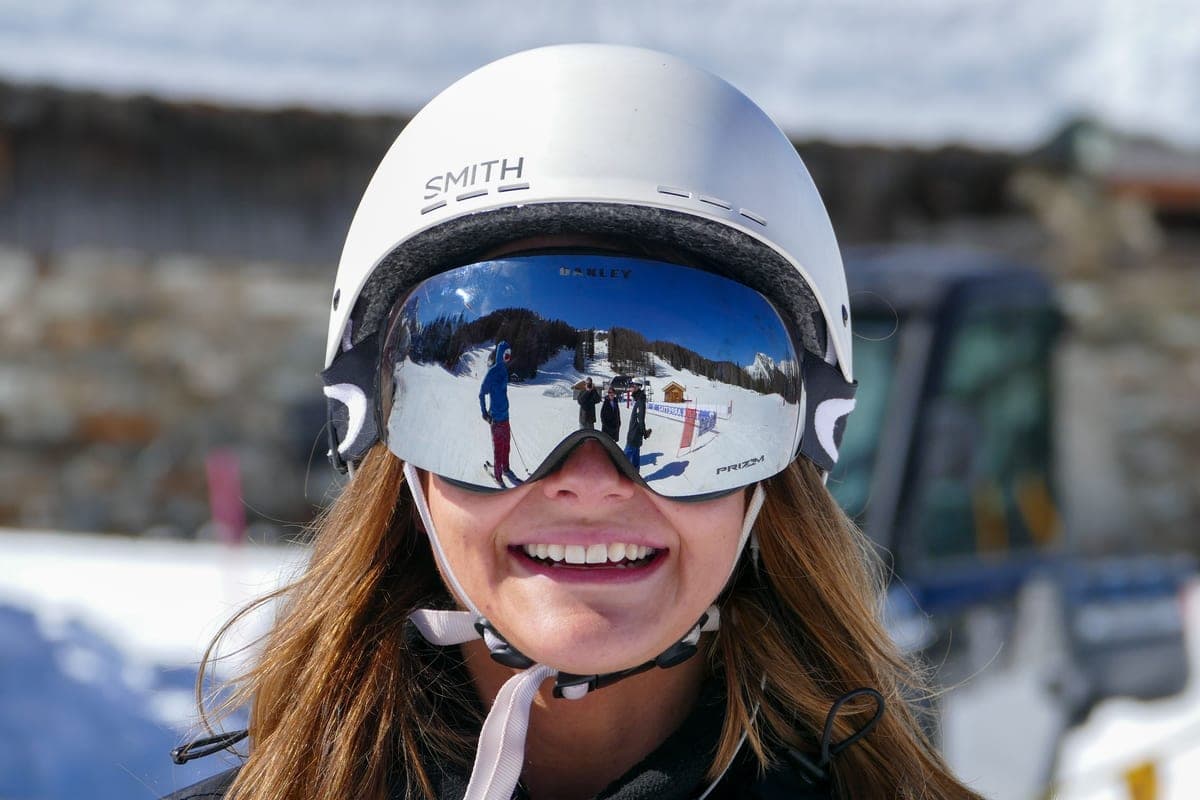
What a visor helmet is
A single lens, hinged at the brow of the helmet, that swings down in front of your face and lifts up out of the way. There is no strap, no goggle foam against your skin, and nothing separate to lose. It is a common sight in Europe and less so at US resorts, which is mostly a matter of habit rather than any difference in the conditions.
Where it genuinely wins
- Glasses. This is the strongest case by a distance. A visor sits far enough from your face that ordinary prescription glasses fit underneath with nothing pressing on the arms. If you wear glasses and have fought with over-the-glasses goggles, this is the alternative worth knowing about.
- No foam on your face. Goggle foam leaves a mark, presses on the bridge of the nose, and is the part people with sensitive skin dislike. A visor touches nothing.
- Nothing to mismatch. There is no gap between goggle and helmet brow to check, because there is no join. That gap is a real and common problem, and a visor removes it by construction.
- Field of view. A visor generally sits further from the eye than a goggle lens, which widens what you can see.
Where it loses
| Issue | Visor helmet | Helmet plus goggles |
|---|---|---|
| Lens choice | One lens, sometimes photochromic, rarely swappable cheaply | Any lens tint, and a second lens for around $30 to $40 |
| Damage cost | A scratched visor can mean a new helmet, or an expensive part | A scratched goggle is a goggle |
| Snow when lifted | Lifting the visor in falling snow puts snow on the inside of the lens | Goggles can come off entirely and go inside a jacket |
| Availability in the US | A thinner market, fewer models, less price competition | Very wide choice at every price |
| Buying online | Fit is the helmet fit, which is easier | Two items that have to match each other |
If you are here because of glasses
The visor is one answer and an over-the-glasses goggle is the other, and the second is far easier to buy. An OTG goggle is cut deeper at the temples so the arms of your glasses sit inside without pressing into your head, and one of the picks below publishes exactly that construction at $90.
There is also a third answer nobody mentions: prescription inserts that clip inside a standard goggle. They cost less than a visor helmet, work with any goggle you already own, and are the option most opticians will discuss if you ask. The full guide to skiing in glasses covers all three routes.
If you do buy a visor helmet
- Check it names ASTM F2040 or CE EN 1077 like any other helmet. The visor changes nothing about the certification requirement. What those standards test.
- Check whether the visor is replaceable, and what a replacement costs. This is the difference between a scratched lens being an annoyance and being a new helmet.
- Check the lens category or VLT figure, because you are committing to one lens. What VLT means. A photochromic visor that darkens and lightens is the usual answer to this and costs more.
- Check for a rotational-impact system, exactly as you would on any other helmet. Why that matters.
The honest verdict
For most families, a helmet and goggles is the better buy: cheaper, more available, and far easier to fix when a lens gets scratched on the second day. For a glasses wearer who has tried over-the-glasses goggles and disliked them, a visor helmet is a genuinely good answer and worth the narrower market.
Whichever you choose, the fit rules are the same, because it is a helmet first. Measure your head and check the fit, and check whether you should be buying at all.
Every pick, with the working
Each entry shows the published inputs, the axis scores they produce, and what you give up. The order is the computed order, not a commercial one, and the arithmetic is open underneath each score.
1 · A head at the edges of the size range, or one between two sizes
Smith Cache Mips
The widest published head range of any helmet on this page and the only one certified to both the US and European standards while carrying a rotational-impact liner, a dial adjuster and a three-year warranty. It is also the second most expensive, and 550 g is not light.
- Published price
- $125
- Cost per day on snow
- $5 a day
- Amortized over
- 5 seasons (25 days)
- Certified to
- ASTM F2040, CE EN 1077:2007 Class B
- Rotational system
- Mips
- Published sizes
- 51-67 cm across S, M, L and XL
- Weight
- 550 g
- Warranty
- Smith 3-year limited warranty
What it gets right
- Certified to ASTM F2040 and CE EN 1077:2007 Class B
- Four published sizes covering 51-67 cm, so odd-sized heads are actually catered for
- Three-year warranty, the longest published term in this group
- Eleven vents, five of them adjustable, which matters more than it sounds on a warm spring afternoon
What you give up
- 550 g in size medium is the heaviest here, and a child or a light adult will notice it
- No published crash-replacement program
The working behind the 6.7
- Cost per day on snow: 7.4
- $125 over 5 seasons at 5 days each = 25 days = $5 a day
- Published protection: 9.0
- ASTM F2040 (+4); CE EN 1077 (+2); Mips rotational system (+3)
- Size availability: 6.6
- 4 published sizes (5.1 of 8.5); continuous in-size adjuster published (+1.5); range: 51-67 cm across S, M, L and XL
- Warranty and support: 2.5
- 3 yr (2.5 of 6); no published crash replacement (+0); no published repair route (+0)
Axes with unpublished inputs are dropped and the remaining weights re-normalized, so a product is not punished for a manufacturer’s silence. Specifications compiled September 3, 2026 from Smith published specifications.
2 · A skier who wears glasses and does not want contacts
Bolle Y7 OTG
Built around the frame depth that lets a pair of glasses sit inside without the arms pressing, which is the only thing that actually distinguishes an over-the-glasses goggle. Double lens, treated inner surface, 100% UV.
- Published price
- $90
- Cost per day on snow
- $3.60 a day
- Amortized over
- 5 seasons (25 days)
- Certified to
- Not published
- UV protection
- 100% published
- Anti-fog
- Anti-fog and anti-scratch lens treatment
- Lenses included
- 1
- Published sizes
- One size
- Warranty
- No term published for goggles
Bolle publishes several Y7 OTG lens variants; the photochromic version is published at a higher price.
What it gets right
- Purpose-built over-the-glasses frame depth rather than a normal goggle sold as OTG
- 100% UV protection with anti-fog and anti-scratch lens treatment
- Double lens with vents top and bottom, the construction that resists fogging
What you give up
- One lens in the box, so flat-light days mean buying a second
- Deeper frame is bulkier against a helmet brow than a standard goggle
The working behind the 5.5
- Cost per day on snow: 8.4
- $90 over 5 seasons at 5 days each = 25 days = $3.60 a day
- Published protection: 6.0
- 100% UV protection published (+4); no published impact standard (+0); anti-fog treatment published (+2); single lens (+0)
- Size availability: not scored
- Sold in one size, so size availability does not apply.
- Warranty and support: 0.0
- no published term (0 of 6); no published crash replacement (+0); no published repair route (+0)
Axes with unpublished inputs are dropped and the remaining weights re-normalized, so a product is not punished for a manufacturer’s silence. Specifications compiled September 3, 2026 from Bolle published specifications.
3 · Anyone who skis in more than one kind of light
Smith Squad ChromaPop
The only goggle here that ships with a second lens in the box, which is the single change that makes a goggle usable in both bright sun and flat light. That, plus 100% UV and a treated inner lens, is the whole specification worth paying for.
- Published price
- $155
- Cost per day on snow
- $6.20 a day
- Amortized over
- 5 seasons (25 days)
- Certified to
- Not published
- UV protection
- 100% published
- Anti-fog
- Fog-X anti-fog inner lens
- Lenses included
- 2
- Published sizes
- One size
- Warranty
- No term published for goggles
What it gets right
- Two lenses in the box, so a flat-light day does not need a second purchase
- 100% UV protection and a Fog-X treated inner lens
- Cylindrical frame that sits flat against most helmet brows
What you give up
- $155 is more than three of the helmets on this site
- Smith publishes no impact standard for this goggle, so we cannot score it on one
- Sold in one frame size; the smaller and larger faces need a different model entirely
The working behind the 5.3
- Cost per day on snow: 6.5
- $155 over 5 seasons at 5 days each = 25 days = $6.20 a day
- Published protection: 8.0
- 100% UV protection published (+4); no published impact standard (+0); anti-fog treatment published (+2); 2 lenses included (+2)
- Size availability: not scored
- Sold in one size, so size availability does not apply.
- Warranty and support: 0.0
- no published term (0 of 6); no published crash replacement (+0); no published repair route (+0)
Axes with unpublished inputs are dropped and the remaining weights re-normalized, so a product is not punished for a manufacturer’s silence. Specifications compiled September 3, 2026 from Smith published specifications.
Prices last verified October 19, 2026. Prices move constantly; the figure on Amazon at the moment you click is the real one.
Questions people actually ask
Are visor ski helmets any good?
Yes, particularly for people who wear glasses or dislike goggle foam on their face. The trade-offs are lens choice, the cost of a scratched visor, and a thinner selection in the US.
Can you wear glasses under a visor helmet?
Yes, and it is the single strongest argument for one. The visor sits far enough from the face that ordinary glasses fit underneath without the arms being pressed into your head.
Do visor helmets fog up?
They can, and the specific failure mode is lifting the visor in falling snow, which puts snow onto the inside of the lens where you cannot wipe it without removing the anti-fog coating. Goggles can be taken off entirely and put inside a jacket instead.
Are visor helmets certified the same as normal ski helmets?
They should be, to ASTM F2040 or CE EN 1077. The visor does not change the certification requirement, so check for it exactly as you would on any other helmet.