Women's skis, compared on the numbers the makers publish
Waist width and turn radius decide what a ski does. Three skis compared on both where they are published, and an honest note on why all three are one maker.
By Sawyer V. · Published
We have not tested this gear. Everything below is compiled from published specifications and published safety standards, and the arithmetic is public so you can check it. This page carries affiliate links: if you buy through one we earn a commission at no extra cost to you, and it does not change the order of the picks. Full disclosure.
The short answer
A women’s ski differs in two real ways: it is generally softer in flex and the binding mount sits slightly further forward, both to suit a lighter skier with a lower center of mass. Choose by waist width - around 75-80 mm for groomed runs, 85 mm and up if you want one ski for everything - then pick the length from the maker’s published run.
| # | Pick | Best for | Score | Price |
|---|---|---|---|---|
| 1 | K2 Blur 76 Women's Skis A woman who skis groomed runs and wants the turn to happen by itself | $22.00 a dayon snow | 1.8/10 | $420.00 - View on Amazon |
| 2 | K2 Omen 85 Women's Skis A woman who wants one ski for groomers and whatever soft snow turns up | $18.00 a dayon snow | 1.4/10 | $384.97 - View on Amazon |
| 3 | K2 Disruption 75 Women's Skis A beginner who wants a women's-specific construction | $18.00 a dayon snow | 1.4/10 | $389.99 - View on Amazon |
Prices last verified October 19, 2026. Prices move constantly; the figure on Amazon at the moment you click is the real one.
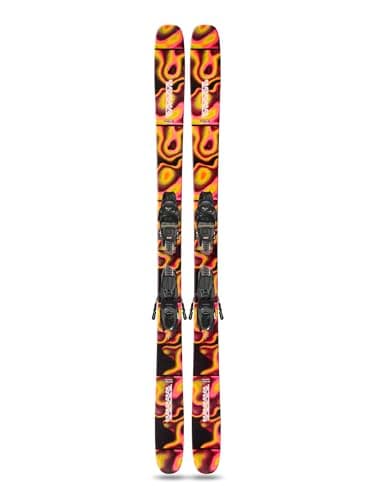
What the women's label actually changes
Two things, both real. A softer flex, because a lighter skier has to be able to bend the ski to make it turn. And a mount point set marginally further forward, to suit a body whose center of mass sits lower than the male average the unisex ski was designed around.
What it does not reliably change is quality, construction or price. The full explainer covers what the marketing adds on top and the honest summary is that a strong or heavier skier is often better served by a unisex ski in a shorter length.
The two numbers that decide the ski
- Waist width. The measurement under your foot, in millimeters. Narrow gets from edge to edge faster on hard snow. Wide floats better in soft snow and is slower to tip over. For a resort skier, 75 to 90 mm is the whole useful range.
- Turn radius. The size of turn the ski’s shape naturally makes, in meters, always quoted at a specific length. A smaller number is a tighter turn with less effort.
Almost everything else that gets discussed - core material, laminate layup, rocker profile - modifies how those two feel rather than replacing them. The ski shapes page covers width and camber properly.
| Ski | Waist | Radius | Lengths | Published price |
|---|---|---|---|---|
| K2 Omen 85 | 85 mm | 16.0 m at 159 cm | 139-169 cm (4) | $449.95 |
| K2 Disruption 75 | 75 mm | Not published | 142-163 cm (4) | $449.95 |
| K2 Blur 76 | 76 mm | 12.7 m at 163 cm | 142-170 cm (5) | $549.95 |
Note that the Omen and the Disruption carry the same published price. The extra 10 mm of waist on the Omen is free, and it is what lets one ski cope with a soft morning as well as a firm one.
The picks
K2 Omen 85
The pick, at a published $449.95 - the same price as the narrower Disruption, which is the whole argument for it. An 85 mm waist is the width that does not force a choice: narrow enough to get on edge without effort on a groomed run, wide enough to stay on top of soft snow rather than diving through it.
Published sidecut is 111-85-106 mm with a 16.0 m radius at 159 cm, which is a medium-to-long turn - the ski wants space rather than quick short-swing turns. Pure aspen core with a triaxial braid and carbon stringers, and an all-terrain twin rocker.
Four published lengths starting at 139 cm, which is short enough for a smaller adult or a strong teenager - and shorter than anything the other two publish. The twin-tip shape is genuinely wasted on a skier who will never ride backwards, and that is most people, but it costs nothing.
K2 Blur 76
Marked as the skip above, and again the skip is contextual rather than a criticism. A 76 mm waist with a published 12.7 m radius at 163 cm is a carving ski and it is extremely good at that.
Five published lengths from 142 to 170 cm is the widest run here, and the composite aspen core with all-terrain rocker means it is not the harsh race-derived thing a 76 mm waist used to imply. If you ski a firm eastern or midwestern hill and have no ambitions beyond groomed runs, this is the more enjoyable ski of the two.
At $549.95 it is a hundred dollars more for a narrower band of use.
K2 Disruption 75
The narrowest of the three at 75 mm, with four published lengths from 142 to 163 cm and the same published $449.95 as the Omen. K2 does not publish a turn radius on this model, which is the one figure the other two give you, so it is the hardest of the three to compare on paper.
It is also the one most likely to be found discounted - model-year carryover in this category is common and the ski changes very little between years.
The when-to-buy page covers the timing on carryover stock, which for skis is the largest single saving available to anyone who is not in a hurry.
None of these include a binding
Worth stating plainly, because it changes the budget. All three are sold flat, and a binding plus a shop mount is a real additional cost on top of the published price.
It also means the DIN range is a separate decision. K2 does not publish a DIN range on these product pages because the binding is not part of the product. The DIN chart page explains how a release value is calculated and the bindings explainer covers brake width, which is the compatibility figure people get wrong.
If that sounds like more decisions than you wanted, a ski-and-binding package removes both of them and for a first or second pair it is usually the better buy.
Choosing the length
Stood on end, a ski for a recreational skier should reach somewhere between your chin and the top of your head, shorter for a beginner and longer as you get faster. That rule is rough, and it is rough in a useful direction: the error it produces is a ski slightly too short, which is far more forgiving than one slightly too long.
The ski size chart page has length by height and ability, and it is worth reading before you commit, because the published length runs here step in 7 to 10 cm increments and the gap between two adjacent lengths is genuinely noticeable.
Before you buy any of this
Skis are near the bottom of the list of things worth owning for a family that skis once or twice a year, and this site says so consistently. The what-to-buy-first page puts boots, helmet and clothing ahead of skis, and a demo day lets you ski two of these back to back before spending anything.
The skiers for whom buying makes sense are the ones who already know what they want the ski to do. If you do not yet, that is not a gap in your knowledge - it is information that the purchase can wait.
Every pick, with the working
Each entry shows the published inputs, the axis scores they produce, and what you give up. The order is the computed order, not a commercial one, and the arithmetic is open underneath each score.
1 · A woman who skis groomed runs and wants the turn to happen by itself
K2 Blur 76 Women's Skis
Skip this one. The wrong ski if you will ever see soft snow. A 76 mm waist with a 12.7 m published radius is a groomed-run ski and is excellent at that one job, but it is a hundred dollars more than the Omen 85 and gives up the ability to handle the morning after a storm. Buy it if you ski a firm-snow resort exclusively and want the turn to happen by itself. Otherwise the wider ski is the better single purchase.
A 76 mm waist with a published 12.7 m radius is a groomed-run ski and makes no pretence otherwise, which is honest and correct for almost everyone this site is written for. Five published lengths from 142 to 170 cm covers a genuinely wide range of women.
- Published price
- $549.95
- Cost per day on snow
- $22.00 a day
- Amortized over
- 5 seasons (25 days)
- Certified to
- Not published
- Published sizes
- 142, 149, 156, 163 and 170 cm, published at 120-76-109 mm with a 12.7 m radius at 163 cm
- Warranty
- No term published on the product page
What it gets right
- Five published lengths, 142 to 170 cm, with a published sidecut and radius
- 76 mm waist, which is the width that makes edge-to-edge changes easy on piste
- Composite aspen core with all-terrain rocker, both published
- 12.7 m published radius at 163 cm, a genuinely short turning ski
What you give up
- Bindings are not included and K2 publishes no DIN range, so budget for a binding and a mount
- 76 mm is too narrow to enjoy a powder day and the page does not pretend otherwise
- No published warranty term
The working behind the 1.8
- Cost per day on snow: 0.0
- $549.95 over 5 seasons at 5 days each = 25 days = $22.00 a day
- Published protection: not scored
- Skis carry no protective standard of their own. The binding release setting does, and a shop sets it.
- Size availability: 6.8
- 5 published sizes (6.8 of 8.5); no continuous adjuster published (+0); range: 142, 149, 156, 163 and 170 cm, published at 120-76-109 mm with a 12.7 m radius at 163 cm
- Warranty and support: 0.0
- no published term (0 of 6); no published crash replacement (+0); no published repair route (+0)
Axes with unpublished inputs are dropped and the remaining weights re-normalized, so a product is not punished for a manufacturer’s silence. Specifications compiled September 12, 2026 from K2 published specifications.
2 · A woman who wants one ski for groomers and whatever soft snow turns up
K2 Omen 85 Women's Skis
An 85 mm waist and a twin-tip shape at the lowest published price of the women's skis here, which makes it the one ski on this page that works on a soft day as well as a hard one. The published 139 cm length is short enough for a small adult or a strong teenager.
- Published price
- $449.95
- Cost per day on snow
- $18.00 a day
- Amortized over
- 5 seasons (25 days)
- Certified to
- Not published
- Published sizes
- 139, 149, 159 and 169 cm, published at 111-85-106 mm with a 16.0 m radius at 159 cm
- Warranty
- No term published on the product page
What it gets right
- Tied cheapest women's ski in this ledger at a published $449.95, and the widest of the three
- 85 mm waist, wide enough to float a little without being slow on hard snow
- Four published lengths starting at 139 cm, which fits a smaller adult
- Pure aspen core with a triaxial braid and carbon stringers, published
What you give up
- 16.0 m published radius is a longer turn than the Blur, so it needs more space
- No binding included and no published DIN range
- A twin tip is wasted on a skier who will never ride switch
The working behind the 1.4
- Cost per day on snow: 0.0
- $449.95 over 5 seasons at 5 days each = 25 days = $18.00 a day
- Published protection: not scored
- Skis carry no protective standard of their own. The binding release setting does, and a shop sets it.
- Size availability: 5.1
- 4 published sizes (5.1 of 8.5); no continuous adjuster published (+0); range: 139, 149, 159 and 169 cm, published at 111-85-106 mm with a 16.0 m radius at 159 cm
- Warranty and support: 0.0
- no published term (0 of 6); no published crash replacement (+0); no published repair route (+0)
Axes with unpublished inputs are dropped and the remaining weights re-normalized, so a product is not punished for a manufacturer’s silence. Specifications compiled September 12, 2026 from K2 published specifications.
3 · A beginner who wants a women's-specific construction
K2 Disruption 75 Women's Skis
A women's-specific beginner ski at the same $449.95 as the Rossignol 76, in four lengths from 142 cm. Fewer lengths than the Rossignol, which is the one real difference between them on published figures.
- Published price
- $449.95
- Cost per day on snow
- $18.00 a day
- Amortized over
- 5 seasons (25 days)
- Certified to
- Not published
- Published sizes
- 142, 149, 156 and 163 cm
- Warranty
- No term published on the product page
What it gets right
- $449.95 published, matching the comparable Rossignol
- Women's-specific construction and mounting position published by K2
What you give up
- Four published lengths against the Rossignol's six, so the fit band is coarser
- Nothing shorter than 142 cm, which rules out smaller adults
The working behind the 1.4
- Cost per day on snow: 0.0
- $449.95 over 5 seasons at 5 days each = 25 days = $18.00 a day
- Published protection: not scored
- Skis carry no protective standard of their own. The binding release setting does, and a shop sets it.
- Size availability: 5.1
- 4 published sizes (5.1 of 8.5); no continuous adjuster published (+0); range: 142, 149, 156 and 163 cm
- Warranty and support: 0.0
- no published term (0 of 6); no published crash replacement (+0); no published repair route (+0)
Axes with unpublished inputs are dropped and the remaining weights re-normalized, so a product is not punished for a manufacturer’s silence. Specifications compiled September 3, 2026 from K2 published specifications.
Prices last verified October 19, 2026. Prices move constantly; the figure on Amazon at the moment you click is the real one.
Questions people actually ask
What is the difference between women's and unisex skis?
Generally a softer flex, so a lighter skier can bend the ski into a turn, and a mount point set slightly further forward to suit a lower center of mass. Quality and construction are usually identical. A heavier or stronger skier is often better served by a unisex ski in a shorter length.
What waist width should a woman's ski be?
For resort skiing, 75 to 90 mm covers the useful range. Around 75 to 80 mm gets from edge to edge fastest on groomed snow; 85 mm and up floats better in soft snow and is the better choice if you want one ski for all conditions.
What does turn radius mean on a ski?
The size of turn the ski’s shape naturally makes, in meters, always quoted at a specific length. A 12.7 m radius makes a tighter turn with less effort than a 16.0 m radius. Shorter radius suits narrow trails and quick turns; longer suits open runs and speed.
Do women's skis come with bindings?
None of the three here do. They are sold flat, so a binding and a shop mount are a real additional cost on top of the published price. A ski-and-binding package removes both the cost and the compatibility decision, which is usually the better route for a first or second pair.
What length skis should I buy?
On end, somewhere between your chin and the top of your head, shorter if you are a beginner. The rule errs towards skis that are slightly too short, which is the forgiving direction to be wrong in. Published length runs step in 7 to 10 cm, and the difference between adjacent sizes is noticeable.