The best skis under $500, and the cost the sticker never shows
At this price you are buying a complete ski with bindings, which is genuinely good value. What the price does not include is the twenty minutes of shop work that makes them safe to use.
By Sawyer V. · Published
We have not tested this gear. Everything below is compiled from published specifications and published safety standards, and the arithmetic is public so you can check it. This page carries affiliate links: if you buy through one we earn a commission at no extra cost to you, and it does not change the order of the picks. Full disclosure.
The short answer
Under $500 buys a complete ski with bindings that is genuinely fine for groomed runs - the compromise is in materials and versatility, not in safety. Pick on published length run first (you need the length that fits you), then waist width and turn radius. Budget separately for mounting: the binding still has to be adjusted and tested against your boots, and that cost is never in the sticker price.
| # | Pick | Best for | Score | Price |
|---|---|---|---|---|
| 1 | K2 Disruption 75 Women's Skis A beginner who wants a women's-specific construction | $18.00 a dayon snow | 1.4/10 | $389.99 - View on Amazon |
| 2 | Rossignol Experience 76 skis with Xpress 10 bindings A smaller adult or a tall teenager on groomed runs | $18.00 a dayon snow | 2.3/10 | $479.95 - View on Amazon |
| 3 | K2 Omen 85 Women's Skis A woman who wants one ski for groomers and whatever soft snow turns up | $18.00 a dayon snow | 1.4/10 | $384.97 - View on Amazon |
Prices last verified October 19, 2026. Prices move constantly; the figure on Amazon at the moment you click is the real one.
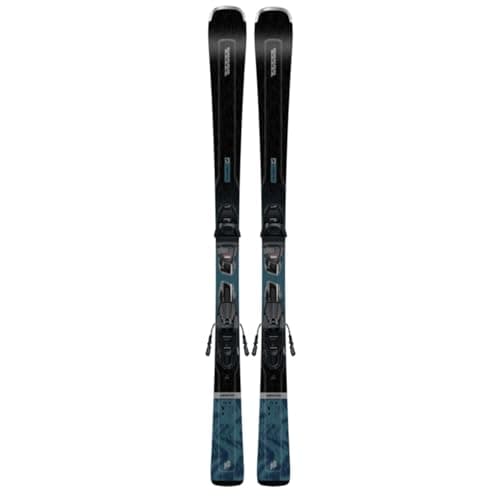
What $500 actually buys
A complete ski with a binding already matched to it, in a length run wide enough that most adults can find their size, from a brand that publishes real specifications. That is a lot for the money, and for the skier this site is written for - groomed runs, a week or two a year - it is enough ski.
What you are giving up sits in three places, and none of them is safety. The materials are simpler, usually a composite or wood-composite core rather than metal laminates, which means the ski is less stable at speed and less composed on firm snow. The versatility is narrower: these are groomer skis, not soft-snow skis. And the bindings are lower-DIN models, which is fine for most people and not for a heavy, aggressive skier.
The three published numbers that matter
| Specification | What it means | How to use it |
|---|---|---|
| Length run | The sizes the ski is actually made in | Check your length exists before anything else |
| Waist width | Width underfoot in millimeters | Narrower is quicker edge to edge on groomers; wider floats better in soft snow |
| Turn radius | The arc the ski wants to make, in meters | Shorter radius turns more easily; longer is more stable at speed |
| Binding DIN range | The release settings available | Make sure your setting sits inside it, not at the edge |
Length comes first because it is the only one that can rule a ski out entirely. The ski size chart gives the band from your height and ability, and the weight adjustment that matters more than either.
The picks
K2 Disruption 75
The pick. K2 publishes four lengths - 142, 149, 156 and 163 cm - a 75 mm waist and a published turn radius, with a binding system matched to the ski. A 75 mm waist is squarely a groomer width: quick from edge to edge, which is what makes a ski feel easy when you are still learning to roll it onto its edge rather than skid it.
It is also the cheapest of the three at its live price, and at this end of the market the published radius per length is the detail that separates a spec sheet from a marketing page.
Honest cons: four lengths is the narrowest run here, so taller and shorter skiers may not find their size. A 75 mm waist is narrow for anything but firm snow, and it will feel out of its depth in a fresh six inches. And the lower-DIN binding suits light to average skiers rather than heavy ones.
Rossignol Experience 76
Here for one strong reason and marked as the skip for another. Rossignol publishes six lengths from 136 to 176 cm, which is the widest run on this page by a distance - genuinely valuable for a household buying two or three pairs, or for a skier whose size the K2 simply does not make.
It arrives with Xpress bindings already matched, and the 76 mm waist puts it in the same groomer category as the K2. The reason it is the skip is price: at its live figure it is the dearest of the three without a corresponding published advantage, and on this site that money is better spent on boots, which is the purchase that actually changes how a day feels.
Why boots come first makes that argument properly.
K2 Omen 85 Women’s
The one ski here that handles a soft day. K2 publishes an 85 mm waist - ten millimeters wider than the Disruption - and four published lengths, on a women’s construction with a twin-tip shape.
That width is the whole argument: 85 mm is wide enough to stay on top of a few inches of fresh snow while still being manageable on a groomed run, which makes it the most versatile ski on this page. It is also priced under the Rossignol at its live figure.
Honest cons: a wider ski is slower edge to edge, which a beginner notices on firm snow. A twin tip is wasted on a skier who will never ride switch. And it is built and sized on a women’s construction, so it is not the ski for everyone reading this page - what that label actually means.
What another five hundred buys
Useful context, because for some readers the honest answer is that this price band is not where they should be shopping.
| Bracket | What appears | Who notices |
|---|---|---|
| Under $500 with bindings | Composite or wood-composite core, groomer widths, lower-DIN bindings | Nobody, on groomed runs at moderate speed |
| $500-800 | Metal laminate or heavier wood cores, more length options | Anyone skiing faster or on firm, chopped-up afternoon snow |
| $800 and up | Specialist shapes, lighter builds, touring capability | People who ski a lot, or off groomers regularly |
The jump worth paying for is the first one, and only if you ski enough days to feel it. For a family on groomed runs a week or two a year, the ski is rarely the limiting factor - boots and technique are. The wider ski roundup covers the next bracket up.
Get the length right before anything else
A cheap ski in the right length outperforms an expensive one in the wrong length, every time, and length is the only specification on this page that can rule a model out entirely.
- Start from height, roughly chin to nose for a recreational skier, and then adjust.
- Adjust down for a beginner, for a lighter skier, and for anyone who skis slowly and makes shorter turns. A shorter ski is easier to turn and more forgiving of mistakes.
- Adjust up for speed, for weight, and for anyone who already links carved turns confidently.
- Check the run exists before falling for a model. Four published lengths means four chances to fit you; six means six.
The full chart with the arithmetic shown.
Read the binding, not just the ski
At this price the binding is chosen by the maker to match the ski, which is convenient and does not remove your responsibility to check one number: the DIN range, which is the span of release settings the binding offers.
Your setting is calculated from weight, height, age, ability and boot sole length, and it needs to sit comfortably inside that range rather than at the very top or bottom of it. A heavier or more aggressive skier can genuinely exceed the range on a beginner-oriented binding, at which point the ski is not suitable no matter how good the price is.
How the number is worked out explains why it is a shop calculation rather than a guess, and the bindings page covers release behavior.
One ski for a whole family?
A question that comes up constantly with budget skis, and the answer is mostly no. Skis are sized to the person, and the length band for an adult and a teenager rarely overlaps usefully. What can be shared is a length between two similar adults - and even then the bindings have to be re-adjusted for each person’s boot sole length and release setting, which is a shop visit every time.
For households wanting one purchase to cover several people, seasonal leases handle it far better, because the shop swaps sizes as children grow. How lease programs work.
The cost nobody advertises
There is a second hidden cost that catches online buyers: boot sole compatibility. If your boots have GripWalk soles and the binding is alpine-only, a shop will decline to set them up - correctly. Check the pairing before you buy rather than after.
Children’s skis in this bracket
Worth addressing separately, because a complete children’s ski and binding package sits well under this page’s ceiling - and the decision is different from the adult one.
The arithmetic that matters is growth. A child grows through ski lengths every season or two, and each change means a new binding adjustment for the new boot sole length even when the ski still fits. So the question is not whether a cheap ski is good enough - at a child’s speed and weight, it genuinely is - but whether buying makes sense at all when the equipment has a one-season service life.
- Buying wins if the child skis a lot of days, if there is a younger sibling to hand down to, or if you live close enough that gear gets used on short notice.
- A seasonal lease wins for most families, because the shop swaps sizes mid-season when the child grows, and handles the binding adjustment each time. How lease programs are priced.
- Never hand down without a shop visit. The bindings must be re-adjusted and tested for the new skier, which is not a driveway job.
How to size a child’s skis covers the length question, which for children is even more sensitive than it is for adults.
Used skis at this price
Five hundred dollars buys a new entry ski or a two-season-old ski that cost twice that. For skis specifically the used route is genuinely good, provided you check three things: the bases for core shots, the edges for notches or rust pitting, and whether the bindings are a current model a shop will still service.
That last point ends more used deals than the first two. Some older bindings are on manufacturers’ indemnified lists and some are not, and a shop will not adjust one it cannot certify. What is safe to buy used covers the whole kit.
When renting still wins
Buying skis at any price only makes sense past a certain number of days on snow, and this site is consistent about saying so. Divide the purchase price plus mounting by your local daily rental rate, and compare that to the days you will genuinely ski in the next two seasons.
For a family skiing five days a year, renting usually still wins - and it wins harder for children, who outgrow skis. The arithmetic, with the numbers shown, and the kids’ ski page for the junior version of the same question.
If the budget is fixed, spend in this order
Most people arrive at this page having decided to buy skis, when the same money spent differently would improve their skiing more. The order that actually helps, from a fixed budget:
| Priority | Why it comes first | Rough share of budget |
|---|---|---|
| Boots that fit | The only item that directly controls the ski, and the one rentals do worst | The largest single share |
| Lessons | Improves every run for the rest of your life; equipment does not | Two or three days' worth |
| Skis and bindings | A competent groomer ski at this price is genuinely adequate | What is left |
| Everything else | Poles, bags and tuning kit can wait a season | Nothing, initially |
Which is why boots before skis is the single most repeated piece of advice on this site. If buying skis means renting boots, the money is in the wrong place.
What to ignore on the listing
Budget skis are sold with a lot of language that describes nothing measurable. Three examples worth recognizing, because ignoring them makes the comparison much simpler.
- Named core technologies without a material or a thickness. “Power core” is a name; “wood core” or “composite core” is a specification. Compare the second and discard the first.
- Ability claims. “Beginner to advanced” appears on nearly every ski in this bracket and tells you nothing. Length, width and turn radius tell you who the ski suits.
- Rocker described in adjectives. If a maker publishes a rocker profile, that is useful. If it says “versatile rocker,” it is a word.
The three numbers that survive this filter are the ones this page compares on - and they are the only ones you can check across brands.
Who should buy what
- A groomer skier who wants the easiest ski to turn. The K2 Disruption 75, if your length is in its run.
- A household buying two or three pairs. The Rossignol Experience 76, for the six published lengths.
- Someone who wants one ski for firm and soft days. The K2 Omen 85, for the wider waist.
- Anyone who has not yet bought boots. Buy boots first. It is the single biggest comfort upgrade available and it is the item rental fleets serve worst.
Every pick, with the working
Each entry shows the published inputs, the axis scores they produce, and what you give up. The order is the computed order, not a commercial one, and the arithmetic is open underneath each score.
1 · A beginner who wants a women's-specific construction
K2 Disruption 75 Women's Skis
A women's-specific beginner ski at the same $449.95 as the Rossignol 76, in four lengths from 142 cm. Fewer lengths than the Rossignol, which is the one real difference between them on published figures.
- Published price
- $449.95
- Cost per day on snow
- $18.00 a day
- Amortized over
- 5 seasons (25 days)
- Certified to
- Not published
- Published sizes
- 142, 149, 156 and 163 cm
- Warranty
- No term published on the product page
What it gets right
- $449.95 published, matching the comparable Rossignol
- Women's-specific construction and mounting position published by K2
What you give up
- Four published lengths against the Rossignol's six, so the fit band is coarser
- Nothing shorter than 142 cm, which rules out smaller adults
The working behind the 1.4
- Cost per day on snow: 0.0
- $449.95 over 5 seasons at 5 days each = 25 days = $18.00 a day
- Published protection: not scored
- Skis carry no protective standard of their own. The binding release setting does, and a shop sets it.
- Size availability: 5.1
- 4 published sizes (5.1 of 8.5); no continuous adjuster published (+0); range: 142, 149, 156 and 163 cm
- Warranty and support: 0.0
- no published term (0 of 6); no published crash replacement (+0); no published repair route (+0)
Axes with unpublished inputs are dropped and the remaining weights re-normalized, so a product is not punished for a manufacturer’s silence. Specifications compiled September 3, 2026 from K2 published specifications.
2 · A smaller adult or a tall teenager on groomed runs
Rossignol Experience 76 skis with Xpress 10 bindings
Skip this one. The most expensive of the three and the one whose case is hardest to make at this price. It publishes six lengths from 136 to 176 cm - the widest run here and genuinely useful for a household buying more than one pair - but it is the priciest, and the K2 Disruption 75 covers most of the same ground for less while publishing a turn radius per length. Buy the Rossignol if your length is one the K2 does not offer; otherwise the money is better spent on boots.
The narrower, cheaper sibling of the 78, at $449.95 with bindings, and the shortest published length here at 136 cm. Six lengths starting that short is what makes it work for a smaller adult or a tall teenager.
- Published price
- $449.95
- Cost per day on snow
- $18.00 a day
- Amortized over
- 5 seasons (25 days)
- Certified to
- Not published
- Published sizes
- 136, 144, 152, 160, 168 and 176 cm
- Warranty
- No term published on the product page
What it gets right
- $449.95 with Xpress 10 bindings included, $130 under the 78
- Six lengths from 136 cm, the shortest adult ski here
- A 76 mm waist is narrow, which makes edge-to-edge turns quicker to learn
What you give up
- A narrow ski is less forgiving in soft snow than a wider one
- The binding release setting still needs a shop, as with any ski
The working behind the 2.3
- Cost per day on snow: 0.0
- $449.95 over 5 seasons at 5 days each = 25 days = $18.00 a day
- Published protection: not scored
- Skis carry no protective standard of their own. The binding release setting does, and a shop sets it.
- Size availability: 8.5
- 6 published sizes (8.5 of 8.5); no continuous adjuster published (+0); range: 136, 144, 152, 160, 168 and 176 cm
- Warranty and support: 0.0
- no published term (0 of 6); no published crash replacement (+0); no published repair route (+0)
Axes with unpublished inputs are dropped and the remaining weights re-normalized, so a product is not punished for a manufacturer’s silence. Specifications compiled September 3, 2026 from Rossignol published specifications.
3 · A woman who wants one ski for groomers and whatever soft snow turns up
K2 Omen 85 Women's Skis
An 85 mm waist and a twin-tip shape at the lowest published price of the women's skis here, which makes it the one ski on this page that works on a soft day as well as a hard one. The published 139 cm length is short enough for a small adult or a strong teenager.
- Published price
- $449.95
- Cost per day on snow
- $18.00 a day
- Amortized over
- 5 seasons (25 days)
- Certified to
- Not published
- Published sizes
- 139, 149, 159 and 169 cm, published at 111-85-106 mm with a 16.0 m radius at 159 cm
- Warranty
- No term published on the product page
What it gets right
- Tied cheapest women's ski in this ledger at a published $449.95, and the widest of the three
- 85 mm waist, wide enough to float a little without being slow on hard snow
- Four published lengths starting at 139 cm, which fits a smaller adult
- Pure aspen core with a triaxial braid and carbon stringers, published
What you give up
- 16.0 m published radius is a longer turn than the Blur, so it needs more space
- No binding included and no published DIN range
- A twin tip is wasted on a skier who will never ride switch
The working behind the 1.4
- Cost per day on snow: 0.0
- $449.95 over 5 seasons at 5 days each = 25 days = $18.00 a day
- Published protection: not scored
- Skis carry no protective standard of their own. The binding release setting does, and a shop sets it.
- Size availability: 5.1
- 4 published sizes (5.1 of 8.5); no continuous adjuster published (+0); range: 139, 149, 159 and 169 cm, published at 111-85-106 mm with a 16.0 m radius at 159 cm
- Warranty and support: 0.0
- no published term (0 of 6); no published crash replacement (+0); no published repair route (+0)
Axes with unpublished inputs are dropped and the remaining weights re-normalized, so a product is not punished for a manufacturer’s silence. Specifications compiled September 12, 2026 from K2 published specifications.
Prices last verified October 19, 2026. Prices move constantly; the figure on Amazon at the moment you click is the real one.
Questions people actually ask
Are skis under $500 any good?
For groomed runs and a week or two a year, yes. What you give up is materials, soft snow capability and binding DIN range - not safety. The ski will feel less stable at speed and less composed on firm snow than a metal-laminate ski costing twice as much.
Do skis under $500 come with bindings?
Usually, and that is most of the value at this price. What is not included is the setup: the shop still has to set sole length and forward pressure and calculate and test the release value against your boots. Budget for that separately.
What ski width should I buy for groomed runs?
Something in the mid-70s millimeters underfoot is quick edge to edge and easy to manage on firm snow. Around 85 mm gives up some of that quickness in exchange for staying on top of a few inches of fresh snow, which is the more versatile choice if your region gets regular snowfall.
Is it better to buy cheap skis or rent?
Divide the purchase price plus mounting by your local daily rental rate and compare it to the days you will actually ski in two seasons. For a family skiing around five days a year, renting usually still wins - and always wins for growing children.
Can I buy skis online and have them mounted locally?
Yes, and most shops will do it. Check two things first: that the shop will mount skis bought elsewhere, and that your boot sole standard matches what the binding accepts. A GripWalk boot in an alpine-only binding cannot be certified, and a shop will decline it.