The best intermediate skis, and how to know you need one
Most people who think they need intermediate skis need a lesson. But there is a real point where a beginner ski holds you back, and there is a way to tell.
By Sawyer V. · Published
We have not tested this gear. Everything below is compiled from published specifications and published safety standards, and the arithmetic is public so you can check it. This page carries affiliate links: if you buy through one we earn a commission at no extra cost to you, and it does not change the order of the picks. Full disclosure.
The short answer
You have outgrown a beginner ski when it chatters at speed on firm snow and washes out at the end of a turn - not when you have skied a certain number of days. The intermediate answer is a 75-85 mm waist all-mountain ski with a stiffer construction. Before upgrading skis, upgrade boots and get a tune; both change more, for less.
| # | Pick | Best for | Score | Price |
|---|---|---|---|---|
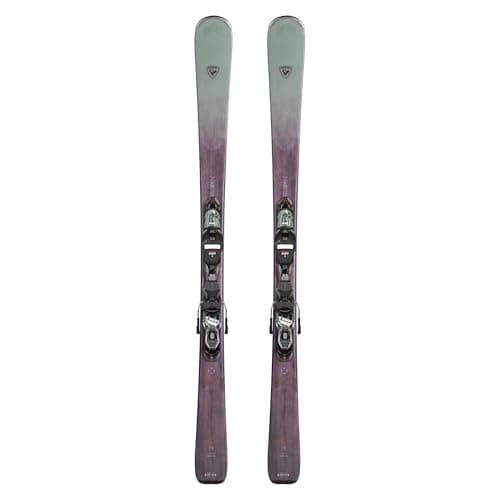
| 1 | Rossignol Experience 78 Carbon skis with Xpress bindings Someone certain they will ski more than about six days a season | $23.20 a dayon snow | 2.3/10 | $579.95 - View on Amazon |
| 2 | K2 Disruption 75 Women's Skis A beginner who wants a women's-specific construction | $18.00 a dayon snow | 1.4/10 | $389.99 - View on Amazon |
| 3 | Rossignol Experience 76 skis with Xpress 10 bindings A smaller adult or a tall teenager on groomed runs | $18.00 a dayon snow | 2.3/10 | $479.95 - View on Amazon |
Prices last verified October 19, 2026. Prices move constantly; the figure on Amazon at the moment you click is the real one.
The honest test
“Intermediate” is a marketing category, not a measurable thing, so the useful question is not what level you are - it is whether the ski under you is now the limiting factor. Three symptoms say it is:
- Chatter on firm snow at speed. The ski vibrates and loses contact through the second half of a turn. This is a stiffness and damping limit, and it is the clearest signal.
- Washing out at the end of a turn. You commit to an edge and the tail lets go. A soft beginner tail is designed to do this - it is forgiving, and forgiveness becomes vagueness once you can actually drive a ski.
- It stops before you do. You have a speed or an angle where you know more is available and the ski is not delivering it.
What is not on that list: how many seasons you have skied, which runs you ski, or whether the ski was sold as a beginner model. Plenty of people ski a beginner ski happily for a decade, and there is nothing wrong with that.
What actually changes in an intermediate ski
| Specification | Beginner | Intermediate | What you feel |
|---|---|---|---|
| Waist width | About 70-76 mm | About 75-85 mm | More float off-piste, slightly slower edge-to-edge |
| Construction | Softer, often full cap | Stiffer, often with metal or carbon | Holds an edge at speed instead of chattering |
| Length run | Fewer lengths | More lengths published | A better chance of the right size for you |
| Tail shape | Softer, releases easily | Firmer, holds through the turn | The turn finishes where you aimed it |
| Bindings | Often system bindings included | Often included, higher DIN range | Matters if your setting is near the top of the range |
The waist width row is the one worth understanding. The all-mountain page explains what the number means: it is the ski’s width at its narrowest point, and it trades quickness on hard snow against float in soft. Going wider is not automatically an upgrade - if you ski groomed runs on the East Coast, a narrower ski is genuinely the better tool.
The picks
Rossignol Experience 78 Carbon with Xpress bindings
The pick. A published 78 mm waist puts it squarely in the intermediate all-mountain band, and the carbon in the construction is what addresses the chatter complaint that brought you to this page.
The specification that matters most for fit is the length run: Rossignol publishes six lengths - 138, 146, 154, 162, 170 and 178 cm. Six published lengths is the widest run in this ledger and it meaningfully improves the chance of getting the right size rather than the nearest one. The size chart has the method.
Bindings are included, which removes a compatibility decision and a mounting cost.
Honest cons: it is the most expensive ski in this ledger, Rossignol publishes no warranty term on the product page, and at 78 mm it is a groomed-and-mixed ski rather than a powder ski - if you are chasing deep snow, this is not the width for it.
K2 Disruption 75
The women’s-construction answer, with a published 75 mm waist and four lengths: 142, 149, 156 and 163 cm. Narrower than the Rossignol, which makes it quicker edge-to-edge on firm groomed snow and less capable in soft.
The women’s skis page covers what that construction genuinely changes and what is only a topsheet.
Honest cons: four published lengths against the Rossignol’s six, the top length of 163 cm is short for a taller skier, and no published warranty term.
Rossignol Experience 76
Marked as the skip above, and the reason is worth reading before you spend anything.
What to upgrade before the skis
In order of how much they change per dollar:
- Boots. Comfortably first, and it is not close. A boot that fits and is the right stiffness transforms how a ski responds, and a bad boot ruins a good ski. The boot buying page.
- A tune. Sharp edges and a waxed base fix two of the three symptoms at the top of this page. A home kit pays for itself at a certain number of tunes.
- A lesson. The single highest-return purchase in skiing, and the honest answer for most people who think their skis are holding them back. The arithmetic is published.
- Footbeds. Cheap, and they change how the boot transmits input. The footbeds page.
- Then skis. And consider demoing before buying - it is the only way to feel the difference, and demo fees often come off the purchase price.
Who should buy what
- Chattering on firm snow, mixed terrain. The Experience 78 Carbon.
- Mostly groomed runs, wanting quickness. The Disruption 75, or stay narrow.
- Skiing under about eight days a season. Probably nothing. Rent or demo, and put the money into lessons. The cost page runs it.
- Already on an Experience 76 or similar. Read the skip note. The published gap is narrow.
- Buying used. This is a good category for it - intermediate skis get sold on by people upgrading, often barely used. What is safe to buy used.
Every pick, with the working
Each entry shows the published inputs, the axis scores they produce, and what you give up. The order is the computed order, not a commercial one, and the arithmetic is open underneath each score.
1 · Someone certain they will ski more than about six days a season
Rossignol Experience 78 Carbon skis with Xpress bindings
Rossignol lists this ski's skill level as beginner and sells it with bindings mounted, which removes the one step that makes buying skis online go wrong. Six lengths from 138 to 178 cm covers a family from a tall child to a tall adult.
- Published price
- $579.95
- Cost per day on snow
- $23.20 a day
- Amortized over
- 5 seasons (25 days)
- Certified to
- Not published
- Published sizes
- 138, 146, 154, 162, 170 and 178 cm
- Warranty
- No term published on the product page
What it gets right
- Published by Rossignol at beginner skill level, not inferred from a spec sheet
- Sold with Xpress bindings included, so there is one purchase rather than three
- Six published lengths spanning 138-178 cm
What you give up
- $579.95 is $4.64 a day even on a generous five-season, five-days-a-year horizon
- The binding still has to have its release setting adjusted by a shop for the skier's height, weight and boot sole length, which is not something to skip
- Boots are not included, and boots matter more than skis for a beginner
The working behind the 2.3
- Cost per day on snow: 0.0
- $579.95 over 5 seasons at 5 days each = 25 days = $23.20 a day
- Published protection: not scored
- Skis carry no protective standard of their own. The binding release setting does, and a shop sets it.
- Size availability: 8.5
- 6 published sizes (8.5 of 8.5); no continuous adjuster published (+0); range: 138, 146, 154, 162, 170 and 178 cm
- Warranty and support: 0.0
- no published term (0 of 6); no published crash replacement (+0); no published repair route (+0)
Axes with unpublished inputs are dropped and the remaining weights re-normalized, so a product is not punished for a manufacturer’s silence. Specifications compiled September 3, 2026 from Rossignol published specifications.
2 · A beginner who wants a women's-specific construction
K2 Disruption 75 Women's Skis
A women's-specific beginner ski at the same $449.95 as the Rossignol 76, in four lengths from 142 cm. Fewer lengths than the Rossignol, which is the one real difference between them on published figures.
- Published price
- $449.95
- Cost per day on snow
- $18.00 a day
- Amortized over
- 5 seasons (25 days)
- Certified to
- Not published
- Published sizes
- 142, 149, 156 and 163 cm
- Warranty
- No term published on the product page
What it gets right
- $449.95 published, matching the comparable Rossignol
- Women's-specific construction and mounting position published by K2
What you give up
- Four published lengths against the Rossignol's six, so the fit band is coarser
- Nothing shorter than 142 cm, which rules out smaller adults
The working behind the 1.4
- Cost per day on snow: 0.0
- $449.95 over 5 seasons at 5 days each = 25 days = $18.00 a day
- Published protection: not scored
- Skis carry no protective standard of their own. The binding release setting does, and a shop sets it.
- Size availability: 5.1
- 4 published sizes (5.1 of 8.5); no continuous adjuster published (+0); range: 142, 149, 156 and 163 cm
- Warranty and support: 0.0
- no published term (0 of 6); no published crash replacement (+0); no published repair route (+0)
Axes with unpublished inputs are dropped and the remaining weights re-normalized, so a product is not punished for a manufacturer’s silence. Specifications compiled September 3, 2026 from K2 published specifications.
3 · A smaller adult or a tall teenager on groomed runs
Rossignol Experience 76 skis with Xpress 10 bindings
Skip this one. It is the beginner-to-intermediate ski this site already recommends elsewhere, and it is here as the skip for a specific reason: for a lot of people reading an intermediate ski page, the honest answer is that they already own something like this and do not need to replace it. The published gap between it and the 78 Carbon is narrow. If this is your ski, spend the money on a lesson and a tune instead.
The narrower, cheaper sibling of the 78, at $449.95 with bindings, and the shortest published length here at 136 cm. Six lengths starting that short is what makes it work for a smaller adult or a tall teenager.
- Published price
- $449.95
- Cost per day on snow
- $18.00 a day
- Amortized over
- 5 seasons (25 days)
- Certified to
- Not published
- Published sizes
- 136, 144, 152, 160, 168 and 176 cm
- Warranty
- No term published on the product page
What it gets right
- $449.95 with Xpress 10 bindings included, $130 under the 78
- Six lengths from 136 cm, the shortest adult ski here
- A 76 mm waist is narrow, which makes edge-to-edge turns quicker to learn
What you give up
- A narrow ski is less forgiving in soft snow than a wider one
- The binding release setting still needs a shop, as with any ski
The working behind the 2.3
- Cost per day on snow: 0.0
- $449.95 over 5 seasons at 5 days each = 25 days = $18.00 a day
- Published protection: not scored
- Skis carry no protective standard of their own. The binding release setting does, and a shop sets it.
- Size availability: 8.5
- 6 published sizes (8.5 of 8.5); no continuous adjuster published (+0); range: 136, 144, 152, 160, 168 and 176 cm
- Warranty and support: 0.0
- no published term (0 of 6); no published crash replacement (+0); no published repair route (+0)
Axes with unpublished inputs are dropped and the remaining weights re-normalized, so a product is not punished for a manufacturer’s silence. Specifications compiled September 3, 2026 from Rossignol published specifications.
Prices last verified October 19, 2026. Prices move constantly; the figure on Amazon at the moment you click is the real one.
Questions people actually ask
How do I know if I need intermediate skis?
Three symptoms, none of them about how long you have skied: the ski chatters at speed on firm snow, the tail washes out at the end of a turn, and you can feel there is more available that the ski will not deliver. If none of those is happening, your skis are not holding you back regardless of what level they were sold as.
What waist width is best for an intermediate skier?
Roughly 75 to 85 mm for all-mountain use. Narrower is quicker edge-to-edge on hard groomed snow, wider floats better in soft. Going wider is not automatically an upgrade - if you ski firm groomed runs, a narrower ski like a 75 mm is genuinely the better tool for you.
Should I upgrade my skis or my boots first?
Boots, and it is not close. Everything you ask a ski to do travels through the boot, so a boot that is too soft or too large absorbs the input before it reaches the ski - which feels exactly like a ski that will not respond. A good boot transforms an average ski; a good ski cannot rescue a bad boot.
Why do my skis chatter at speed?
Either the ski is too soft and underdamped for the speed, or the edges are dull and the base is dry. Check the cheap cause first - have them tuned, because a burred edge washes out and a dry base chatters in a way that is easily mistaken for the ski being outgrown. If a fresh tune does not fix it, the construction is the limit.
Is it worth demoing skis before buying?
Yes, and it is the only reliable way to feel a difference that a spec sheet describes poorly. Demo fees frequently come off the purchase price at the same shop, which makes it close to free if you buy. It is also the fastest way to discover that the ski you were about to buy is not actually what you want.