Cross-country ski packages, and the compatibility trap they solve
Buying Nordic gear piece by piece means matching a boot to a binding standard to a ski. A package removes that problem, which is most of why packages exist.
By Sawyer V. · Published
We have not tested this gear. Everything below is compiled from published specifications and published safety standards, and the arithmetic is public so you can check it. This page carries affiliate links: if you buy through one we earn a commission at no extra cost to you, and it does not change the order of the picks. Full disclosure.
The short answer
A complete package is skis, bindings, boots and poles already matched, which removes the binding-standard problem that stops most people buying Nordic gear at all. Cross-country skis are sized by dressed body weight, not height - the Whitewoods package publishes 197 cm for 151-180 lb and 207 cm for 181 lb and up. Check the binding is a common standard like NNN, and buy a waxless base.
| # | Pick | Best for | Score | Price |
|---|---|---|---|---|
| 1 | MSR Evo Trail Snowshoes Packed trails and rolling terrain, one pair shared between adults | $6.80 a dayon snow | 3.9/10 | $167.00 - View on Amazon |
| 2 | Tubbs Wayfinder Snowshoes A heavier adult, or an adult carrying a child and a bag | $8.20 a dayon snow | 3.2/10 | $173.70 - View on Amazon |
| 3 | Whitewoods Adult NNN Cross-Country Ski Package A first cross-country setup, bought once, without a compatibility puzzle | Not publishedon snow | 0.9/10 | $379.99 - View on Amazon |
Prices last verified October 19, 2026. Prices move constantly; the figure on Amazon at the moment you click is the real one.
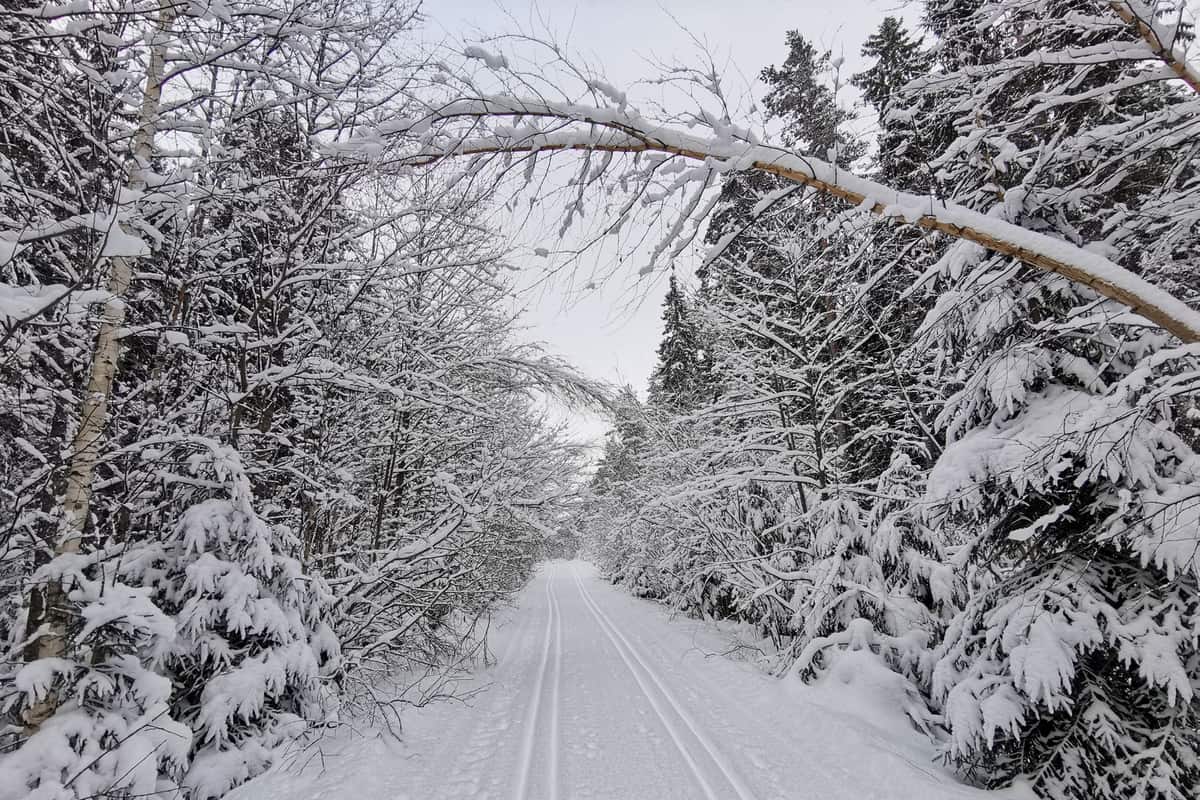
The problem a package solves
In downhill skiing, any boot fits any binding - the sole shape is standardized and a shop adjusts the binding to the boot. Cross-country is not like that. The boot attaches to the ski at the toe only, through a small bar that clips into a plate, and there are competing systems for that plate that are not interchangeable.
That means buying separates requires you to get boot, binding and ski all on the same standard, and getting it wrong means owning a boot that physically cannot attach to the skis you bought. It is the single biggest reason people who want to try cross-country do not.
A package removes the decision entirely. The four pieces arrive matched, and the only thing you choose is the size.
Why weight, not height
This is the specification that surprises people coming from downhill, where length is a percentage of your height.
A classic cross-country ski has camber built into it - an arch that lifts the middle of the base off the snow when you are gliding on both skis. When you push down on one ski, that arch flattens and the grip zone under your foot contacts the snow. That contact is what stops you sliding backward as you stride.
The thing that flattens the camber is your weight. Too light for the ski and the grip zone never touches, so you slide backward on every stride. Too heavy and the grip zone is permanently in contact, so you never glide. Height has almost nothing to do with it.
| Dressed weight | Published ski length |
|---|---|
| 151-180 lb | 197 cm |
| 181 lb and up | 207 cm |
“Dressed” means with clothing, boots and a pack - which on a winter outing is not a trivial addition. Weigh yourself as you would go out, not in the morning.
The honest gap in this package is visible in that table: two published lengths, so a lighter adult is not catered for at all. If you are under about 150 lb dressed, you need a different package or separates.
Waxless is the right answer
A classic ski needs grip under the foot and glide everywhere else, and there are two ways to get the grip.
- Waxless. A machined pattern in the base - fish scales, or a skin insert - that grips going backward and releases going forward. Nothing to apply, works across a range of temperatures, slightly slower. This is what the Whitewoods package publishes, and it is correct for a recreational skier.
- Grip wax. A sticky wax applied to the grip zone, matched to the snow temperature. Faster and better when it is right, and genuinely difficult to get right - it is a skill, and wet snow near freezing defeats most people.
If you are reading this page, buy waxless. Grip wax is for people who have already decided they love the sport. Glide wax is a separate thing and still applies - a waxless ski still wants glide wax on the tips and tails.
What is actually in the box
The Whitewoods adult package publishes four components:
- CrossTour skis with a laminated wood core, cap construction, an ABS tail and a machined negative waxless base.
- Rottefella NNN Touring bindings, pre-mounted - which is the part that removes the compatibility problem.
- Whitewoods 302 NNN boots, matched to the binding standard.
- Cross Trail poles with a 15 mm tapered shaft.
Honest cons on the package as a whole: only two published lengths, a touring-grade laminated wood core rather than a performance construction, no published warranty term, and boot sizing is published per package - so the boot size and the ski length are not independently chosen, which is a real constraint if your feet and your weight do not line up conventionally.
Package or separates
| Situation | Buy | Why |
|---|---|---|
| First cross-country setup | Package | Removes the compatibility decision entirely |
| Under about 150 lb dressed | Separates or a different package | The published lengths here do not go low enough |
| Unusual boot size for your weight | Separates | Package boot sizing is tied to the ski length |
| You already own NNN boots | Skis and bindings only | Boots are the piece that fits you personally; keep them |
| Not sure you will like it | Rent for a day first | Nordic centers rent, and it is cheap |
That last row is the one we would push hardest. Cross-country is genuinely harder to start than downhill and the first day tells you a lot. The cross-country page runs the honest comparison with snowshoeing, which is the cheaper and much easier alternative.
The snowshoe comparison, honestly
Two of the products on this page are snowshoes, and they are here because for a lot of families they are the better answer to the same wish.
Snowshoeing requires no technique, no trail grooming, no compatibility decision and no sizing beyond a published load band. Cross-country is faster, covers more ground and is better exercise - and it needs a groomed track or a firm surface, and a day or two before it stops being frustrating.
The snowshoe sizing page uses the same weight-based logic this page does, which is not a coincidence: both sports are about floating a body on soft snow. Poles carry over between them with a basket change.
Who should buy what
- A first Nordic setup, 151 lb dressed and up. The Whitewoods package.
- Lighter than that. Not this package. Rent, or buy separates with a shop’s help.
- Unsure about the sport. Rent at a Nordic center for a day first.
- Wanting winter exercise with no learning curve. Snowshoes. The snowshoe roundup.
- A child. Junior packages exist and the same weight-based logic applies, which for a growing child means renting or leasing rather than buying.
Every pick, with the working
Each entry shows the published inputs, the axis scores they produce, and what you give up. The order is the computed order, not a commercial one, and the arithmetic is open underneath each score.
1 · Packed trails and rolling terrain, one pair shared between adults
MSR Evo Trail Snowshoes
MSR publishes the number that decides whether snowshoes work: a 180 lb load limit, rising to 250 lb with add-on tails. Most brands publish a size chart instead and let you guess.
- Published price
- $169.95
- Cost per day on snow
- $6.80 a day
- Amortized over
- 5 seasons (25 days)
- Certified to
- Not published
- Published sizes
- One size, 22 in, with optional add-on tails
- Weight
- 1640 g
- Warranty
- No term published on the product page
What it gets right
- Published load limits: 180 lb, or 250 lb with tails fitted
- 1.64 kg per pair, light for a steel-traction snowshoe
- Tails are sold separately, so the capacity can be raised later rather than replaced
What you give up
- $169.95 is the most expensive snowshoe here
- One size only, so a heavier adult needs the tails as well
The working behind the 3.9
- Cost per day on snow: 6.1
- $169.95 over 5 seasons at 5 days each = 25 days = $6.80 a day
- Published protection: not scored
- Snowshoes carry no protective standard.
- Size availability: not scored
- Sold in one size, so size availability does not apply.
- Warranty and support: 0.0
- no published term (0 of 6); no published crash replacement (+0); no published repair route (+0)
Axes with unpublished inputs are dropped and the remaining weights re-normalized, so a product is not punished for a manufacturer’s silence. Specifications compiled September 3, 2026 from MSR published specifications.
2 · A heavier adult, or an adult carrying a child and a bag
Tubbs Wayfinder Snowshoes
The only snowshoe here that publishes a load band reaching 300 lb, which matters if you are a larger adult or carrying a small child. It is also the most expensive, and the size bands overlap enough that picking wrong is hard.
- Published price
- $204.95
- Cost per day on snow
- $8.20 a day
- Amortized over
- 5 seasons (25 days)
- Certified to
- Not published
- Published sizes
- 25 in (120-200 lb), 30 in (170-250 lb), 36 in (220-300 lb)
- Weight
- 1530 g
- Warranty
- No term published on the product page
What it gets right
- Three sizes published against explicit load bands from 120 lb to 300 lb
- 3 lb 6 oz per pair in the 30 in size
- Load bands overlap, so a person between two sizes has a real choice rather than a guess
What you give up
- $204.95, the most expensive item in this section
- The smallest size starts at 120 lb, so it does not cover children at all
The working behind the 3.2
- Cost per day on snow: 5.0
- $204.95 over 5 seasons at 5 days each = 25 days = $8.20 a day
- Published protection: not scored
- Snowshoes carry no protective standard.
- Size availability: 3.4
- 3 published sizes (3.4 of 8.5); no continuous adjuster published (+0); range: 25 in (120-200 lb), 30 in (170-250 lb), 36 in (220-300 lb)
- Warranty and support: 0.0
- no published term (0 of 6); no published crash replacement (+0); no published repair route (+0)
Axes with unpublished inputs are dropped and the remaining weights re-normalized, so a product is not punished for a manufacturer’s silence. Specifications compiled September 3, 2026 from Tubbs published specifications.
3 · A first cross-country setup, bought once, without a compatibility puzzle
Whitewoods Adult NNN Cross-Country Ski Package
The only complete cross-country package in this ledger, and the only one that publishes ski length against a dressed rider weight rather than height. Skis, Rottefella NNN Touring bindings, Whitewoods 302 NNN boots and poles arrive together and matched, which removes the compatibility problem that stops most people buying Nordic gear at all.
- Published price
- Not published
- Cost per day on snow
- Not published
- Amortized over
- 5 seasons (25 days)
- Certified to
- Not published
- Published sizes
- 197 cm published for 151-180 lb dressed weight, 207 cm for 181-210+ lb
- Warranty
- No term published on the product page
What it gets right
- Published sizing by dressed rider weight: 197 cm for 151-180 lb, 207 cm for 181 lb and up
- Complete package published: skis, bindings, boots and poles, already matched
- Machined negative waxless base published, so there is no kick wax to learn
- Rottefella NNN Touring bindings published, which is the common standard rather than a proprietary one
What you give up
- Two published lengths only, so lighter adults are not catered for at all
- Laminated wood core with cap construction; this is a touring package, not a performance ski
- No published warranty term
- Boot sizing is published per package, so the boot size and the ski length are not independently chosen
The working behind the 0.9
- Cost per day on snow: not scored
- No manufacturer-published price, so this axis is not scored.
- Published protection: not scored
- Skis carry no protective standard of their own. The binding release setting does, and a shop sets it.
- Size availability: 1.7
- 2 published sizes (1.7 of 8.5); no continuous adjuster published (+0); range: 197 cm published for 151-180 lb dressed weight, 207 cm for 181-210+ lb
- Warranty and support: 0.0
- no published term (0 of 6); no published crash replacement (+0); no published repair route (+0)
Axes with unpublished inputs are dropped and the remaining weights re-normalized, so a product is not punished for a manufacturer’s silence. Specifications compiled September 12, 2026 from Whitewoods published package contents and sizing.
Prices last verified October 19, 2026. Prices move constantly; the figure on Amazon at the moment you click is the real one.
Questions people actually ask
What is included in a cross-country ski package?
Skis, bindings, boots and poles, already matched. The Whitewoods adult package publishes CrossTour skis with a waxless base, Rottefella NNN Touring bindings pre-mounted, Whitewoods 302 NNN boots and Cross Trail poles with a 15 mm tapered shaft. The matching is the point - it removes the binding-standard problem entirely.
How are cross-country skis sized?
By dressed body weight, not height. A classic ski has camber that lifts the grip zone off the snow when you glide, and your weight is what flattens it so the grip zone contacts. Too light and you slide backward; too heavy and you never glide. Whitewoods publishes 197 cm for 151-180 lb and 207 cm for 181 lb and up.
What does NNN mean on cross-country bindings?
It is a boot-and-binding standard. Cross-country boots attach at the toe through a bar that clips into a plate, and competing systems are not interchangeable. NNN is the common recreational standard, so boots and bindings are widely available from several makers - which matters in a few years when the boots wear out and the skis have not.
Should I buy waxless cross-country skis?
Yes, for recreational use. A waxless base has a machined pattern that grips going backward and releases going forward, works across a range of temperatures and needs nothing applied. Grip wax is faster when correct and genuinely difficult to get right - wet snow near freezing defeats most people. A waxless ski still wants glide wax on tips and tails.
Is cross-country skiing or snowshoeing easier to start?
Snowshoeing, by a wide margin. It needs no technique, no groomed track and no compatibility decision - just a snowshoe sized to your total load. Cross-country covers more ground and is better exercise, and it takes a day or two before it stops being frustrating. If you are unsure, rent Nordic gear for a day before buying.