The best ski wax, and the temperature number on the box
A wax chart looks like expertise and is mostly noise for a recreational skier. Two published numbers cover an entire season, and one of them is optional.
By Sawyer V. · Published
We have not tested this gear. Everything below is compiled from published specifications and published safety standards, and the arithmetic is public so you can check it. This page carries affiliate links: if you buy through one we earn a commission at no extra cost to you, and it does not change the order of the picks. Full disclosure.
The short answer
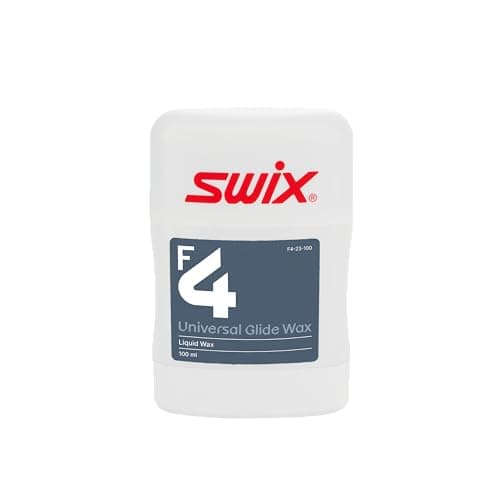
For almost every recreational skier, one universal all-temperature wax ironed on at a published 130C is the whole answer - Swix publishes the F4 block as universal across the range. If you want to be more precise, the same line publishes just two bands: -4C and warmer, and -4C and colder. Everything beyond that is racing. A rub-on with a cork is a valid mid-trip fix, not a replacement for ironing.
| # | Pick | Best for | Score | Price |
|---|---|---|---|---|
| 1 | Swix F4 Glidewax 180 g Block A family iron-on wax that covers every condition without a wax chart | Not publishedon snow | 0.0/10 | $21.88 - View on Amazon |
| 2 | Swix F4 Glidewax Warm 60 g with Cork Spring snow, and a mid-trip top-up with no iron in the room | Not publishedon snow | 0.0/10 | $19.80 - View on Amazon |
| 3 | Swix F4 Glidewax Cold 60 g with Cork Genuinely cold, dry, abrasive midwinter snow | Not publishedon snow | 0.0/10 | $15.95 - View on Amazon |
| 4 | Demon Snow Ready Tune Kit The household that will keep tuning | $7.33 a dayon snow | 3.6/10 | $89.99 - View on Amazon |
Prices last verified October 19, 2026. Prices move constantly; the figure on Amazon at the moment you click is the real one.
Why wax at all, in one paragraph
A ski base is porous plastic. Wax fills those pores, which does two things: it lets the base glide instead of grabbing, and it seals the plastic so it does not dry out and oxidize. The first is a performance benefit you may or may not notice. The second is maintenance, and it is the reason this page exists - an unwaxed base left over a summer goes chalky and white, and that is real damage rather than a slow day.
The waxing method page has the technique; this page is about which wax to put on the iron.
Universal against temperature-specific
Walk into a shop and there is a wall of waxes in colors, each with a narrow temperature band. That wall exists for racers, and for a recreational skier it is a distraction.
| Approach | What you buy | Who it is for |
|---|---|---|
| One universal wax | One block, no chart, covers the season adequately | Almost everybody on this site |
| Two-band split (warm and cold) | Noticeably better glide at the ends of the range | Someone who skis 15+ days and notices |
| Full wax chart, 4-6 bands | Marginal gains measured with a stopwatch | Racers, and people who enjoy the process |
| No wax at all | Nothing, and a base that oxidizes over summer | Nobody, including people who rent |
The second row is where the Swix line is genuinely useful, because it publishes the split as two numbers rather than four colors: -4C and warmer, or -4C and colder. That is a wax chart a person can remember.
The picks
Swix F4 Glidewax, 180 g block
The pick, and the right default for a household. It is published as a universal wax for all temperature ranges, developed for alpine skiing, and it works on snowboards equally - which matters in a mixed family where one box has to cover everything.
The published detail that most improves results is the iron temperature: 130C. Too cool and the wax sits on top instead of penetrating; too hot and you can damage the base permanently. Having a number rather than a guess is the difference between waxing and melting plastic onto a ski.
A 180 g block covers a family fleet for a season or more, and Swix publishes a 900 g block for anyone waxing a lot.
Honest cons: Swix publishes no temperature band for the universal block itself, only for the cold and warm variants - so the "all temperatures" claim is not backed by a stated range. It needs an iron, a scraper and a brush; the wax alone is not a tune. And there is no fluorocarbon statement on the block’s own page.
Swix F4 Glidewax Warm, 60 g with cork
The softer half of the published pair, stated for -4C and warmer, with the cork in the box. This is the one that fixes a spring afternoon where the skis suddenly stop running and everybody assumes they are tired.
Because it is a rub-on, it goes on in a parking lot in two minutes with no equipment. Honest cons: a rub-on lasts a fraction as long as an ironed-in wax, and you need the cold version too if you want the season covered on published numbers.
Swix F4 Glidewax Cold, 60 g with cork
The harder half, published for -4C and colder. Cold snow is abrasive in a way warm snow is not, and a wax too soft for it wears through in a morning - which is exactly the situation where people conclude their skis are slow.
Honest cons: wrong wax above its published band and it will feel slow there. Rub-on durability means it is a top-up rather than a tune.
Rub-on against ironed-in
Both have a place and they are not substitutes.
- Ironed-in wax penetrates the base and lasts several days of skiing. It is the real job, it needs an iron and a scraper, and it takes about twenty minutes per pair.
- Rub-on with a cork sits on the surface and lasts a few runs to a day. It is a mid-trip fix, a rescue for the day you discover the skis are dry, and a genuinely good thing to have in a boot bag.
- Storage wax is the third case: a thick coat of any wax, ironed on and left unscraped until autumn. The end-of-season page covers why this is the most important wax of the year.
The honest sequence for most families: iron a universal wax on at the start of the season, carry a rub-on for the trip, and iron a thick storage coat on in April.
How often, actually
There is no schedule that fits everybody, so use the ski as the indicator. Look at the base in good light. If it is uniformly dark and slightly slick, it is fine. If there are chalky white patches - usually along the edges first - it is dry and it wants wax.
As a working rule, every four to six days of skiing for a recreational skier, plus once at the start of the season and once before storage. Skiing on manufactured snow or in cold abrasive conditions shortens that interval considerably. The mid-season checkup covers the rest.
Who should buy what
- A household with an iron and a bench. The 180 g universal block. One purchase, one season.
- Anyone traveling to ski. A rub-on with a cork in the boot bag, whichever band matches the forecast.
- Someone starting from zero. A tune kit, which bundles the scraper and brush you also need - and read the skip note above about the wax inside it.
- Anyone renting skis. None of it. The shop waxes them. That is part of what the rental price includes.
- Someone with damaged bases. Wax is not the fix. The repair page is.
Every pick, with the working
Each entry shows the published inputs, the axis scores they produce, and what you give up. The order is the computed order, not a commercial one, and the arithmetic is open underneath each score.
1 · A family iron-on wax that covers every condition without a wax chart
Swix F4 Glidewax 180 g Block
The default answer for a household that waxes its own skis: a published all-temperature universal glide wax, developed for alpine skiing, ironed on at a published 130C then scraped and brushed. One 180 g block covers a family's skis for a season or more.
- Published price
- Not published
- Cost per day on snow
- Not published
- Amortized over
- 3 seasons (15 days)
- Certified to
- Not published
- Published sizes
- 180 g block; a 900 g block is also published
- Weight
- 180 g
- Warranty
- Not applicable; consumable
What it gets right
- Published as a universal wax for all temperature ranges, so there is one block rather than a wax box
- Published iron temperature of 130C, which is the figure people most often get wrong
- 180 g and 900 g sizes both published, so a household can buy the size that matches its fleet
- Suitable for skis and snowboards alike, which matters in a mixed family
What you give up
- Swix publishes no temperature band for the universal block, only for the cold and warm variants
- Needs an iron, a scraper and a brush; the wax alone is not a tune
- No published fluorocarbon statement on the block's own page
The working behind the 0.0
- Cost per day on snow: not scored
- No manufacturer-published price, so this axis is not scored.
- Published protection: not scored
- This category carries no protective standard.
- Size availability: not scored
- Sold in one size, so size availability does not apply.
- Warranty and support: 0.0
- no published term (0 of 6); no published crash replacement (+0); no published repair route (+0)
Axes with unpublished inputs are dropped and the remaining weights re-normalized, so a product is not punished for a manufacturer’s silence. Specifications compiled September 12, 2026 from Swix published F4 Glidewax specifications.
2 · Spring snow, and a mid-trip top-up with no iron in the room
Swix F4 Glidewax Warm 60 g with Cork
The softer half of the published pair: a stated temperature range of minus 4C and warmer, with the cork in the box so it goes on in a parking lot without an iron. This is the one that fixes a spring afternoon where the skis suddenly stop running.
- Published price
- Not published
- Cost per day on snow
- Not published
- Amortized over
- 3 seasons (15 days)
- Certified to
- Not published
- Published sizes
- 60 g with a cork applicator
- Weight
- 60 g
- Warranty
- Not applicable; consumable
What it gets right
- Published temperature range of minus 4C and warmer, which is a real number rather than a color
- Cork applicator included, so it is a rub-on fix that takes two minutes
- 60 g is enough for many applications and fits in a jacket pocket
- Pairs with the cold version to cover the season on published numbers
What you give up
- A rub-on lasts a fraction as long as an ironed-in wax
- Two products needed to cover the range that one universal block covers approximately
- No published warranty, because it is a consumable
The working behind the 0.0
- Cost per day on snow: not scored
- No manufacturer-published price, so this axis is not scored.
- Published protection: not scored
- This category carries no protective standard.
- Size availability: not scored
- Sold in one size, so size availability does not apply.
- Warranty and support: 0.0
- no published term (0 of 6); no published crash replacement (+0); no published repair route (+0)
Axes with unpublished inputs are dropped and the remaining weights re-normalized, so a product is not punished for a manufacturer’s silence. Specifications compiled September 12, 2026 from Swix published F4 Glidewax Warm specifications.
3 · Genuinely cold, dry, abrasive midwinter snow
Swix F4 Glidewax Cold 60 g with Cork
The harder half of the pair, published for minus 4C and colder. Cold snow is abrasive in a way warm snow is not, and a wax that is too soft for it wears off in a morning, which is the reason the two-product split exists at all.
- Published price
- Not published
- Cost per day on snow
- Not published
- Amortized over
- 3 seasons (15 days)
- Certified to
- Not published
- Published sizes
- 60 g with a cork applicator
- Weight
- 60 g
- Warranty
- Not applicable; consumable
What it gets right
- Published temperature range of minus 4C and colder
- Cork included, so it is a rub-on that works on a cold morning without equipment
- Harder formulation for abrasive cold snow, where a universal wax wears through fastest
- Small enough to live in a boot bag all season
What you give up
- Wrong wax for anything above its published band, and it will feel slow there
- Rub-on durability, so it is a top-up rather than a tune
- Needs the warm version too if you want the season covered on published numbers
The working behind the 0.0
- Cost per day on snow: not scored
- No manufacturer-published price, so this axis is not scored.
- Published protection: not scored
- This category carries no protective standard.
- Size availability: not scored
- Sold in one size, so size availability does not apply.
- Warranty and support: 0.0
- no published term (0 of 6); no published crash replacement (+0); no published repair route (+0)
Axes with unpublished inputs are dropped and the remaining weights re-normalized, so a product is not punished for a manufacturer’s silence. Specifications compiled September 12, 2026 from Swix published F4 Glidewax Cold specifications.
4 · The household that will keep tuning
Demon Snow Ready Tune Kit
Skip this one. It is on this page because a kit is how most people buy their first wax, and it is the skip because it is the wrong first purchase for someone who only wants to wax. A kit bundles edge tools, a scraper, brushes and wax, and the wax in it is a small quantity of a generic block with no published temperature range. Buy the kit if you intend to tune edges as well. If you only want to wax, buy the Swix block and a scraper.
Ten dollars more than the Basic, and the published contents differ in the two places that matter over a decade: a full adjustable-temperature iron published with a lifetime warranty rather than a mini, and 1.06 lb of universal wax rather than a bar. If you expect to tune for more than one season, this is the one that stays useful.
- Published price
- $109.99
- Cost per day on snow
- $7.33 a day
- Amortized over
- 3 seasons (15 days)
- Certified to
- Not published
- Published sizes
- One size
- Warranty
- No kit term published; the adjustable-temp iron is published with a lifetime warranty
What it gets right
- Adjustable-temp iron published with a lifetime warranty
- 1.06 lb of published wax, several seasons of a family's waxing
- Both a nylon and a wire brush published, so base structure gets cleaned properly
What you give up
- $109.99 published, and still real money against a shop wax
- No published warranty on the kit as a whole, only on the iron
- More tools than a household waxing twice a year will ever open
The working behind the 3.6
- Cost per day on snow: 5.7
- $109.99 over 3 seasons at 5 days each = 15 days = $7.33 a day
- Published protection: not scored
- This category carries no protective standard.
- Size availability: not scored
- Sold in one size, so size availability does not apply.
- Warranty and support: 0.0
- no published term (0 of 6); no published crash replacement (+0); no published repair route (+0)
Axes with unpublished inputs are dropped and the remaining weights re-normalized, so a product is not punished for a manufacturer’s silence. Specifications compiled September 4, 2026 from Demon United published contents list.
Prices last verified October 19, 2026. Prices move constantly; the figure on Amazon at the moment you click is the real one.
Questions people actually ask
What is the best ski wax for beginners?
A universal all-temperature glide wax, ironed on. Swix publishes the F4 block as universal across the range and as developed for alpine skiing, and one 180 g block covers a family fleet for a season. The wax chart on a shop wall is built for racers; a recreational skier gets essentially all the benefit from one block.
What temperature should I set my wax iron to?
Swix publishes 130C for F4 Glidewax. That number matters more than the wax you choose - too cool and the wax sits on the surface without penetrating, too hot and you can damage the base permanently. Use a waxing iron with a stated temperature, not a clothes iron.
Do I need different wax for cold and warm snow?
Only if you ski a lot and notice. Cold crystals stay sharp and abrade a soft wax off in a morning; warm snow is wet and rounded and creates suction a hard wax handles badly. Swix publishes the split as two bands rather than a color chart: -4C and warmer, and -4C and colder. For most people, universal is enough.
Is rub-on ski wax any good?
As a top-up, yes. A rub-on with a cork goes on in two minutes with no equipment and lasts a few runs to a day, which makes it the right thing to carry in a boot bag. It is not a substitute for ironed-in wax, which penetrates the base and lasts several days. Carry one, iron the other.
How often should I wax my skis?
Every four to six days of skiing for a recreational skier, plus once at the start of the season and a thick unscraped storage coat before summer. Use the base as the indicator rather than a calendar: uniformly dark and slightly slick is fine, chalky white patches along the edges means it is dry.