Ski bags, and the empty weight nobody checks before buying
A bag that holds two pairs of skis and weighs sixteen pounds empty has spent a third of your airline allowance before you pack a sock. Four compared on what the makers actually publish.
By Sawyer V. · Published
We have not tested this gear. Everything below is compiled from published specifications and published safety standards, and the arithmetic is public so you can check it. This page carries affiliate links: if you buy through one we earn a commission at no extra cost to you, and it does not change the order of the picks. Full disclosure.
The short answer
Check two published numbers before anything else: the bag’s length options and its empty weight. Length decides whether your skis fit at all - these publish 157, 175 and 190 cm, so a 184 cm ski rules out most of the market. Empty weight decides what you can pack: the soft bags here publish 2.50 to 6.49 lb, the hard case publishes 15.6 lb, and an airline allowance is usually 50 lb either way.
| # | Pick | Best for | Score | Price |
|---|---|---|---|---|
| 1 | Dakine Fall Line Ski Roller Bag 190cm A family checking two pairs of skis and a set of boots as one item | $14.80 a dayon snow | 1.6/10 | $159.95 - View on Amazon |
| 2 | Dakine Low Roller Snowboard Bag 157cm Flying with a snowboard without taking the bindings off | $14.40 a dayon snow | 2.2/10 | $135.80 - View on Amazon |
| 3 | Sportube Series 3 Hard Case Anyone who flies with skis often enough to have already had a pair damaged | $18.66 a dayon snow | 1.5/10 | $279.95 - View on Amazon |
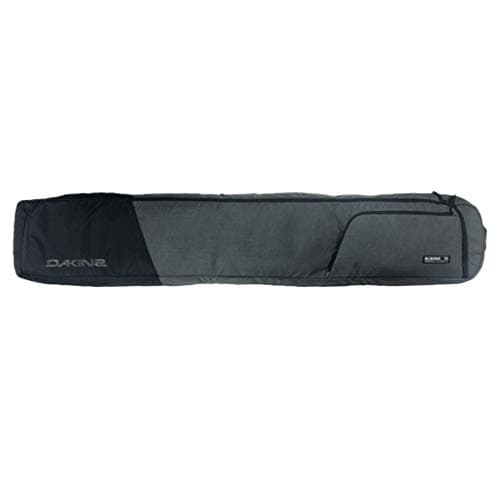
| 4 | Dakine Ski Sleeve 190cm Keeping grit, edges and wax off a car interior on the drive up | $4.80 a dayon snow | 5.1/10 | $70.80 - View on Amazon |
Prices last verified October 19, 2026. Prices move constantly; the figure on Amazon at the moment you click is the real one.
First: do you need one?
Most people buying a ski bag are solving one of two completely different problems, and the answer changes entirely depending on which.
- Skis travel inside the car. What you need is a sleeve - something that keeps edges off the upholstery and wax off a child. No padding required, no wheels, no capacity for boots. The cheapest thing on this page is the right thing.
- Skis get checked onto a plane. Now the bag is the only thing between your skis and a conveyor system that will drop them. Padding, capacity and weight all matter, and a sleeve is not adequate.
There is also a third answer that this site keeps recommending and will again: for a single trip a year, renting at the resort is often cheaper than flying with your own skis once oversize fees are counted, and it is certainly less work. What rental and lease programs actually cost has the arithmetic. Buy a travel bag when you have already decided the skis are coming with you.
If you have not settled which type of bag you want, the boot bags and ski bags guide walks through sleeves, padded bags, wheeled bags and hard cases without picking products. This page is the product half of that question.
The four specifications worth comparing
Ski bags are marketed on almost nothing measurable - “durable,” “travel-ready,” “burly.” Four figures survive that, and every bag here is ranked on them.
- 1. Published length options. The single spec that can rule a bag out completely. A bag published at 175 cm does not hold a 180 cm ski, and no amount of forcing changes that. Check your skis first, then shop.
- 2. Padding, published as such. “Padded” and “360-degree padded and tarp lined” are different claims. The second is a published construction; the first is a word. A bag with no published padding is a sleeve whatever it is called.
- 3. Published capacity. Makers state this in pairs and items - “2 pairs of skis, 1 pair of boots, poles and outerwear” - and it is worth reading literally. A bag rated for one pair will physically close on two and will not survive the season.
- 4. Empty weight. The one nobody checks, and the one that costs money. Every pound of bag is a pound of gear you cannot pack before an airline charges you.
Warranty is the tiebreaker. Dakine publishes a ten-year limited warranty across its bags; Sportube publishes five years on its hard cases. Both are real terms you can hold them to, and both are unusual in luggage.
| Bag | Lengths published | Padding | Capacity | Empty weight |
|---|---|---|---|---|
| Dakine Fall Line Ski Roller | 175, 190 cm | 360-degree, tarp lined | 2 pairs skis, boots, poles | 6.49 lb (190 cm) |
| Dakine Low Roller | 157, 165, 175 cm | 360-degree, tarp lined | 2 boards, 1 with bindings | 5.7 lb (157 cm) |
| Sportube Series 3 | Adjustable 42-72 in | HDPE hard shell | 3 pairs skis, or 2 boards | 15.6 lb |
| Dakine Ski Sleeve | 175, 190 cm | None published | 1 pair skis | 2.50 lb (190 cm) |
We have not tested any of these bags, here or anywhere else on the site. The ranking is arithmetic over the figures in that table plus published price and warranty, and the method is printed in full.
The picks
Dakine Fall Line Ski Roller Bag
Dakine publishes this in 175 and 190 cm, with the 190 measuring 190 x 30 x 20 cm and weighing 6.49 lb empty. Capacity is published as two pairs of skis, one pair of boots, poles and outerwear, and a removable boot bag is published as included - which quietly removes a second purchase from the trip.
The construction figures are the reason it is first here: 360-degree padding with a tarp lining, a lockable YKK #10 main zipper, 9 cm urethane wheels and interior webbing anchor straps to stop skis sliding, all published rather than described. The body is published as 100% recycled polyester.
Honest cons. At 190 cm long it is oversize for essentially every airline, so budget for an oversize fee regardless of weight. It is published in two lengths only, so anyone on skis over 190 cm is out of luck. And it is soft-sided - it protects against handling, not against being at the bottom of a pallet. Dakine’s own published price is the highest of the three soft bags on this page.
Dakine Low Roller Snowboard Bag
The same bag built around a board. Dakine publishes three lengths - 157, 165 and 175 cm - which is a wider size run than the ski version, with the 157 measuring 170 x 30 x 15 cm and weighing 5.7 lb empty.
The published capacity line is the one that matters: two snowboards, one of them with bindings still mounted, plus boots and outerwear. That detail decides whether you spend twenty minutes with a screwdriver before a flight. Padding, tarp lining, the YKK #10 lockable zipper, the 9 cm urethane wheels and the removable boot bag are all published, same as the ski bag.
Honest cons. It is a board bag, and skis longer than the published length do not fit into it no matter how the geometry looks. The 157 cm bag is already 170 cm externally, which is oversize at most airlines - so the smallest bag in the range does not buy you out of the fee. It is soft-sided. And nothing specific is published about the wheels beyond their size, which is a shame, because on any wheeled bag the wheels are what fails first.
Sportube Series 3
The hard case. Sportube publishes an HDPE shell - the same material family as a ski base - that telescopes from 42 to 72 in (107 to 183 cm), 14.5 in wide and 7.875 in deep, with a published capacity of three pairs of alpine skis and poles, or two snowboards and boots.
Two things make it genuinely different. The adjustable length means one case covers a child’s skis this year and an adult’s in five, which no soft bag on this page does. And the published five-year manufacturer’s warranty is the longest term here on the item most likely to be damaged by someone else.
Honest cons, and they are the reason it carries our skip note. Sportube publishes 15.6 lb empty. On a standard 50 lb checked allowance that is roughly a third of your budget spent on the box, and a family that packs boots and outerwear into the same case will go overweight without trying. It is the most expensive pick here at published prices, it is oversize at 72 in extended, and unlike the soft bags it cannot be folded into a closet in April.
Dakine Ski Sleeve
Included because for a large share of readers it is the correct answer and the cheapest one. Dakine publishes it in 175 and 190 cm, at 190 x 20 x 15 cm and 2.50 lb empty for the longer size, in 100% recycled polyester, with a full-length zipper and a removable shoulder strap.
What it is for: skis riding inside a car. It keeps edges off seats, grit off bases and wax off everything, folds flat when it is not in use, and weighs a fifth of what the hard case weighs. If the skis never see an airport, this is the purchase.
Honest cons, and they are categorical rather than minor. Dakine publishes no padding for it, so it is explicitly not a bag to check on a flight. Capacity is one pair, where everything else here publishes two or more. There are no wheels and no boot compartment. And it was sold out on Dakine’s own site when we compiled these specs, so availability moves around more than the others.
Getting the length right
The most common mistake with a ski bag is buying by price and discovering the length afterwards. Measure - or read the number printed on the ski - before you shop.
- Buy the bag longer than the ski, not equal to it. A 190 cm bag takes a 190 cm ski, but tails and tip protectors take space, and a bag packed to its absolute limit puts strain on the zipper.
- Two pairs need the longer bag, not two bags. A published two-pair capacity assumes the pairs sit base to base, which works when both are inside the length rating.
- Mixed family lengths go in the longest bag you own. Children’s skis fit inside an adult bag; the reverse never works. This is the single strongest argument for the adjustable hard case.
- Snowboards are measured differently. A 157 cm board goes in a 157 cm bag, but the bag is 170 cm externally - check the external figure against any storage space you are planning around.
If you are still choosing skis themselves, the ski size chart is where the length comes from in the first place.
Empty weight is the specification that costs money
This is the part almost nobody works out before buying, and it is pure arithmetic.
A standard checked allowance is 50 lb. Ski equipment is usually allowed as one item - a bag of skis and poles plus a boot bag - but the weight limit still applies, and exceeding it is expensive per bag, each way, for every person.
| Bag | Empty weight published | Left for skis, boots and clothing |
|---|---|---|
| Dakine Ski Sleeve 190 cm | 2.50 lb | 47.5 lb |
| Dakine Low Roller 157 cm | 5.7 lb | 44.3 lb |
| Dakine Fall Line Roller 190 cm | 6.49 lb | 43.5 lb |
| Sportube Series 3 | 15.6 lb | 34.4 lb |
For context, a pair of adult skis with bindings is commonly in the region of fifteen pounds and a pair of ski boots around eight, which is why two pairs of skis plus two pairs of boots in a 15.6 lb case is already past the limit before anything soft goes in. Weigh the packed bag at home on a bathroom scale - stand on it holding the bag, then subtract yourself - rather than discovering the number at a check-in desk.
Hard case or soft bag
The real trade, stated plainly, because the marketing on both sides is unhelpful.
| Soft padded bag | Hard case | |
|---|---|---|
| Protection from crushing | Limited | The reason it exists |
| Empty weight | Under 7 lb here | 15.6 lb here |
| Storage at home | Folds flat | Takes a corner of a garage |
| Fits mixed ski lengths | One length per bag | Adjustable here |
| Cost at published prices | Lower | Highest here |
| Doubles as a gear bag at home | Yes | Not really |
The honest summary: a hard case is insurance, and insurance is worth buying when the thing being insured is expensive and the event is likely. If you fly with skis once a year and rent boots, a padded soft bag is proportionate. If you fly several times a season on skis you chose carefully, the case pays for itself the first time it prevents a cracked tail.
Packing so nothing arrives broken
The bag is half of it; how you load it is the other half, and it costs nothing.
- Skis base to base, bindings offset. Two pairs facing each other pack flatter and protect each other’s edges. Offset the bindings so they do not stack into one thick point.
- Strap them together before they go in. Anchor straps are published on both Dakine bags for exactly this; a loose pair inside a bag is a pair sliding into its own tips. Straps and carriers.
- Soft clothing at the tips and tails. Those are what break. Jackets, pants and base layers are free padding you were bringing anyway.
- Nothing sharp travels with skis. A file or an edge tool in a ski bag is a tool cutting the bag from the inside for six hours.
- Dry everything first. A bag zipped shut over damp gear is how a liner starts to smell and how a bag develops mildew in storage. The drying routine.
The travel page covers the airline side - what counts as ski equipment, what gets charged, and what to do when a bag does not arrive.
If you are driving instead
Most of this page assumes a flight, because that is where a bag earns its money. Driving changes the calculation completely: a sleeve is enough inside the car, and if the skis go on the roof the bag is irrelevant because they never go in one.
Worth reading before buying anything: racks against boxes against inside the car, and roof boxes compared on published ski length - that last figure catches families out far more often than bag length does.
What happens to the bag in April
A detail that separates the soft bags from the case. Dakine publishes “packs down for storage” on both rollers, and the sleeve folds to almost nothing. The Sportube does not fold - it is a rigid box for twelve months of the year, and it needs a place to live.
Whichever you own, store it empty and dry with the zipper open. A bag stored closed with a damp jacket inside is a bag you throw away. End-of-season storage, in full.
Who should buy what
- Flying once a year with skis: the Dakine Fall Line Ski Roller Bag, in the length that clears your longest ski. The included boot bag removes a second purchase.
- Flying with a snowboard: the Dakine Low Roller, because it publishes capacity for a board with bindings still on it.
- Flying often, or on skis you care about: the Sportube Series 3, accepting that 15.6 lb of the allowance is gone before you start.
- Driving, skis inside the car: the Dakine Ski Sleeve. Anything more is a bag you are carrying for no reason.
- Not sure you are taking your own skis at all: price a rental at the destination first. What the whole thing costs.
Every pick, with the working
Each entry shows the published inputs, the axis scores they produce, and what you give up. The order is the computed order, not a commercial one, and the arithmetic is open underneath each score.
1 · A family checking two pairs of skis and a set of boots as one item
Dakine Fall Line Ski Roller Bag 190cm
The one to own if you fly with skis. Dakine publishes 360-degree padding, a tarp lining, 9 cm urethane wheels, a lockable YKK #10 zipper and a removable boot bag, with capacity published as two pairs of skis, boots, poles and outerwear - and it still weighs 6.49 lb empty.
- Published price
- $222
- Cost per day on snow
- $14.80 a day
- Amortized over
- 3 seasons (15 days)
- Certified to
- Not published
- Published sizes
- 175 cm and 190 cm published; the 190 cm measures 190 x 30 x 20 cm
- Weight
- 2944 g
- Warranty
- 10-year limited warranty against manufacturing defects, published by Dakine
What it gets right
- Published capacity of 2 pairs of skis, 1 pair of boots, poles and outerwear
- 360-degree padded and tarp-lined, published, which is the difference between a bag and a sleeve
- Over-sized 9 cm urethane wheels and a lockable YKK #10 main zipper, both published
- Removable boot bag published as included, so the boots do not need a second purchase
- 6.49 lb empty at 190 cm, leaving most of a 50 lb airline allowance for gear
What you give up
- At 190 x 30 x 20 cm it is oversize for most airlines, so expect an oversize fee
- Published in two lengths only - if your skis are over 190 cm, nothing here fits them
- Soft-sided, so it protects against handling rather than against being crushed
- Dakine's own published price is the highest of the three soft bags here
The working behind the 1.6
- Cost per day on snow: 0.1
- $222 over 3 seasons at 5 days each = 15 days = $14.80 a day
- Published protection: not scored
- This category carries no protective standard.
- Size availability: 1.7
- 2 published sizes (1.7 of 8.5); no continuous adjuster published (+0); range: 175 cm and 190 cm published; the 190 cm measures 190 x 30 x 20 cm
- Warranty and support: 4.0
- 10 yr (4 of 6); no published crash replacement (+0); no published repair route (+0)
Axes with unpublished inputs are dropped and the remaining weights re-normalized, so a product is not punished for a manufacturer’s silence. Specifications compiled September 28, 2026 from Dakine published specifications.
2 · Flying with a snowboard without taking the bindings off
Dakine Low Roller Snowboard Bag 157cm
The Fall Line built for boards. Same published 360-degree padding, tarp lining, 9 cm urethane wheels and lockable YKK #10 zipper, with capacity published as two snowboards - one of them with bindings still mounted, which is the detail that decides whether you unbolt anything at the airport.
- Published price
- $216
- Cost per day on snow
- $14.40 a day
- Amortized over
- 3 seasons (15 days)
- Certified to
- Not published
- Published sizes
- 157 cm, 165 cm and 175 cm published; the 157 cm measures 170 x 30 x 15 cm
- Weight
- 2586 g
- Warranty
- 10-year limited warranty against manufacturing defects, published by Dakine
What it gets right
- Published capacity of 2 snowboards, 1 with bindings mounted, plus boots and outerwear
- Three published lengths - 157, 165 and 175 cm - so a wider size run than the ski bag
- 360-degree padded and tarp-lined with a removable boot bag, all published
- 5.7 lb empty at 157 cm, published
What you give up
- A board bag, not a ski bag - skis with a published length over the bag do not fit
- The 157 cm bag measures 170 cm externally, which is already oversize at most airlines
- Soft-sided; a hard case is the answer if you are worried about crushing
- No published warranty specific to the wheels, which are the part that fails first
The working behind the 2.2
- Cost per day on snow: 0.4
- $216 over 3 seasons at 5 days each = 15 days = $14.40 a day
- Published protection: not scored
- This category carries no protective standard.
- Size availability: 3.4
- 3 published sizes (3.4 of 8.5); no continuous adjuster published (+0); range: 157 cm, 165 cm and 175 cm published; the 157 cm measures 170 x 30 x 15 cm
- Warranty and support: 4.0
- 10 yr (4 of 6); no published crash replacement (+0); no published repair route (+0)
Axes with unpublished inputs are dropped and the remaining weights re-normalized, so a product is not punished for a manufacturer’s silence. Specifications compiled September 28, 2026 from Dakine published specifications.
3 · Anyone who flies with skis often enough to have already had a pair damaged
Sportube Series 3 Hard Case
Skip this one. Skip it if you fly once a year. Sportube publishes 15.6 lb empty, which is roughly a third of a standard 50 lb checked allowance gone before a single ski goes in, and the published price is the highest here. It earns its place for someone who flies with skis several times a season or has already had a pair damaged - not for the family taking one trip.
A hard HDPE shell that telescopes from a published 42 to 72 in, so one case covers a child's skis and an adult's. Published capacity is three pairs of skis and poles or two snowboards and boots, and it carries a published 5-year warranty - the longest here.
- Published price
- $279.95
- Cost per day on snow
- $18.66 a day
- Amortized over
- 3 seasons (15 days)
- Certified to
- Not published
- Published sizes
- One case, published as adjustable from 42 to 72 in (107 to 183 cm), 14.5 in wide and 7.875 in deep
- Weight
- 7076 g
- Warranty
- 5-year manufacturer's warranty against defects, published by Sportube
What it gets right
- Adjustable from a published 42 to 72 in, so it fits junior skis and adult skis in the same case
- HDPE shell published - the same material family as a ski base, and it does not crush
- Published capacity of 3 pairs of skis and poles, or 2 snowboards and boots
- Published 5-year manufacturer's warranty, the longest term on this page
What you give up
- 15.6 lb empty published, which is more than a third of a 50 lb airline allowance gone before you pack
- Published at 72 in fully extended, comfortably oversize for every airline
- The most expensive pick here at Sportube's published price
- Rigid and bulky to store at home, unlike the soft bags that pack flat
The working behind the 1.5
- Cost per day on snow: 0.0
- $279.95 over 3 seasons at 5 days each = 15 days = $18.66 a day
- Published protection: not scored
- This category carries no protective standard.
- Size availability: not scored
- Sold in one size, so size availability does not apply.
- Warranty and support: 4.0
- 5 yr (4 of 6); no published crash replacement (+0); no published repair route (+0)
Axes with unpublished inputs are dropped and the remaining weights re-normalized, so a product is not punished for a manufacturer’s silence. Specifications compiled September 28, 2026 from Sportube published specifications.
4 · Keeping grit, edges and wax off a car interior on the drive up
Dakine Ski Sleeve 190cm
A sleeve, not a bag: Dakine publishes no padding at all, one pair of skis of capacity and 2.50 lb empty. That makes it the right thing for skis riding inside a car and the wrong thing for a baggage handler, and it is honest about which it is.
- Published price
- $72
- Cost per day on snow
- $4.80 a day
- Amortized over
- 3 seasons (15 days)
- Certified to
- Not published
- Published sizes
- 175 cm and 190 cm published; the 190 cm measures 190 x 20 x 15 cm
- Weight
- 1134 g
- Warranty
- 10-year limited warranty against manufacturing defects, published by Dakine
What it gets right
- 2.50 lb empty published, the lightest thing here by a factor of two
- Published as 100% recycled polyester with a full-length zipper and a removable shoulder strap
- Folds flat for storage, so it does not occupy a closet out of season
- Dakine's published 10-year limited warranty applies to it like the rest of the range
What you give up
- No padding published - this is explicitly not a bag to check on a flight
- One pair of skis only, where every other pick here publishes two or more
- No wheels and no boot compartment
- Sold out on Dakine's own site at the time of writing, so availability moves around
The working behind the 5.1
- Cost per day on snow: 7.6
- $72 over 3 seasons at 5 days each = 15 days = $4.80 a day
- Published protection: not scored
- This category carries no protective standard.
- Size availability: 1.7
- 2 published sizes (1.7 of 8.5); no continuous adjuster published (+0); range: 175 cm and 190 cm published; the 190 cm measures 190 x 20 x 15 cm
- Warranty and support: 4.0
- 10 yr (4 of 6); no published crash replacement (+0); no published repair route (+0)
Axes with unpublished inputs are dropped and the remaining weights re-normalized, so a product is not punished for a manufacturer’s silence. Specifications compiled September 28, 2026 from Dakine published specifications.
Prices last verified October 19, 2026. Prices move constantly; the figure on Amazon at the moment you click is the real one.
Questions people actually ask
What size ski bag do I need?
One published longer than your longest ski, not equal to it - tip protectors and tails take room, and a bag packed to its limit strains the zipper. The bags here publish 175 and 190 cm for skis and 157, 165 and 175 cm for boards, so read the number printed on your ski before shopping.
Do airlines charge extra for ski bags?
Most treat skis and a boot bag as one checked item, but the standard weight limit - usually 50 lb - still applies, and ski bags are long enough to be oversize either way. Check your specific airline before you fly, and weigh the ski bag and boot bag together at home rather than separately.
Is a hard ski case worth it?
Worth it if you fly several times a season or your skis were expensive. The Sportube Series 3 publishes an HDPE shell, an adjustable 42 to 72 in length and a five-year warranty - but also 15.6 lb empty, which is about a third of a 50 lb allowance. For one trip a year, a padded soft bag is proportionate.
Can I put two pairs of skis in one bag?
If the maker publishes a two-pair capacity, yes - both Dakine rollers here do. Pack them base to base with the bindings offset so they do not stack into one thick point, and strap them together before they go in so nothing slides.
Do I need a padded ski bag if I am driving?
No. An unpadded sleeve does the job inside a car: it keeps edges off the upholstery and wax off everything else, and it weighs a fraction of a travel bag. Padding is for baggage handlers.
Should I buy a ski bag or just rent at the resort?
Price both. For one trip a year, renting skis at the destination is frequently cheaper than the bag plus oversize fees, and far less to carry. Buy the bag once you have decided your own skis are coming with you.
Sources
- Dakine published Fall Line Ski Roller Bag dimensions, weight, materials and features
- Dakine published Low Roller Snowboard Bag sizes, dimensions, weight and capacity
- Dakine published Ski Sleeve sizes, dimensions, weight and materials
- Dakine published 10-year limited warranty terms for bags and luggage
- Sportube published Series 3 dimensions, adjustable length, empty weight, capacity and 5-year warranty