Regular or goofy: finding out which foot goes in front
It is the first decision in snowboarding, it takes sixty seconds to settle, and getting it wrong makes an already hard first day considerably harder.
By Sawyer V. · Published
We have not tested this gear. Everything below is compiled from published specifications and published safety standards, and the arithmetic is public so you can check it. This page carries affiliate links: if you buy through one we earn a commission at no extra cost to you, and it does not change the order of the picks. Full disclosure.
The short answer
Regular means the left foot leads; goofy means the right one does. Neither is better and roughly two thirds of people are regular. The quickest test: have someone give you a gentle push from behind while you stand relaxed - the foot you step forward with to catch yourself is your lead foot. If two tests disagree, go with the more comfortable one on the snow; the tests are shortcuts, not the answer.
| # | Pick | Best for | Score | Price |
|---|---|---|---|---|
| 1 | System MTN CRCX snowboard package A household buying more than one board | Not publishedon snow | 4.3/10 | $489.95 - View on Amazon |
Prices last verified October 22, 2026. Prices move constantly; the figure on Amazon at the moment you click is the real one.
What the words mean
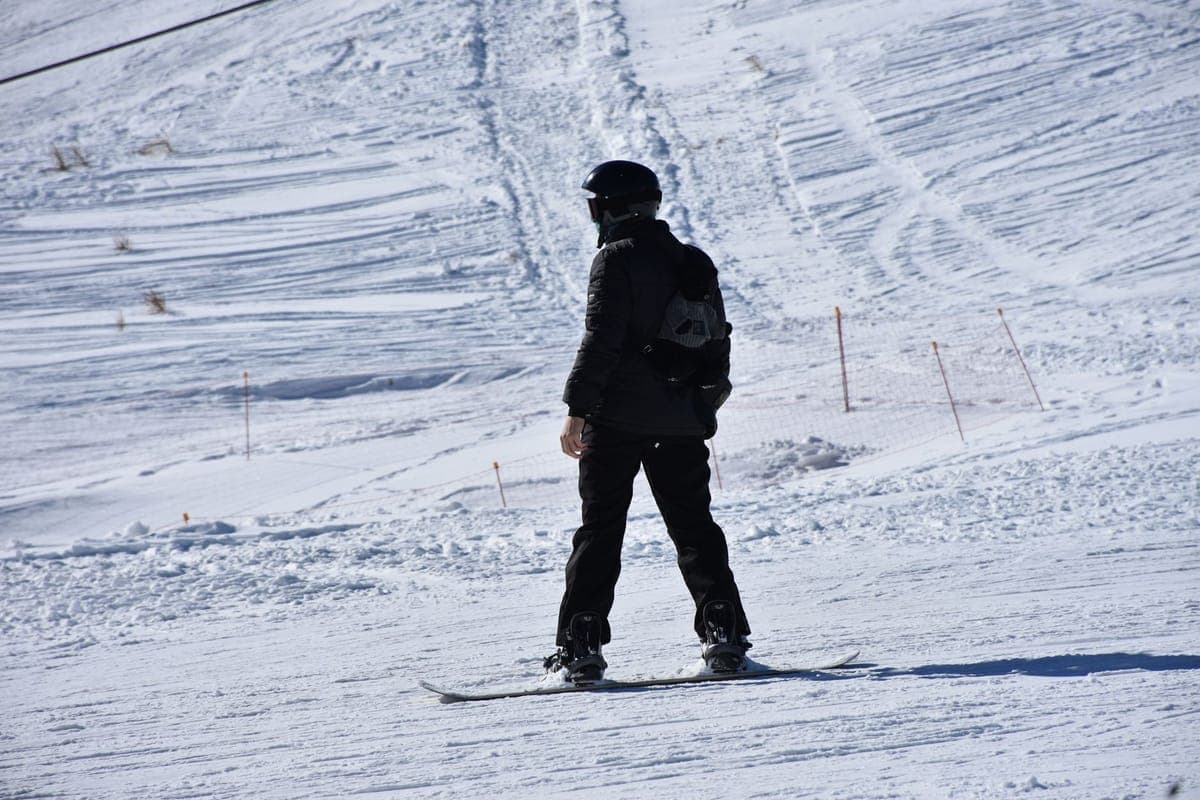
A snowboard is ridden sideways. One foot is at the front of the board and does most of the steering; the other is at the back and does most of the pushing. Which one goes where is a fixed property of how you balance, and it has a name.
- Regular: left foot forward, right foot back. Roughly two thirds of people.
- Goofy: right foot forward, left foot back. Roughly one third.
Neither has any advantage. The name goofy is an accident of skateboarding history rather than a judgment, and every trick, turn and technique works identically either way. What matters is that the board is set up for the one you actually are, because a beginner riding on the wrong lead foot is fighting the board on every single turn and will conclude, reasonably, that snowboarding is impossible.
Four tests, in order of reliability
The push test
The most reliable and the one every instructor uses. Stand relaxed with your feet together and your eyes forward. Have somebody give you a gentle, unexpected push between the shoulder blades. The foot you step forward with to catch yourself is your lead foot: it is the one your body trusts to take weight first.
The word unexpected is doing the work. If you know it is coming, you will think about it, and thinking about it produces the wrong answer. Get someone to do it while you are mid-conversation.
The slide test
Find a smooth floor in socks, take a short run-up, and slide. Whichever foot you put forward to slide on is the same foot you will put forward on a board. This is a good one for children, who will do it repeatedly and cheerfully.
The stairs test
Walk up a set of stairs without thinking about it. The foot you lead with is usually the same as your snowboard lead foot. Less reliable than the first two, and useful as a tiebreak.
The kick test
Which foot would you kick a ball with? That is usually your back foot on a board, because the back foot is the one doing the pushing and the fine control. People get this backward constantly, which is why it is last on the list. If you kick with your right, you are probably regular.
| Test | Result | Reliability |
|---|---|---|
| Push from behind | The foot you catch yourself with is the lead foot | Highest |
| Sliding in socks | The foot you slide with in front is the lead foot | High |
| Walking up stairs | The foot you lead with is usually the lead foot | Medium |
| Kicking a ball | The kicking foot is usually the BACK foot | Low, and often misread |
| Which hand you write with | Tells you nothing reliable | None |
What if the tests disagree
Perfectly normal, and it happens most to people who do other board sports or who are genuinely close to ambidextrous. Three things to do about it.
- Weight the push test. It is the closest analogue to what your body does on a board, which is catching itself in a direction.
- Try both on the snow, on the first morning. Strap in one way, do a few slides on the flat, then swap. One will feel less awkward. That answer beats every test on this page.
- Ask the instructor. Any ski school will check this in the first ten minutes of a lesson, and they have watched several thousand people do it.
If you skateboard, surf or wakeboard, use the same stance you already use. The muscle memory transfers directly and there is no reason to fight it.
Why it decides the equipment
Lead foot is the input to every other setup decision, which is why this page comes before the setup page rather than after it.
- Binding angles are asymmetric. A typical beginner setup is about +15 degrees on the front foot and slightly negative on the back, so the two bindings are set differently and it matters which is which. The stance page has the numbers.
- A leash, where one is used, goes on the front foot. Because that is the one that stays strapped in when you get off a lift.
- Getting off a chairlift is a front-foot skill. You ride with the back foot loose and push with it, which is the whole subject of the lifts page.
- Boards are sometimes sold set up for regular. A rental shop will swap the angles in two minutes if you ask, and will not if you do not.
Testing a child
The slide test in socks on a wooden floor is by far the easiest with a young child, because it is a game rather than an examination. Do it three or four times across an evening and see whether the answer is consistent. The push test also works, gently, but children tend to anticipate it.
One caution: do not lock the answer in too hard. Children change as they grow and an eight-year-old who seemed goofy at six may be more comfortable regular now. The instructor will check it at the start of the lesson, which is another argument for booking one. The kids snowboard page covers the rest of the first-season kit.
A word on riding switch
Riding switch means riding with your non-dominant foot forward on purpose, and it is a skill worth learning eventually rather than something to worry about now. What matters for a beginner is that your board is a shape that allows it by accident, because you will end up backward without meaning to. That is the argument for a twin shape, and it is the reason a strongly directional board is the wrong first purchase.
Get the lead foot right, get the stance set, and everything on this page becomes something you never think about again.
Every pick, with the working
Each entry shows the published inputs, the axis scores they produce, and what you give up. The order is the computed order, not a commercial one, and the arithmetic is open underneath each score.
1 · A household buying more than one board
System MTN CRCX snowboard package
Eight published lengths from 138 to 163 cm is the widest size range in this category, which for a family means one brand can fit a twelve-year-old and a six-foot adult. The camber-rocker-camber profile is aimed squarely at not catching an edge.
- Published price
- Not published
- Cost per day on snow
- Not published
- Amortized over
- 5 seasons (25 days)
- Certified to
- Not published
- Published sizes
- 138 to 163 cm including two wide sizes
- Warranty
- No term published on the product page
System sells the MTN in several package configurations at different published prices, so no single list price applies to the item you will land on.
What it gets right
- Eight published lengths, two of them wide, which is unusually broad
- Camber-rocker-camber profile with the contact points lifted, designed to resist edge catches
- Sold as a complete package with bindings
What you give up
- No single published price: the same board appears in several package configurations
- Boots again separate
The working behind the 4.3
- Cost per day on snow: not scored
- No manufacturer-published price, so this axis is not scored.
- Published protection: not scored
- Snowboards carry no protective standard of their own.
- Size availability: 8.5
- 8 published sizes (8.5 of 8.5); no continuous adjuster published (+0); range: 138 to 163 cm including two wide sizes
- Warranty and support: 0.0
- no published term (0 of 6); no published crash replacement (+0); no published repair route (+0)
Axes with unpublished inputs are dropped and the remaining weights re-normalized, so a product is not punished for a manufacturer’s silence. Specifications compiled September 3, 2026 from System published specifications.
Prices last verified October 22, 2026. Prices move constantly; the figure on Amazon at the moment you click is the real one.
Questions people actually ask
How do I know if I am regular or goofy?
The most reliable test is the push test: stand relaxed and have someone give you an unexpected gentle push from behind. The foot you step forward with to catch yourself is your lead foot. Sliding across a smooth floor in socks is the next best, and it works especially well for children.
Is regular or goofy better?
Neither. Roughly two thirds of people are regular, meaning left foot forward, and the name goofy is an accident of skateboarding history rather than a judgment. Every technique works identically either way. What matters is that the board is set up for the one you actually are.
Does being right handed mean I am regular?
No. Handedness and footedness are related but not the same, and plenty of right-handed people are goofy. Using your writing hand to decide is the most common way people get this wrong. Use the push test instead.
What if the tests give different answers?
That is common, especially for people who do other board sports. Weight the push test most heavily, then try both stances on the flat on your first morning and keep whichever feels less awkward. Any instructor will also check it in the first ten minutes of a lesson.
Should my snowboard stance match my skateboard stance?
Yes. If you already skateboard, surf or wakeboard, use the same lead foot. The balance and the muscle memory transfer directly and there is nothing to be gained by fighting it.