Ski tuning vises, and the two numbers that decide the purchase
A vise either holds your ski still or it does not, and that comes down to two published measurements almost nobody states. Here is what to ask for.
By Sawyer V. · Published
We have not tested this gear. Everything below is compiled from published specifications and published safety standards, and the arithmetic is public so you can check it. This page carries affiliate links: if you buy through one we earn a commission at no extra cost to you, and it does not change the order of the picks. Full disclosure.
The short answer
Two published numbers decide it: the center clamp opening, which has to exceed your ski’s waist width, and the side clamp adjustment range, which has to cover tip and tail. The Demon Muzzle publishes 110 mm and 40-90 mm - most competitors publish neither. You only need a vise if you are filing edges; for waxing alone, a towel on a table and two chairs genuinely works.
| # | Pick | Best for | Score | Price |
|---|---|---|---|---|
| 1 | Demon United Muzzle Ski and Snowboard Vise Anyone who has decided to tune at home and needs the skis to actually stay still | Not publishedon snow | 0.0/10 | $109.99 - View on Amazon |
| 2 | Demon Complete Basic Tune Kit A first home tune, everything in one box | $6.67 a dayon snow | 3.9/10 | $89.99 - View on Amazon |
| 3 | Demon Snow Ready Tune Kit The household that will keep tuning | $7.33 a dayon snow | 3.6/10 | $89.99 - View on Amazon |
Prices last verified October 19, 2026. Prices move constantly; the figure on Amazon at the moment you click is the real one.
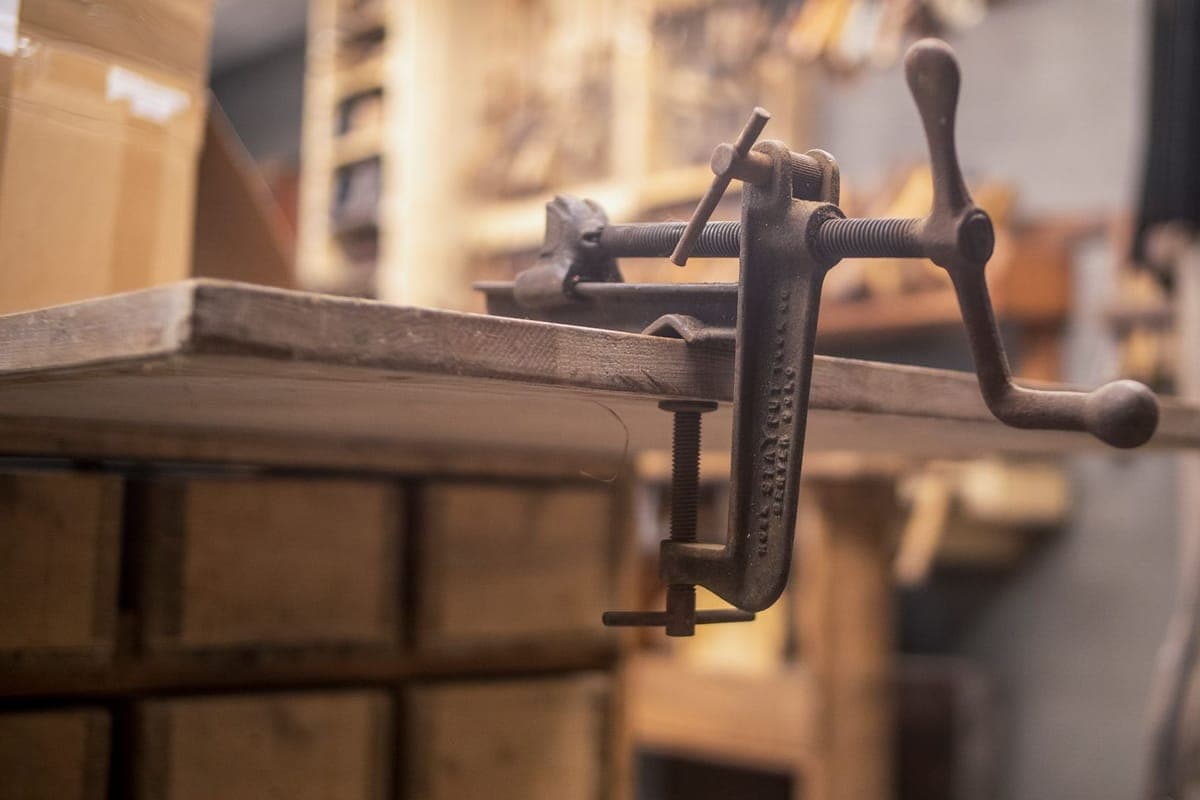
Do you actually need one?
Start here, because for a large share of readers the answer is no.
| Job | Needs a vise? | Why |
|---|---|---|
| Waxing | No | Wax goes on a ski lying flat. A towel on a table works; the ski does not move much. |
| Scraping wax | Helpful | You are pushing hard along the ski. Without a vise it slides away from you. |
| Brushing | Helpful | Same reason as scraping, with less force. |
| Filing or deburring edges | Yes | A ski that moves under a file gets an uneven edge, which is worse than a dull one. |
| Setting base or side bevel | Yes, firmly | Precision work. Movement is the failure mode. |
The honest line is at edges. If you only ever wax - which is most home tuning - you do not need a vise and you should not buy one. The moment you pick up a file, you do. The edge repair page covers what edge work is and is not worth doing yourself.
The two numbers to demand
This category is unusually bad at publishing specifications, and the two that matter are both simple measurements.
- Center clamp opening. How wide the middle clamp opens, in millimeters. It has to exceed the waist width of your widest ski. A modern all-mountain ski is commonly in the 80 to 100 mm range at the waist, and a powder ski is wider. The all-mountain page explains what waist width means.
- Side clamp adjustment range. How far the two end clamps open, in millimeters. These hold the tip and tail, which are considerably wider than the waist - so a range, not a single figure.
- Mounting method. Almost all clamp to a bench or table edge. Check the thickness they will accept against your actual bench.
- Brake retainers. A small elastic or clip that holds the ski brake out of the way. Not optional - a ski brake springing down mid-file is how topsheets get gouged.
What is on the page
Demon United Muzzle Vise
The only vise here that publishes the two numbers: a center clamp opening to 110 mm and side clamps adjustable from 40 to 90 mm. That 110 mm figure clears the waist of every ski in this ledger with room spare, and the side range covers tip and tail on a typical recreational ski.
It is a three-piece metal set rather than two plastic blocks, which matters when you are leaning on a file. It comes from the same maker as the tune kits on this site, so the vise and the kit are a matched purchase rather than a gamble on compatibility.
Honest cons: it needs a bench or a solid table edge it can clamp to, so it is not free-standing. No published warranty term. And three separate pieces means three things to store, with the brake retainers being the part that goes missing first.
Demon tune kits
Both kits here bundle the scraper, brushes, edge tools and wax you need alongside the tuning itself. The tune kits page runs the arithmetic on whether a kit pays for itself - the short version is that it depends on one number, which is how many shop tunes a season you currently buy.
Neither kit includes a vise, which is the thing worth knowing before ordering. The tools and the workholding are separate purchases.
The setup that costs nothing
Before spending anything, this genuinely works for waxing and adequately for scraping:
- Two dining chairs, backs facing each other, about a ski-length apart, with a towel over each back. The ski sits base-up across them.
- A rubber band or a strong elastic around the brake arms and the heel piece to hold the brake up out of the way. This is the one non-negotiable part.
- A third point of support under the middle if the ski flexes - a stack of books, or a box.
- An old sheet underneath. Wax shavings travel considerably further than you expect and they are unpleasant underfoot.
This will not hold a ski steady enough for accurate edge work, and that is the honest limit. It is entirely adequate for the waxing job that most people are actually doing.
Who should buy what
- Waxing only, once or twice a season. No vise. Two chairs and a towel.
- Waxing a family fleet regularly. A vise is a real quality-of-life upgrade for scraping, even though you can manage without.
- Filing edges yourself. The Muzzle, and check your ski’s waist width against the published 110 mm first.
- Starting from nothing. A tune kit first, a vise second, and wax you actually chose third.
- Renting skis. None of this. The shop tunes them, and that is part of what the rental costs. The cost page puts it in proportion.
Every pick, with the working
Each entry shows the published inputs, the axis scores they produce, and what you give up. The order is the computed order, not a commercial one, and the arithmetic is open underneath each score.
1 · Anyone who has decided to tune at home and needs the skis to actually stay still
Demon United Muzzle Ski and Snowboard Vise
The only vise in this category that publishes the two numbers that decide whether it fits your skis: a center clamp opening to 110 mm and side clamps adjustable from 40 to 90 mm. Measure your waist width and your tip and tail before buying anything in this category, because most makers publish neither figure.
- Published price
- Not published
- Cost per day on snow
- Not published
- Amortized over
- 3 seasons (15 days)
- Certified to
- Not published
- Published sizes
- Three-piece set; center clamp opens to 110 mm, side clamps 40-90 mm
- Warranty
- No term published on the product page
What it gets right
- Published center clamp opening of 110 mm, which covers the waist of every ski in this ledger
- Published side clamp range of 40 to 90 mm for tip and tail
- Three-piece metal set rather than two plastic blocks, so it holds a ski under a file
- From the same maker as the tune kits on this site, so the kit and the vise are a matched purchase
What you give up
- Needs a bench or a table edge it can clamp to; it is not free-standing
- No published warranty term
- Three pieces to store and lose, and the ski brake retainers are the piece that goes missing
The working behind the 0.0
- Cost per day on snow: not scored
- No manufacturer-published price, so this axis is not scored.
- Published protection: not scored
- This category carries no protective standard.
- Size availability: not scored
- Sold in one size, so size availability does not apply.
- Warranty and support: 0.0
- no published term (0 of 6); no published crash replacement (+0); no published repair route (+0)
Axes with unpublished inputs are dropped and the remaining weights re-normalized, so a product is not punished for a manufacturer’s silence. Specifications compiled September 12, 2026 from Demon United published Muzzle Vise specifications.
2 · A first home tune, everything in one box
Demon Complete Basic Tune Kit
The published contents are an edge tuner, tuning stone, flat file, wire brush, mini wax iron, two scrapers, polish pad, P-tex, all-season wax, instructions and a case. That is everything a first home tune needs in one box, and the mini iron is the compromise: it works, and it is slower than a full-size one.
- Published price
- $99.99
- Cost per day on snow
- $6.67 a day
- Amortized over
- 3 seasons (15 days)
- Certified to
- Not published
- Published sizes
- One size
- Warranty
- No term published on the product page
What it gets right
- Twelve published items including the iron, so nothing else has to be bought
- Includes P-tex and a tuning stone, which the cheapest kits leave out
- Carry case published, which is what stops a kit becoming a drawer of loose files
What you give up
- A mini iron rather than a full-size one, so waxing a pair takes longer
- No warranty term published for the kit
- $99.99 published buys roughly four or five shop waxes instead
The working behind the 3.9
- Cost per day on snow: 6.2
- $99.99 over 3 seasons at 5 days each = 15 days = $6.67 a day
- Published protection: not scored
- This category carries no protective standard.
- Size availability: not scored
- Sold in one size, so size availability does not apply.
- Warranty and support: 0.0
- no published term (0 of 6); no published crash replacement (+0); no published repair route (+0)
Axes with unpublished inputs are dropped and the remaining weights re-normalized, so a product is not punished for a manufacturer’s silence. Specifications compiled September 4, 2026 from Demon United published contents list.
3 · The household that will keep tuning
Demon Snow Ready Tune Kit
Ten dollars more than the Basic, and the published contents differ in the two places that matter over a decade: a full adjustable-temperature iron published with a lifetime warranty rather than a mini, and 1.06 lb of universal wax rather than a bar. If you expect to tune for more than one season, this is the one that stays useful.
- Published price
- $109.99
- Cost per day on snow
- $7.33 a day
- Amortized over
- 3 seasons (15 days)
- Certified to
- Not published
- Published sizes
- One size
- Warranty
- No kit term published; the adjustable-temp iron is published with a lifetime warranty
What it gets right
- Adjustable-temp iron published with a lifetime warranty
- 1.06 lb of published wax, several seasons of a family's waxing
- Both a nylon and a wire brush published, so base structure gets cleaned properly
What you give up
- $109.99 published, and still real money against a shop wax
- No published warranty on the kit as a whole, only on the iron
- More tools than a household waxing twice a year will ever open
The working behind the 3.6
- Cost per day on snow: 5.7
- $109.99 over 3 seasons at 5 days each = 15 days = $7.33 a day
- Published protection: not scored
- This category carries no protective standard.
- Size availability: not scored
- Sold in one size, so size availability does not apply.
- Warranty and support: 0.0
- no published term (0 of 6); no published crash replacement (+0); no published repair route (+0)
Axes with unpublished inputs are dropped and the remaining weights re-normalized, so a product is not punished for a manufacturer’s silence. Specifications compiled September 4, 2026 from Demon United published contents list.
Prices last verified October 19, 2026. Prices move constantly; the figure on Amazon at the moment you click is the real one.
Questions people actually ask
Do I need a ski vise to wax my skis?
No. Wax goes onto a ski lying flat and the ski does not move much, so two dining chairs with towels over the backs and an elastic holding the brake up works perfectly well. A vise starts to matter when you scrape, and becomes genuinely necessary when you file edges - a ski that moves under a file gets an uneven edge.
What size ski vise do I need?
Check two published numbers: the center clamp opening must exceed your widest ski’s waist width, and the side clamp range must cover tip and tail, which are much wider. The Demon Muzzle publishes 110 mm and 40 to 90 mm respectively. Most vises publish neither figure, which is why this page is a guide rather than a ranking.
Why won't my ski stay still while I tune it?
Usually because the brake is down and the ski is rocking on it, or because the clamps are gripping the sidewall rather than sitting under it. Hold the brake arms up with an elastic before anything else - that single step fixes most of it - and add a support under the middle if the ski flexes between the end supports.
Is a ski tuning kit worth buying?
It depends on how many shop tunes a season you currently buy, and the kits page runs that arithmetic. What is worth knowing before ordering is that the kits on this site do not include a vise - the tools and the workholding are separate purchases, and a kit alone will not let you file edges accurately.
Can I tune skis on a kitchen table?
For waxing, yes, with a towel under the ski and a sheet on the floor - wax shavings travel much further than you expect. For edge work, no: the ski has to be held rigidly and a table edge will not do it. That is the line where a vise stops being a convenience and starts being the tool.