Skate blades: drying, guards and how often to sharpen
A dull blade slides sideways and everybody blames their ankles. Keeping an edge is three habits, and one of them is the guards you are probably using wrong.
By Sawyer V. · Published
We have not tested this gear. Everything below is compiled from published specifications and published safety standards, and the arithmetic is public so you can check it. This page carries affiliate links: if you buy through one we earn a commission at no extra cost to you, and it does not change the order of the picks. Full disclosure.
The short answer
Wipe the blades dry every single time before the skates go in a bag, then let them air before storing. Use soft absorbent guards in the bag and hard guards only for walking - never store skates in hard guards, which trap moisture against the steel. A recreational skater needs sharpening roughly once or twice a season, or whenever the blade starts sliding sideways.
| # | Pick | Best for | Score | Price |
|---|---|---|---|---|
| 1 | American Athletic Party Girl Adjustable Figure Skates A child who skates at a local rink a few times a season | $6.50 a dayon snow | 4.2/10 | $64.99 - View on Amazon |
| 2 | Jackson Ultima Softec Vibe Adjustable Skates A growing child who skates a few times each winter | Not publishedon snow | 2.5/10 | $99.95 - View on Amazon |
| 3 | American Athletic Cougar Adjustable Hockey Skates A very young beginner who keeps tripping on a toe pick | Not publishedon snow | 1.6/10 | $64.99 - View on Amazon |
Prices last verified October 22, 2026. Prices move constantly; the figure on Amazon at the moment you click is the real one.
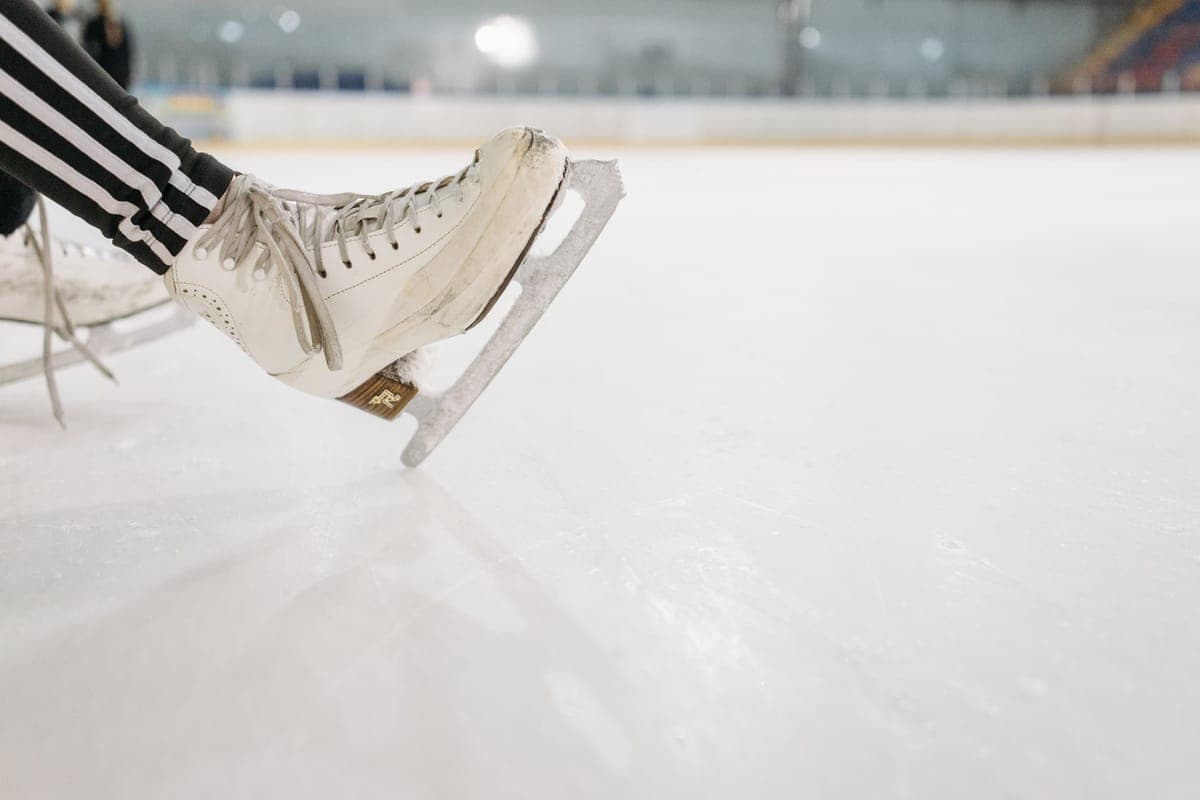
A blade has two edges, and that is the whole subject
Look at the bottom of a skate blade end-on and it is not flat. It is ground with a concave channel down the middle, called the hollow, which leaves two sharp edges - an inside edge and an outside edge. Those two edges are what bite the ice, and everything about skating is choosing which one to stand on.
Sharpening is not making the blade pointy. It is regrinding that hollow so the two edges come back to a defined shape. When people say a blade is dull, what they usually mean is that the edges have rounded and the blade now slides sideways instead of holding a line.
Rust is the actual enemy
Steel plus water plus a closed bag equals rust, and rust on an edge is the same problem as rust on a ski edge: it pits the surface, and a pitted edge does not hold. Skates spend their entire working life on water, so this is not an occasional risk, it is the default outcome of doing nothing.
- Step off the ice and wipe the blades immediately. A cloth or a towel, both sides, all the way along, including the mount.
- Put soft guards on - the fabric ones designed to absorb moisture.
- At home, take the guards off and let the blades air fully. This is the step that gets skipped, and it is the one that matters.
- Then store with soft guards on and the boots open.
Surface rust that has already appeared can be taken off gently with a fine abrasive and a light hand, but the edge underneath may already be compromised. Prevention here is genuinely cheaper than the cure.
Guards: the mistake almost everyone makes
| Type | What it is | Use it for | Never |
|---|---|---|---|
| Hard guards | Rigid plastic, often with a spring or a strap | Walking on floors, concrete and rubber matting | Storage; they trap water against the steel |
| Soft guards | Padded absorbent fabric sleeves | The bag, and storage | Walking; they offer no protection from a hard floor |
Storing skates in hard guards is the single most common way good blades get ruined between sessions. The guard holds a film of water against the steel in a sealed space, which is close to ideal conditions for rust. Hard guards come off the moment you sit down; soft guards go on for everything else.
And walk in the hard guards rather than on the blades. A few steps on concrete does visible damage to an edge, and a rink’s rubber matting is kinder but not neutral.
How often to sharpen
Far less often than the internet suggests, for a recreational skater. Sharpening removes metal, and a blade has a finite amount of it, so unnecessary sharpening shortens the life of the skate.
- A family skating a few times a winter: once at the start of the season, and again only if it stops holding.
- Weekly skating: roughly every 20 to 30 hours on the ice, or once or twice a season.
- New skates: most come unsharpened or with a factory edge that is not skate-ready. Ask the shop before the first session.
- After any contact with concrete or a stone, regardless of the schedule.
The test is simpler than a schedule: run a thumbnail lightly across the edge, not along it. A sharp edge catches the nail and shaves a sliver; a dull one slides across. Do it on both edges of both skates, because they wear unevenly.
What a hollow is, and why you should not ask for the deepest
When a shop sharpens skates, it grinds the hollow to a radius, described in inches - a smaller number is a deeper hollow with more aggressive edges.
The instinct is to ask for the deepest available, and it is usually wrong. A deeper hollow bites harder, which means it also grips harder when you did not want it to, is harder to glide on, and is more tiring. A shallower hollow slides more and is easier for a beginner to control.
For a recreational skater, take the shop’s standard recommendation for your weight and skate type and leave it alone. This is a preference for people who skate several times a week, and a distraction for everyone else.
Adjustable skates and soft boots
The adjustable shells that make sense for a growing child - the ones in this ledger publish about four shoe sizes each - carry the same steel as any other recreational skate and need exactly the same care. Wipe, air, soft guards.
Two extra checks on an adjustable pair. Confirm the lever or button that sets the length is fully engaged before every session, because a shell that shifts mid-stride is unpleasant. And check the blade mount screws occasionally; there are more moving parts in these than in a fixed skate, and vibration backs screws out. The kids skate roundup compares the published shells and adjustment ranges.
The boot needs care too
- Loosen the laces fully before storing. Leaving a skate laced compresses the tongue and padding and makes it harder to get into next time.
- Open the boot and let the inside dry, at room temperature and away from any heat source. Same rule as ski boot liners: heat hardens and shrinks foam.
- Pull the footbed out if it comes out. It holds more moisture than anything else in the boot.
- One thin sock, always. Two pairs fills space that should be filled by your foot and makes feet colder. The same argument as ski boots.
Summer storage
Blades clean, completely dry, soft guards on, boots unlaced and open, stored somewhere dry and not hot. A pair of skates put away in a bag in April with a film of water on the steel comes out in November with an edge that needs regrinding, and possibly with pitting that no grind fixes.
That is the same principle as everything else in this section, and the end-of-season page has the full routine for the rest of the gear. The rule is the same across all of it: nothing goes away wet.
Every pick, with the working
Each entry shows the published inputs, the axis scores they produce, and what you give up. The order is the computed order, not a commercial one, and the arithmetic is open underneath each score.
1 · A child who skates at a local rink a few times a season
American Athletic Party Girl Adjustable Figure Skates
Three shells covering youth 10 through adult 8, each adjusting across four sizes, at a published $64.99. That is the cheapest published route to a skate that fits a child for more than one winter.
- Published price
- $64.99
- Cost per day on snow
- $6.50 a day
- Amortized over
- 2 seasons (10 days)
- Certified to
- Not published
- Published sizes
- Small 10Y-13Y, Medium 1-4, Large 5-8
- Warranty
- No term published
What it gets right
- $64.99 published, with each shell adjusting across four shoe sizes
- Three shells cover youth 10 through adult 8
What you give up
- No published warranty term
- Recreational figure blade, so it is not a starting point for lessons in either figure skating or hockey
The working behind the 4.2
- Cost per day on snow: 6.3
- $64.99 over 2 seasons at 5 days each = 10 days = $6.50 a day
- Published protection: not scored
- No certification published for this model, so protection is not scored.
- Size availability: 4.9
- 3 published sizes (3.4 of 8.5); continuous in-size adjuster published (+1.5); range: Small 10Y-13Y, Medium 1-4, Large 5-8
- Warranty and support: 0.0
- no published term (0 of 6); no published crash replacement (+0); no published repair route (+0)
Axes with unpublished inputs are dropped and the remaining weights re-normalized, so a product is not punished for a manufacturer’s silence. Specifications compiled September 3, 2026 from American Athletic published specifications.
2 · A growing child who skates a few times each winter
Jackson Ultima Softec Vibe Adjustable Skates
A two-piece boot that lengthens by pulling a lever, covering four shoe sizes per shell. For a child skating a handful of times a winter, that is the difference between one purchase and three.
- Published price
- Not published
- Cost per day on snow
- Not published
- Amortized over
- 2 seasons (10 days)
- Certified to
- Not published
- Published sizes
- Small Y11-2, Medium 2-6, Large 6-9, each adjustable across four sizes
- Warranty
- No term published
Jackson Ultima publishes no MSRP we could read; retail prices for the same skate ranged widely on the compile date.
What it gets right
- Each shell adjusts across four shoe sizes, so one pair can last several seasons
- Three shells cover youth 11 through adult 9
- Soft boot construction, which a child can put on without help
What you give up
- No published MSRP and no published warranty term
- An adjustable soft boot gives less ankle support than a fitted skate, which matters once a child skates regularly
The working behind the 2.5
- Cost per day on snow: not scored
- No manufacturer-published price, so this axis is not scored.
- Published protection: not scored
- No certification published for this model, so protection is not scored.
- Size availability: 4.9
- 3 published sizes (3.4 of 8.5); continuous in-size adjuster published (+1.5); range: Small Y11-2, Medium 2-6, Large 6-9, each adjustable across four sizes
- Warranty and support: 0.0
- no published term (0 of 6); no published crash replacement (+0); no published repair route (+0)
Axes with unpublished inputs are dropped and the remaining weights re-normalized, so a product is not punished for a manufacturer’s silence. Specifications compiled September 3, 2026 from Jackson Ultima published product specification.
3 · A very young beginner who keeps tripping on a toe pick
American Athletic Cougar Adjustable Hockey Skates
The hockey-blade equivalent, adjusting across four sizes from youth 6. A hockey blade is flatter and easier for a beginner to stand on than a figure blade with a toe pick, which catches.
- Published price
- Not published
- Cost per day on snow
- Not published
- Amortized over
- 2 seasons (10 days)
- Certified to
- Not published
- Published sizes
- Adjusts across four sizes; youth 6-9 shell published
- Warranty
- No term published
American Athletic publishes no MSRP for this model that we could read.
What it gets right
- Adjusts across four sizes, starting at youth 6
- Hockey blade has no toe pick, which is one fewer thing for a beginner to catch
What you give up
- No published MSRP and no published warranty term
- Fewer shell sizes published than the figure-skate version
The working behind the 1.6
- Cost per day on snow: not scored
- No manufacturer-published price, so this axis is not scored.
- Published protection: not scored
- No certification published for this model, so protection is not scored.
- Size availability: 3.2
- 2 published sizes (1.7 of 8.5); continuous in-size adjuster published (+1.5); range: Adjusts across four sizes; youth 6-9 shell published
- Warranty and support: 0.0
- no published term (0 of 6); no published crash replacement (+0); no published repair route (+0)
Axes with unpublished inputs are dropped and the remaining weights re-normalized, so a product is not punished for a manufacturer’s silence. Specifications compiled September 3, 2026 from American Athletic published specifications.
Prices last verified October 22, 2026. Prices move constantly; the figure on Amazon at the moment you click is the real one.
Questions people actually ask
How often should ice skates be sharpened?
For a family skating a few times a winter, once at the start of the season and again only if the blades stop holding. For weekly skating, roughly every 20 to 30 hours on the ice. Sharpening removes metal, so unnecessary sharpening shortens the life of the skate.
Should you store skates in hard guards?
No, and it is the most common way good blades get ruined. A hard guard holds a film of water against the steel in a sealed space, which is close to ideal conditions for rust. Hard guards are for walking; soft absorbent guards are for the bag and for storage.
How do I know if my skates need sharpening?
Run a thumbnail lightly across the edge rather than along it. A sharp edge catches and shaves a sliver; a dull one slides across. Check both edges of both skates, because they wear unevenly. On the ice, the symptom is the blade sliding sideways instead of holding a line.
What is the hollow on a skate blade?
The concave channel ground down the middle of the blade, which leaves an inside and an outside edge. It is described by a radius in inches, and a smaller number means a deeper hollow with more aggressive edges. Recreational skaters should take the shop’s standard recommendation.
How do you stop skate blades rusting?
Wipe them dry immediately after every session, both sides and along the mount, then let them air fully at home before storing with soft guards on. The step people skip is the airing: guards straight onto damp steel is how rust starts.