Figure skates or hockey skates: which to buy for a first pair
The toe pick is the whole argument. It is a tool for one kind of skating and a tripping hazard for the other, and almost nobody explains that before you buy.
By Sawyer V. · Published
We have not tested this gear. Everything below is compiled from published specifications and published safety standards, and the arithmetic is public so you can check it. This page carries affiliate links: if you buy through one we earn a commission at no extra cost to you, and it does not change the order of the picks. Full disclosure.
The short answer
For a first pair, the honest answer for most people is recreational or hockey-style, because the toe pick on a figure skate is a tripping hazard until you are deliberately using it. Choose figure if the goal is lessons, spins and jumps; hockey if the goal is speed, stops and a child who keeps catching their toe; recreational soft-boot if the goal is a few outings a winter in comfort. For children, buy an adjustable shell that spans about four shoe sizes.
| # | Pick | Best for | Score | Price |
|---|---|---|---|---|
| 1 | Jackson Ultima Softec Vista Ice Skates An adult who skates a few times a winter and is tired of rental skates | Not publishedon snow | 4.3/10 | $149.95 - View on Amazon |
| 2 | American Athletic Party Girl Adjustable Figure Skates A child who skates at a local rink a few times a season | $6.50 a dayon snow | 4.2/10 | $64.99 - View on Amazon |
| 3 | American Athletic Cougar Adjustable Hockey Skates A very young beginner who keeps tripping on a toe pick | Not publishedon snow | 1.6/10 | $64.99 - View on Amazon |
Prices last verified October 19, 2026. Prices move constantly; the figure on Amazon at the moment you click is the real one.
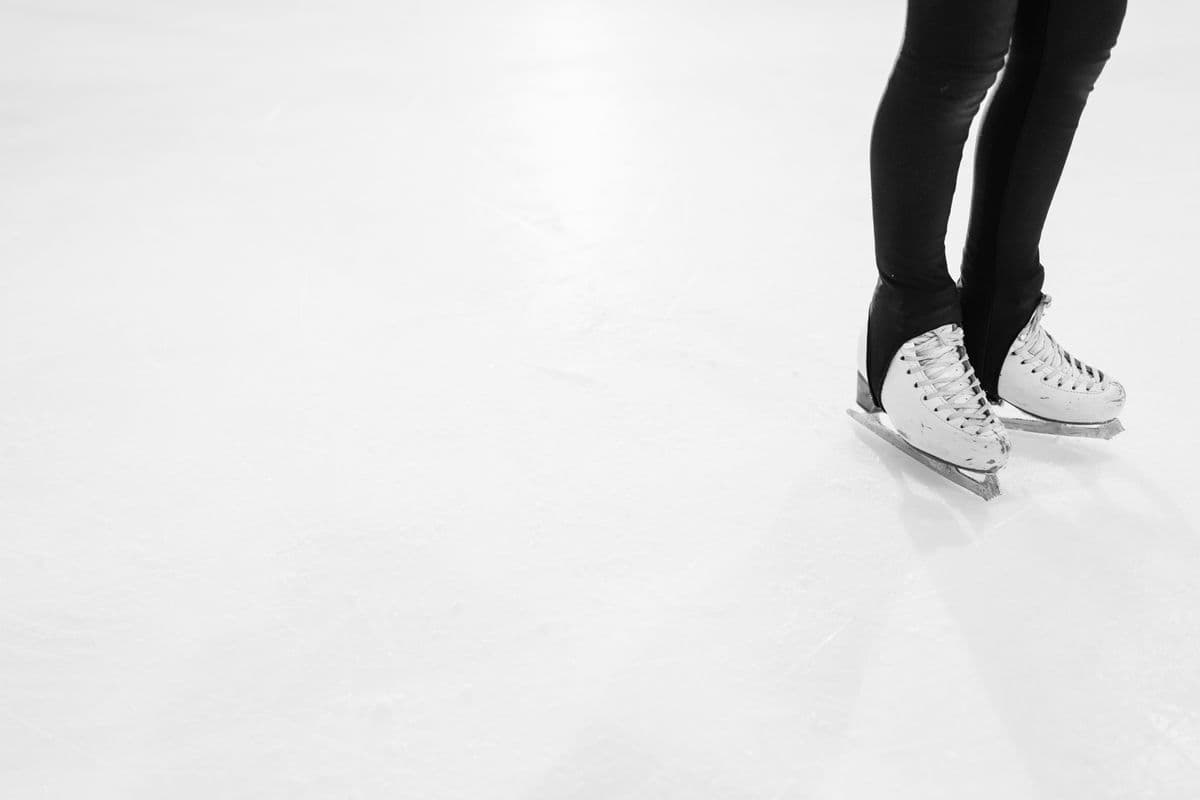
The toe pick, which is the entire difference
Look at the front of a figure skate blade and you will see a row of jagged teeth. That is the toe pick, and it exists so a skater can dig into the ice to launch a jump or anchor a spin. It is a tool with a specific purpose.
For a beginner, it is mostly a thing to trip over. New skaters naturally lean forward for balance, which is exactly the movement that plants the toe pick into the ice and stops the skate dead while the body keeps going. That is the classic first-session faceplant, and it is not clumsiness - it is equipment doing what it was designed to do at a moment you did not intend.
A hockey blade has no toe pick. It is also curved more along its length, which makes it quicker to turn and easier to push off from, at the cost of being less stable in a straight glide.
The comparison
| Figure | Hockey | Recreational soft-boot | |
|---|---|---|---|
| Blade | Toe pick, longer, flatter | No toe pick, more curved | Usually a rounded recreational blade |
| Boot | Stiff, supportive, higher cut | Stiff, protective, lower cut | Softer, padded, quick to put on |
| Best for | Lessons, spins, jumps, gliding | Speed, quick turns, stops | A few casual outings a winter |
| Beginner risk | Catching the toe pick | Less stable when standing still | Less ankle support as skill grows |
| Comfort on day one | Firm and demanding | Firm and demanding | The most comfortable by a distance |
The three published options on this site
American Athletic Party Girl - adjustable figure
The figure-skate answer for a growing child: a published shell that adjusts across four shoe sizes, with three shells covering youth 10 through adult 8. If a child wants lessons, wants to spin, or simply wants figure skates because that is what skating looks like to them, this is the sensible way to buy them without paying for a stiff boot they outgrow in a season.
Honest con: it still has the toe pick, so the first hour involves learning where it is.
American Athletic Cougar - adjustable hockey
The same adjustable idea with a hockey blade, published as adjusting across four sizes from youth 6. As the ledger row puts it, the hockey blade has no toe pick, which is one fewer thing for a beginner to catch - and for a child who keeps tripping in figure skates, swapping to a hockey blade is often the change that turns skating into something they enjoy.
Honest con: less fore-and-aft stability when standing still, which some very young children find harder rather than easier.
Jackson Ultima Softec Vista - recreational
The adult answer for a few outings a winter. Published as factory sharpened, so it works on the first outing rather than after a trip to a shop, with a Nylex lining published for warmth - which matters more than people expect on an outdoor rink - and sizes covering women’s 4 to 11 and youth 8 to 3.
A soft-boot recreational skate is warmer and far more comfortable than a stiff figure or hockey boot, and it is the right buy for anyone whose ambition is a pleasant hour on the ice rather than a skill.
Honest con: the support that makes a stiff boot uncomfortable is also what lets you progress, so a soft boot becomes the limiting factor if you start skating regularly.
Buying for children: adjustable shells
Adjustable skates are the one place in winter sports where buying for growth is genuinely correct rather than a compromise - because the shell adjusts in length while keeping the heel located, which is not what happens when you buy a boot two sizes too big.
- Set them to the child’s current size, not to next year’s. A skate with room in it rolls the ankle, and a child skating on their ankles is a child who wants to leave.
- One thin pair of socks. Thick socks in a skate cause the same circulation problem they cause in a ski boot.
- Tight at the ankle, looser over the toes. The ankle is where support comes from; clamping the forefoot just hurts.
- Helmet on, always for children. A ski or multi-sport helmet is fine, and the outdoor ice safety page covers the rest.
The kids skate roundup compares the adjustable models properly, and the fit guide has the sizing method.
Outdoor rinks change the answer slightly
Outdoor ice is colder, rougher and more variable than a rink, which pushes the choice toward a warmer, softer recreational boot - a stiff competition boot is cold, and outdoor sessions are usually shorter and more casual anyway. Rough ice also blunts blades faster, so plan on sharpening more often than an indoor skater would. The outdoor ice safety page covers the rest, including what to check before going on anything that is not a maintained rink.
Fit: the two checks that decide comfort
A skate that fits badly is worse than the wrong type of skate, and both checks take seconds.
- Heel lock. Laced up, stand and bend your knees. Your heel should stay down. If it lifts, the skate is too big or laced wrong, and you will get blisters at the back and no control at the front. Lace tightest across the ankle, looser over the toes.
- Toe touch. Standing upright, toes should just brush the end. Bend your knees and they should pull back. Room at the end means the foot slides forward and the ankle rolls - the single most common reason a child says skating hurts.
Skate sizing generally runs smaller than shoe sizing, sometimes by a full size, which catches out parents buying online. The ice skate fit guide has the measuring method and the sizing caveats per type.
Renting first, which is the sensible order
Rink rentals are almost always hockey or recreational skates rather than figure skates, which is itself a useful signal about what a rink considers manageable for a first-timer. Two or three sessions on rentals tells you more than any comparison page can, including this one.
- Ask when the skates were last sharpened. Busy rinks fall behind, and a blunt rental is the most common reason a first session goes badly.
- Take your own thin socks. Rental skates plus thick socks is the same circulation mistake as ski boots.
- Note which type you were given on the session that went well, then buy that.
Buying makes sense once you are going regularly - a family of four skating a dozen times a winter passes the arithmetic quickly, and owned skates are sharpened to your preference and fitted to your feet.
One thing that matters more than the type
A blunt skate is the most common reason a beginner has a bad time, and it gets blamed on the skate type, on the ice, or on the skater. New skates are not always sharpened from the factory - the Jackson above publishes that it is, which is a genuine convenience - and rental skates at a busy rink are frequently overdue.
If a skate slides sideways when you try to stop, or feels like it will not hold an edge at all, it needs sharpening rather than replacing. The blade care page covers how often, how to dry blades so they do not rust, and why walking on a hard floor in skates undoes a sharpening in one trip.
The verdict
- Adult, a few outings a winter: recreational soft-boot. Warm, comfortable, sharpened, done.
- Child who wants lessons: adjustable figure skates, and accept the toe pick as part of the learning.
- Child who keeps tripping: adjustable hockey skates. Removing the toe pick removes the problem.
- Anyone renting first: a good plan. Rent twice, notice which blade you got on the better day, and buy that.
Every pick, with the working
Each entry shows the published inputs, the axis scores they produce, and what you give up. The order is the computed order, not a commercial one, and the arithmetic is open underneath each score.
1 · An adult who skates a few times a winter and is tired of rental skates
Jackson Ultima Softec Vista Ice Skates
A published women's range of 4 to 11 with a youth range below it, a moisture-resistant nylon upper, a Nylex lining, and an Ultima Mark I blade that arrives factory sharpened. Factory sharpened is the specification that matters for a rental-replacement skate, because a blunt blade is why most first-time adults conclude they cannot skate.
- Published price
- Not published
- Cost per day on snow
- Not published
- Amortized over
- 4 seasons (20 days)
- Certified to
- Not published
- Published sizes
- Women's 4-11 and youth 8-3, full sizes only, medium width
- Warranty
- No term published on the product page
What it gets right
- Published as factory sharpened, so it works on the first outing rather than after a trip to a shop
- Women's 4 to 11 and youth 8 to 3 published, which covers a household from about age eight upward
- Nylex lining published for warmth, which matters on an outdoor rink more than an indoor one
- Soft-boot construction, so it does not need the break-in a leather figure boot does
What you give up
- Medium width only, so a genuinely wide or narrow foot is not catered for
- Full sizes only, with no half sizes published
- No published warranty term, and no published support rating
The working behind the 4.3
- Cost per day on snow: not scored
- No manufacturer-published price, so this axis is not scored.
- Published protection: not scored
- No certification published for this model, so protection is not scored.
- Size availability: 8.5
- 8 published sizes (8.5 of 8.5); no continuous adjuster published (+0); range: Women's 4-11 and youth 8-3, full sizes only, medium width
- Warranty and support: 0.0
- no published term (0 of 6); no published crash replacement (+0); no published repair route (+0)
Axes with unpublished inputs are dropped and the remaining weights re-normalized, so a product is not punished for a manufacturer’s silence. Specifications compiled September 12, 2026 from Jackson Ultima published Softec Vista specifications.
2 · A child who skates at a local rink a few times a season
American Athletic Party Girl Adjustable Figure Skates
Three shells covering youth 10 through adult 8, each adjusting across four sizes, at a published $64.99. That is the cheapest published route to a skate that fits a child for more than one winter.
- Published price
- $64.99
- Cost per day on snow
- $6.50 a day
- Amortized over
- 2 seasons (10 days)
- Certified to
- Not published
- Published sizes
- Small 10Y-13Y, Medium 1-4, Large 5-8
- Warranty
- No term published
What it gets right
- $64.99 published, with each shell adjusting across four shoe sizes
- Three shells cover youth 10 through adult 8
What you give up
- No published warranty term
- Recreational figure blade, so it is not a starting point for lessons in either figure skating or hockey
The working behind the 4.2
- Cost per day on snow: 6.3
- $64.99 over 2 seasons at 5 days each = 10 days = $6.50 a day
- Published protection: not scored
- No certification published for this model, so protection is not scored.
- Size availability: 4.9
- 3 published sizes (3.4 of 8.5); continuous in-size adjuster published (+1.5); range: Small 10Y-13Y, Medium 1-4, Large 5-8
- Warranty and support: 0.0
- no published term (0 of 6); no published crash replacement (+0); no published repair route (+0)
Axes with unpublished inputs are dropped and the remaining weights re-normalized, so a product is not punished for a manufacturer’s silence. Specifications compiled September 3, 2026 from American Athletic published specifications.
3 · A very young beginner who keeps tripping on a toe pick
American Athletic Cougar Adjustable Hockey Skates
The hockey-blade equivalent, adjusting across four sizes from youth 6. A hockey blade is flatter and easier for a beginner to stand on than a figure blade with a toe pick, which catches.
- Published price
- Not published
- Cost per day on snow
- Not published
- Amortized over
- 2 seasons (10 days)
- Certified to
- Not published
- Published sizes
- Adjusts across four sizes; youth 6-9 shell published
- Warranty
- No term published
American Athletic publishes no MSRP for this model that we could read.
What it gets right
- Adjusts across four sizes, starting at youth 6
- Hockey blade has no toe pick, which is one fewer thing for a beginner to catch
What you give up
- No published MSRP and no published warranty term
- Fewer shell sizes published than the figure-skate version
The working behind the 1.6
- Cost per day on snow: not scored
- No manufacturer-published price, so this axis is not scored.
- Published protection: not scored
- No certification published for this model, so protection is not scored.
- Size availability: 3.2
- 2 published sizes (1.7 of 8.5); continuous in-size adjuster published (+1.5); range: Adjusts across four sizes; youth 6-9 shell published
- Warranty and support: 0.0
- no published term (0 of 6); no published crash replacement (+0); no published repair route (+0)
Axes with unpublished inputs are dropped and the remaining weights re-normalized, so a product is not punished for a manufacturer’s silence. Specifications compiled September 3, 2026 from American Athletic published specifications.
Prices last verified October 19, 2026. Prices move constantly; the figure on Amazon at the moment you click is the real one.
Questions people actually ask
Are figure or hockey skates easier for beginners?
Hockey or recreational skates are usually easier at the very start, because they have no toe pick to catch when a beginner leans forward for balance. Figure skates are the right choice if the goal is lessons, spins and jumps, where the toe pick is a tool rather than a hazard.
What is the toe pick for?
It lets a figure skater dig into the ice to launch a jump or anchor a spin. For a beginner it is mostly something to trip over, because leaning forward - the instinctive balance move - is exactly what plants it in the ice and stops the skate dead.
Are adjustable ice skates any good for kids?
Yes - this is the one category where buying for growth genuinely works, because the shell extends in length while keeping the heel located. Set them to the child’s current size rather than next year’s: a skate with slack in it rolls the ankle.
Do new ice skates come sharpened?
Not always, and a blunt blade is the most common reason a first session goes badly. Some models publish that they ship factory sharpened. If a skate slides sideways when you try to stop, it needs sharpening rather than replacing.
What socks should you wear with ice skates?
One thin pair. Thick socks compress the foot in a stiff boot and restrict circulation, which makes feet colder rather than warmer - the same mechanism as in a ski boot. Tight at the ankle, looser over the toes.