Ski helmets with long hair, and where the ponytail actually has to go
Hair is not a minor detail in helmet fit. It is volume inside a shell that was sized without it, and it moves the whole helmet if you put it in the wrong place.
By Sawyer V. · Published
We have not tested this gear. Everything below is compiled from published specifications and published safety standards, and the arithmetic is public so you can check it. This page carries affiliate links: if you buy through one we earn a commission at no extra cost to you, and it does not change the order of the picks. Full disclosure.
The short answer
Measure and fit the helmet with your hair worn the way you will ski in it. A ponytail belongs below the dial, outside the shell - never bunched inside it, which lifts the helmet off the back of your head and tips it forward over your eyes. For long hair, a low braid or two braids is the most reliable answer, and a helmet whose dial sits low at the base of the skull is the one to look for.
| # | Pick | Best for | Score | Price |
|---|---|---|---|---|
| 1 | Smith Cache Mips A head at the edges of the size range, or one between two sizes | $5 a dayon snow | 6.7/10 | $160.00 - View on Amazon |
| 2 | Giro Crue Mips A child mid-growth-spurt, where one size has to last two seasons | $11.00 a dayon snow | 4.6/10 | $82.46 - View on Amazon |
| 3 | Giro Avera Mips Women's Snow Helmet A rider who wants the lightest published weight and already knows the certification trade | Not publishedon snow | 3.4/10 | $99.99 - View on Amazon |
Prices last verified October 19, 2026. Prices move constantly; the figure on Amazon at the moment you click is the real one.
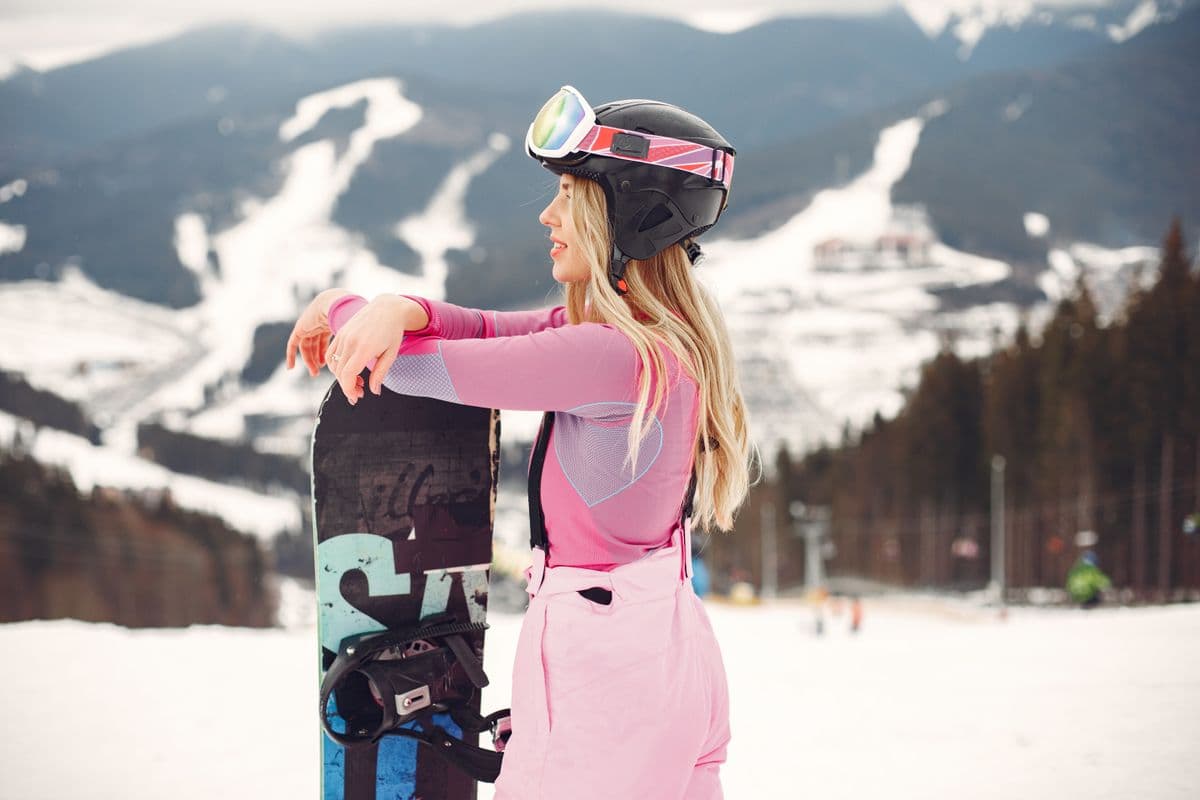
Hair is volume, and the shell was sized without it
A ski helmet works by holding your head evenly. Anything between the liner and your skull changes that fit, and hair - particularly a lot of it, tied up - is far more volume than people expect.
Two failures follow. If hair is bunched inside the shell at the back, it pushes the rear of the helmet up and away, which rotates the front down over your brow. That is the person you see on the lift constantly pushing their helmet back off their goggles. And if the hair is loose and slippery, the helmet sits on hair rather than on your head, so it slides on impact instead of staying put.
The fix is not a special helmet. It is choosing where the hair goes, and then fitting the helmet that way, every time.
Where the ponytail goes
| Hair position | Effect on fit | Verdict |
|---|---|---|
| Low ponytail, below the dial, outside the shell | Helmet sits normally; dial closes under the tail | The standard answer, and what most dials are positioned for |
| High ponytail or bun inside the shell | Lifts the rear of the helmet and tips the front down | Do not - this is the fit failure people blame on the helmet |
| One or two low braids | Distributes volume evenly and stops hair sliding under the liner | The most reliable option for very long or thick hair |
| Loose hair | Helmet sits on hair rather than scalp; slides more readily | Fine for a short day, worse in wind and on a lift |
Some helmets are built with a gap or channel at the rear for exactly this. Where a maker does not publish a ponytail feature, the practical substitute is a dial that sits low, at the base of the skull, so the tail passes beneath it rather than through it.
What to look for, with published examples
- A dial adjuster, positioned low. The Giro Avera Mips publishes an In Form fit dial with vertical tuning and three size bands from 52 to 62.5 cm. Vertical tuning is the useful part: it moves the cradle up or down, which is precisely the adjustment a ponytail needs.
- A wide published size range. The Smith Cache Mips publishes 51 to 67 cm across four sizes, so if your hair puts you between two sizes there is somewhere to go.
- For children, a dial and a size chart. The Giro Crue Mips is the kids equivalent, and children with long hair have the same problem in a smaller shell. The kids size chart has the measuring method.
Measuring with hair on
Measure around your head about a centimeter above the eyebrows and around the widest point at the back, with your hair arranged the way you will wear it skiing. If you normally ski with two braids, measure with two braids in. A measurement taken with hair down and a helmet worn with hair up is a helmet that does not fit on the mountain.
Then check the fit the way the sizing page describes: the helmet should move your scalp when you shake your head, not slide across it, and it should sit level with the front edge about two finger-widths above your eyebrows.
Goggle straps and hair
The goggle strap goes over the helmet, never under it, and that is even more important with long hair: a strap under the shell traps hair against your neck, pulls every time you look up, and lifts the helmet at the back.
Two practical notes. Put the goggles on after the helmet, then run a finger along the top edge to pull hair out from under the frame - trapped hair at the brow breaks the foam seal and fogs the lens. And if your hair is long enough to sit between the strap and the shell, the strap will slide; helmets with a clip or a strip of silicone on the strap hold better. The helmet and goggle fit page covers the forehead gap in detail.
Beanies, liners and the temptation to add volume
The rule this site keeps repeating applies doubly here: if the helmet feels loose with your hair down, do not fill the gap with a beanie. A helmet held in place by a hat is a helmet that is the wrong size, and the hat compresses over a day until it is loose again.
A thin liner for warmth is fine on a cold day, and it must be thin enough not to change the fit. The liners page has what works under a shell, and the balaclava picks are compared on exactly that thinness.
One more thing the strap does
A goggle strap over a helmet holds the goggle against your face, and with long hair it does something else: it traps whatever hair sits between the strap and the shell. That hair slides, which means the goggle slides, which opens the seal at the temples on the exact run where you need it closed.
Tuck stray hair under the helmet before the goggles go on, not after, and check the strap is sitting flat on the shell rather than on a rope of hair.
Helmet hair, static and breakage
Six days under a foam liner does measurable damage to long hair, and it is worth planning for rather than discovering on day four.
- Friction is the problem, not the helmet. Hair dragged across a foam liner every time you turn your head is what causes breakage, especially at the nape. A smooth liner - a thin skull cap, or a satin-lined one - removes most of it.
- Static comes from dry cold air plus synthetic foam. It is worst on the coldest, driest days, and a light leave-in conditioner before the helmet goes on does more than anything you can do afterward.
- Do not put a helmet on wet hair. It freezes at the tips on a cold morning, and damp hair inside a liner is what makes a helmet smell by the third day.
- Air the liner overnight. Same rule as boots: a damp liner in a dark bag is how gear goes bad. The helmet care page covers cleaning removable pads without damaging them.
Buying for a child with long hair
A child’s helmet has less spare room than an adult’s, so hair volume changes the fit proportionally more. Two braids rather than one ponytail is the practical answer: braids sit flatter, they do not bunch into a single lump under the rear of the shell, and they survive a day of falling over.
Measure with the braids in, buy the shell that measurement falls into, and use the dial for the rest - never a size up for hair, and never a beanie to fill the gap. The kids helmet chart has the bands, and the growing room page explains why a helmet is the one item where sizing up is never acceptable.
Small things that make the day better
- Tie it before the helmet, not after. Fixing a ponytail on a chairlift with gloves on is how gloves end up in the trees.
- Use a soft fabric tie, not a hard clip. A metal or plastic clip under a helmet liner is a pressure point on the back of your skull and a genuine hazard in a fall.
- Braids for children. Easier to redo at lunch, and they stop the helmet sliding when a child looks down at their ski tips - which is most of the first day.
- Expect helmet hair. A silk or satin-lined liner reduces the breakage that long hair gets from a foam liner over several days.
The short version
Wear the hair low and outside the shell, measure with it in place, and buy a helmet with a dial that sits low and adjusts vertically. Do not size up to make room for a bun, and do not use a hat to fill a gap. A helmet that fits with your hair the way you actually wear it is the whole answer.
Every pick, with the working
Each entry shows the published inputs, the axis scores they produce, and what you give up. The order is the computed order, not a commercial one, and the arithmetic is open underneath each score.
1 · A head at the edges of the size range, or one between two sizes
Smith Cache Mips
The widest published head range of any helmet on this page and the only one certified to both the US and European standards while carrying a rotational-impact liner, a dial adjuster and a three-year warranty. It is also the second most expensive, and 550 g is not light.
- Published price
- $125
- Cost per day on snow
- $5 a day
- Amortized over
- 5 seasons (25 days)
- Certified to
- ASTM F2040, CE EN 1077:2007 Class B
- Rotational system
- Mips
- Published sizes
- 51-67 cm across S, M, L and XL
- Weight
- 550 g
- Warranty
- Smith 3-year limited warranty
What it gets right
- Certified to ASTM F2040 and CE EN 1077:2007 Class B
- Four published sizes covering 51-67 cm, so odd-sized heads are actually catered for
- Three-year warranty, the longest published term in this group
- Eleven vents, five of them adjustable, which matters more than it sounds on a warm spring afternoon
What you give up
- 550 g in size medium is the heaviest here, and a child or a light adult will notice it
- No published crash-replacement program
The working behind the 6.7
- Cost per day on snow: 7.4
- $125 over 5 seasons at 5 days each = 25 days = $5 a day
- Published protection: 9.0
- ASTM F2040 (+4); CE EN 1077 (+2); Mips rotational system (+3)
- Size availability: 6.6
- 4 published sizes (5.1 of 8.5); continuous in-size adjuster published (+1.5); range: 51-67 cm across S, M, L and XL
- Warranty and support: 2.5
- 3 yr (2.5 of 6); no published crash replacement (+0); no published repair route (+0)
Axes with unpublished inputs are dropped and the remaining weights re-normalized, so a product is not punished for a manufacturer’s silence. Specifications compiled September 3, 2026 from Smith published specifications.
2 · A child mid-growth-spurt, where one size has to last two seasons
Giro Crue Mips
The most useful number Giro publishes here is the adjuster range: the dial covers 6 cm inside a single size, which is roughly two years of a child's head growth. That is the difference between one helmet and two.
- Published price
- $109.95
- Cost per day on snow
- $11.00 a day
- Amortized over
- 2 seasons (10 days)
- Certified to
- ASTM F2040-11, CE EN 1077
- Rotational system
- Mips
- Published sizes
- Youth XS 48.5-52 cm, S 52-55.5 cm, M 55.5-59 cm
- Weight
- 520 g
- Warranty
- Giro 1-year limited warranty
What it gets right
- Published 6 cm of dial adjustment inside a size, plus vertical tuning
- ASTM F2040-11 and CE EN 1077 with a Mips liner
- Hard-shell construction, which survives being packed badly
What you give up
- 520 g, 170 g heavier than the Smith Glide Jr., which a small child will feel by the afternoon
- One-year warranty
The working behind the 4.6
- Cost per day on snow: 3.0
- $109.95 over 2 seasons at 5 days each = 10 days = $11.00 a day
- Published protection: 9.0
- ASTM F2040 (+4); CE EN 1077 (+2); Mips rotational system (+3)
- Size availability: 4.9
- 3 published sizes (3.4 of 8.5); continuous in-size adjuster published (+1.5); range: Youth XS 48.5-52 cm, S 52-55.5 cm, M 55.5-59 cm
- Warranty and support: 1.5
- 1 yr (1.5 of 6); no published crash replacement (+0); no published repair route (+0)
Axes with unpublished inputs are dropped and the remaining weights re-normalized, so a product is not punished for a manufacturer’s silence. Specifications compiled September 3, 2026 from Giro published specifications.
3 · A rider who wants the lightest published weight and already knows the certification trade
Giro Avera Mips Women's Snow Helmet
Skip this one. It is the lightest helmet here and it is genuinely well specified, but Giro publishes only CE EN 1077 for this model and no ASTM F2040. Every other helmet on this site is recommended on a published US certification, and making an exception for a women's-specific shell would be exactly the kind of inconsistency this site exists to avoid. Buy it knowingly or buy a dual-certified shell instead.
The lightest helmet in this ledger at a published 410 g, with Mips, a dial adjuster and three published size bands from 52 to 62.5 cm. The catch is the certification line: Giro publishes CE EN 1077 for it and no ASTM F2040, and this site does not recommend a helmet for a US buyer on a European standard alone.
- Published price
- Not published
- Cost per day on snow
- Not published
- Amortized over
- 5 seasons (25 days)
- Certified to
- CE EN 1077
- Rotational system
- Mips
- Published sizes
- 52-62.5 cm across S, M and L
- Weight
- 410 g
- Warranty
- No term published on the product page
What it gets right
- 410 g published, the lightest weight on this site by a clear margin
- Mips rotational liner and an In Form fit dial with vertical tuning
- Three published size bands stated in centimeters rather than as S/M/L alone
- Stack Vent above the goggle, which is the vent that actually reduces lens fogging
What you give up
- CE EN 1077 published but no ASTM F2040, which is the standard that applies in the US
- No published warranty term on the product page
- No published crash-replacement program
The working behind the 3.4
- Cost per day on snow: not scored
- No manufacturer-published price, so this axis is not scored.
- Published protection: 5.0
- no published ASTM F2040 (+0); CE EN 1077 (+2); Mips rotational system (+3)
- Size availability: 4.9
- 3 published sizes (3.4 of 8.5); continuous in-size adjuster published (+1.5); range: 52-62.5 cm across S, M and L
- Warranty and support: 0.0
- no published term (0 of 6); no published crash replacement (+0); no published repair route (+0)
Axes with unpublished inputs are dropped and the remaining weights re-normalized, so a product is not punished for a manufacturer’s silence. Specifications compiled September 12, 2026 from Giro published Avera Mips specifications.
Prices last verified October 19, 2026. Prices move constantly; the figure on Amazon at the moment you click is the real one.
Questions people actually ask
Where does a ponytail go under a ski helmet?
Low, below the dial and outside the shell. A high ponytail or bun bunched inside the helmet lifts the back and tips the front down over your eyes, which is the most common fit complaint from people with long hair. Two low braids are the most stable option for very long or thick hair.
Do I need a ski helmet with a ponytail hole?
Not necessarily. A dial that sits low at the base of the skull does the same job, because the tail passes underneath it. What matters more is a fit system with vertical adjustment, so you can move the cradle to clear the hair rather than sizing up.
Should I measure my head with my hair up or down?
The way you will ski. Measure about a centimeter above the eyebrows and around the widest point at the back, with your hair arranged exactly as it will be on the mountain. A measurement taken with hair down does not describe the helmet you will actually be wearing.
Can I wear a beanie under a helmet if my hair makes it loose?
No. A helmet held in place by a hat is the wrong size, and the hat compresses over the day until the helmet is loose again. Use the dial, or change shell size. A thin liner for warmth is fine; a thick beanie as a shim is not.
Does a ski helmet damage long hair?
Several days under a foam liner will cause some breakage and a lot of static. A smooth thin liner or a satin-lined cap reduces it, and a low braid keeps hair from being dragged across the liner every time you turn your head.