Fixing a torn ski jacket without ruining it
A tear in a waterproof jacket is a ten-minute fix with a patch and it stays fixed for years. Sewing it is the one thing not to do.
By Sawyer V. · Published
We have not tested this gear. Everything below is compiled from published specifications and published safety standards, and the arithmetic is public so you can check it. This page carries affiliate links: if you buy through one we earn a commission at no extra cost to you, and it does not change the order of the picks. Full disclosure.
The short answer
Patch it, do not sew it. Every stitch is a new hole through the waterproof layer, so a sewn repair leaks more than the tear did. Clean the area, dry it completely, and apply an adhesive repair patch with rounded corners on the outside, plus a second patch inside for a large tear. Done properly it lasts years. Lifting seam tape is the one failure that is not worth repairing at home.
| # | Pick | Best for | Score | Price |
|---|---|---|---|---|
| 1 | Arctix Men's Insulated Snowsports Cargo Pants A cold, dry resort week where the snow does not turn to rain | $2 a dayon snow | 5.2/10 | $64.99 - View on Amazon |
| 2 | Wantdo Men's 3-in-1 Ski Jacket A wet-snow resort at a price that does not assume a season pass | Not publishedon snow | 3.8/10 | $59.97 - View on Amazon |
| 3 | Columbia Whirlibird V Interchange Jacket One jacket that has to work on the mountain and at home | $10 a dayon snow | 3.2/10 | $250.00 - View on Amazon |
Prices last verified October 22, 2026. Prices move constantly; the figure on Amazon at the moment you click is the real one.
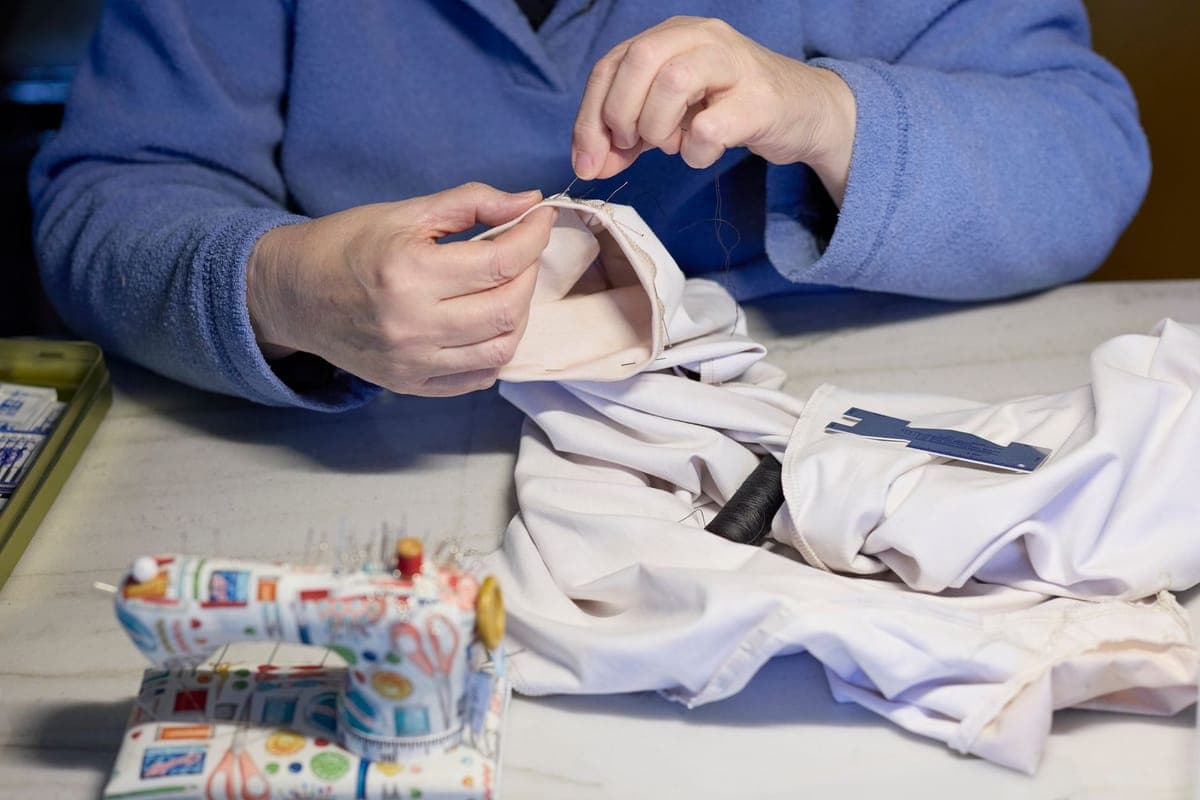
Why sewing is the wrong instinct
A waterproof jacket works because a membrane or coating blocks water while letting vapor out. Every needle hole through that layer is a route for water, which is why makers seal their seams with tape rather than relying on the stitching.
A hand-sewn repair therefore trades one hole for forty. It closes the tear cosmetically and leaks along the entire stitch line, and it does it in the part of the garment that was damaged because it was under stress. Adhesive patches exist precisely because sewing does not work here.
The exception is a purely structural item with no waterproof layer - a fleece, a base layer, the seat panel of a non-waterproof glove. Sew those freely.
Patching, step by step
- Clean the area with a little rubbing alcohol. Adhesive does not stick to the water-repellent finish, sunscreen or oils from skin, and this is the step that decides whether the repair lasts a season or a run.
- Dry it completely. Genuinely dry, not nearly.
- Lay the fabric flat and bring the tear edges together. Do not overlap them. A little tape on the inside can hold the edges while you work.
- Cut a patch with rounded corners, at least a couple of centimeters larger than the tear all round. Rounded corners matter: square corners peel, and this is the difference between a repair that lasts and one that lifts in a week.
- Apply to the outside, press firmly from the middle outward to drive out air bubbles, and hold pressure for a minute.
- For anything over a few centimeters, add a second patch inside. The outer patch keeps water out and the inner one takes the load.
- Leave it flat for 24 hours before wearing. Most adhesives reach full strength overnight, and this is the step people skip.
What to do, by type of damage
| Damage | Fix | Notes |
|---|---|---|
| Small puncture or ski-edge nick | One adhesive patch outside | The most common damage, and a five-minute job |
| Tear up to a few centimeters | Patch outside, second patch inside | Bring the edges together without overlapping |
| Long tear or one across a seam | A specialist repairer | Crossing a seam is where home repairs fail |
| Seam tape lifting inside | Specialist, or accept it | Re-taping needs heat and pressure equipment; a real end-of-life signal |
| Delamination (fabric bubbling away from the membrane) | None | The jacket is finished; this is not repairable |
| Burn hole from a fire pit or a stove | Patch, both sides | Melted synthetic edges hold adhesive well |
| Worn-through cuff or hem | Patch, or fabric tape as a stopgap | Wear rather than damage; it will happen again nearby |
Seam tape: the one that ends jackets
Turn a jacket inside out and look at the seams. There should be a strip of tape bonded over each stitch line. When that tape starts to peel away at the edges or goes crispy, the seam underneath is a row of unsealed needle holes.
Re-taping properly needs a heat press, which is why it is a specialist job rather than a home one. There are iron-on tapes and they work moderately well on a short run with a lot of care and a cloth between the iron and the garment - and badly if the iron is too hot, which melts the face fabric.
Widespread lifting tape is usually the signal that a jacket has reached the end of its useful life, and the lifespan page lists it alongside delamination as one of the two genuine end states for outerwear.
First, check it is actually broken
A large share of jackets brought in as leaking are not damaged at all. The water-repellent finish on the face fabric has worn off, the fabric wets out, and the garment feels clammy and cold even though the membrane underneath is intact.
The test takes ten seconds: run water over the shoulders. If it beads and rolls off, the finish is fine and you are looking for actual damage. If it soaks in and darkens the fabric, wash the jacket and reproof it before repairing anything. The washing page has the method, and it is the cheapest performance recovery available.
What to keep in the bag
- A sheet of adhesive repair patches. Weighs nothing, fixes almost everything on this page, and lives permanently in a boot bag.
- Small scissors, for rounding those corners.
- An alcohol wipe or two. The cleaning step is the one that decides whether the patch holds.
- A few safety pins. For the hem or cuff that has to survive one more day.
- Duct tape only as an emergency. It works for a day and leaves adhesive residue that makes the proper repair harder afterward. If you use it, use it on the inside.
Children’s gear gets patched, not replaced
A child’s jacket takes more damage than an adult’s and is outgrown before it is worn out, which makes patching unusually good value: you are keeping a garment alive for one more season rather than for a decade.
It is also why children’s outerwear is the best thing to buy secondhand - a patched knee on a jacket that fits is worth more than a pristine one that does not. The used-gear page covers what to check, and the hand-me-down page covers what passes down and what does not.
For hardware rather than fabric - a broken zip pull, a snapped buckle, a failed snap - that is a different set of fixes, and they have their own page.
Every pick, with the working
Each entry shows the published inputs, the axis scores they produce, and what you give up. The order is the computed order, not a commercial one, and the arithmetic is open underneath each score.
1 · A cold, dry resort week where the snow does not turn to rain
Arctix Men's Insulated Snowsports Cargo Pants
The only garment in this ledger that publishes an actual waterproof number: a 3,000 mm ThermaLock coating with 85 g of insulation, at fifty dollars. 3,000 mm is the bottom of the useful range, and on a wet spring day you will find out where that bottom is.
- Published price
- $50
- Cost per day on snow
- $2 a day
- Amortized over
- 5 seasons (25 days)
- Certified to
- Not published
- Waterproof rating
- 3,000 mm
- Published sizes
- S through XXL, in 28, 32 and 34 inch inseams
- Warranty
- No term published on the product page
What it gets right
- Publishes a 3,000 mm waterproof rating, which most competitors at this price do not
- 85 g of ThermaTech insulation, warm enough for a beginner standing still on a learning slope
- Three published inseam lengths, which matters more in snow pants than in almost anything else
What you give up
- 3,000 mm is a coating, not a membrane, and heavy wet snow will eventually get through it
- Critical seams only, not fully sealed
The working behind the 5.2
- Cost per day on snow: 9.6
- $50 over 5 seasons at 5 days each = 25 days = $2 a day
- Published protection: 2.0
- 3,000mm waterproof rating (0.0 of 6); critically taped or untaped seams (+0); insulation or shell construction published (+2)
- Size availability: 6.8
- 5 published sizes (6.8 of 8.5); no continuous adjuster published (+0); range: S through XXL, in 28, 32 and 34 inch inseams
- Warranty and support: 0.0
- no published term (0 of 6); no published crash replacement (+0); no published repair route (+0)
Axes with unpublished inputs are dropped and the remaining weights re-normalized, so a product is not punished for a manufacturer’s silence. Specifications compiled September 3, 2026 from Arctix published specifications.
2 · A wet-snow resort at a price that does not assume a season pass
Wantdo Men's 3-in-1 Ski Jacket
Publishes a 10,000 mm waterproof rating, which is a genuine resort-day figure and more than three times what the budget snow pants on this site publish. It is also the only jacket here that names a membrane rather than a coating.
- Published price
- Not published
- Cost per day on snow
- Not published
- Amortized over
- 5 seasons (25 days)
- Certified to
- Not published
- Waterproof rating
- 10,000 mm
- Published sizes
- S through XXL
- Warranty
- No term published on the product page
Wantdo lists this jacket across a price range that varies by colorway and size rather than publishing a single MSRP, so the cost-per-day axis is not scored.
What it gets right
- Publishes 10,000 mm, a number most brands at any price decline to state
- Names a microporous TPU membrane rather than a surface coating
- Three-in-one construction with a zip-out fleece liner
What you give up
- No single published price, so cost per day cannot be computed in advance
- Seam construction is not published, and seams leak before fabric does
The working behind the 3.8
- Cost per day on snow: not scored
- No manufacturer-published price, so this axis is not scored.
- Published protection: 4.5
- 10,000mm waterproof rating (2.5 of 6); seam sealing not published (+0); insulation or shell construction published (+2)
- Size availability: 6.8
- 5 published sizes (6.8 of 8.5); no continuous adjuster published (+0); range: S through XXL
- Warranty and support: 0.0
- no published term (0 of 6); no published crash replacement (+0); no published repair route (+0)
Axes with unpublished inputs are dropped and the remaining weights re-normalized, so a product is not punished for a manufacturer’s silence. Specifications compiled September 3, 2026 from Wantdo published specifications.
3 · One jacket that has to work on the mountain and at home
Columbia Whirlibird V Interchange Jacket
Two jackets in one: a waterproof shell and a zip-out insulated liner that each work alone. For a family that skis one week a year and spends the other fifty-one weeks in a cold parking lot, that is genuinely two purchases avoided.
- Published price
- $250
- Cost per day on snow
- $10 a day
- Amortized over
- 5 seasons (25 days)
- Certified to
- Not published
- Waterproof rating
- Not published
- Published sizes
- S through XXL
- Warranty
- No term published on the product page
What it gets right
- Three-in-one construction, so the shell and the liner are each usable on their own
- Omni-Tech waterproof-breathable fabric with critical seams sealed
- Sold in five sizes with regular, big and tall variants
What you give up
- Columbia publishes no hydrostatic-head figure, so its waterproofing cannot be compared numerically against a rated jacket
- Critical seams are sealed rather than every seam
- $250 is the most expensive item in this ledger apart from the skis
The working behind the 3.2
- Cost per day on snow: 3.7
- $250 over 5 seasons at 5 days each = 25 days = $10 a day
- Published protection: 2.0
- no published waterproof rating (0 of 6); critically taped or untaped seams (+0); insulation or shell construction published (+2)
- Size availability: 6.8
- 5 published sizes (6.8 of 8.5); no continuous adjuster published (+0); range: S through XXL
- Warranty and support: 0.0
- no published term (0 of 6); no published crash replacement (+0); no published repair route (+0)
Axes with unpublished inputs are dropped and the remaining weights re-normalized, so a product is not punished for a manufacturer’s silence. Specifications compiled September 3, 2026 from Columbia published specifications.
Prices last verified October 22, 2026. Prices move constantly; the figure on Amazon at the moment you click is the real one.
Questions people actually ask
Can you sew a ski jacket?
Not a waterproof one. Every stitch is a new hole through the waterproof layer, so a sewn repair leaks along the whole stitch line - which is why makers tape their seams rather than relying on stitching. Use an adhesive patch instead. Fleeces and base layers can be sewn freely.
How do you patch a hole in a ski jacket?
Clean the area with rubbing alcohol, dry it completely, bring the tear edges together without overlapping, and apply an adhesive patch with rounded corners at least a couple of centimeters larger than the tear. Add a second patch inside for anything over a few centimeters, and leave it flat for 24 hours.
Why do repair patches peel off?
Two reasons. Square corners, which lift and then take the whole patch with them - round them with scissors. And a surface that was not cleaned: adhesive does not stick to a water-repellent finish, sunscreen or skin oils, so the alcohol wipe is the step that decides whether the repair lasts.
Can lifting seam tape be repaired?
Properly, only with a heat press, so it is a specialist job. Iron-on tapes work moderately well on a short run with a cloth between the iron and the fabric, and badly if the iron is too hot. Widespread lifting tape usually means the jacket has reached the end of its life.
My ski jacket is leaking - is it broken?
Often not. Run water over the shoulders: if it soaks in and darkens the fabric, the water-repellent finish has worn off and the jacket needs washing and reproofing rather than repairing. If it beads and rolls off, then look for actual damage.