Ski boot insoles, and the thickness figure that decides whether one fits
The footbed that comes in a ski boot is a flat piece of foam. Replacing it is the cheapest real upgrade in skiing - unless your boot is already tight, in which case it is the fastest way to make things worse.
By Sawyer V. · Published
We have not tested this gear. Everything below is compiled from published specifications and published safety standards, and the arithmetic is public so you can check it. This page carries affiliate links: if you buy through one we earn a commission at no extra cost to you, and it does not change the order of the picks. Full disclosure.
The short answer
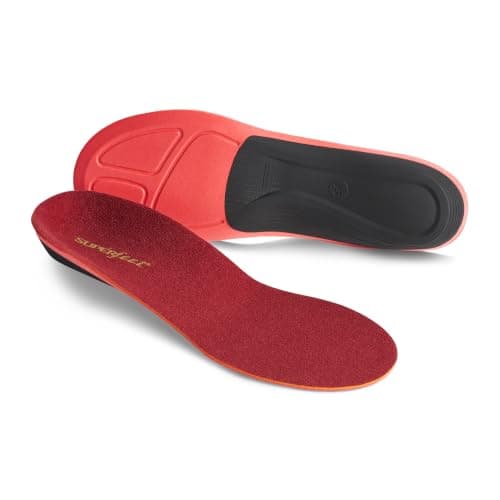
Buy the Superfeet Winter Support, and check your boot has room first. It is the only insole here Superfeet publishes as built for ski and snowboard boots, with an EVOLYTE carbon fiber stabilizer cap, a Thermal Top Cover, and a published unweighted thickness of 7.6 mm at the heel and 6.3 mm at the forefoot — that thickness figure is the one that matters, because it is what you are adding to a boot that was fitted without it. Choose the All-Purpose High Arch instead if the same feet hurt in hiking and work boots too. And if the real complaint is cold rather than unstable, an insole is the wrong purchase entirely. Prices below are live; published figures as of October 11, 2026.
| # | Pick | Best for | Score | Price |
|---|---|---|---|---|
| 1 | Superfeet Winter Support Insoles A ski boot that fits in length but lets the foot roll or the arch collapse | $4.00 a dayon snow | 6.4/10 | $59.95 - View on Amazon |
| 2 | Superfeet All-Purpose High Arch Support Insoles A high-arched foot that hurts in more footwear than just ski boots | $4.00 a dayon snow | 6.4/10 | $59.95 - View on Amazon |
| 3 | HotHands Insole Foot Warmers Winter boots and standing around, not a fitted ski boot | Not publishedon snow | 0.0/10 | $15.55 - View on Amazon |
Prices last verified October 19, 2026. Prices move constantly; the figure on Amazon at the moment you click is the real one.
What an insole actually fixes, and what it does not
Worth being precise, because this is a category people buy hoping it will solve a problem it cannot touch.
- It fixes a foot that moves inside a boot that is the right length. A stock footbed is flat foam with no structure, so the arch flattens and the foot rolls and lengthens under load. That slop is why an edge engages late and vaguely - which most people diagnose as needing better skis.
- It fixes some kinds of pain. Arch ache and the hot spot under the ball of the foot both often come from an unsupported foot spreading inside the shell.
- It does not fix a boot that is the wrong size. Too long is too long. Measure the foot properly before you spend anything here.
- It does not make a tight boot fit. It makes it tighter. See the thickness warning below.
- It does not make cold feet warm, beyond lifting the foot slightly off the cold shell floor. Cold feet have a different cause list, and a thinner sock is near the top of it.
Who each of these is for, and who should skip it
- A ski or snowboard boot with room and a flat stock footbed: the Winter Support. The thermal top cover and the ski-specific designation are the reasons to pay the same money for this rather than the general model.
- High arches and several pairs of boots: the All-Purpose High Arch. Published as a high-arch profile and it transfers to hiking and work footwear, so the cost spreads past the ski season.
- Cold feet rather than an unstable foot: neither — try a warmer first, and read the cold-feet page before spending sixty dollars on the wrong category.
- Skip both if the boot is already snug across the instep. You will make it hurt.
- Skip both for a child. A growing foot in a boot that changes annually does not justify a $60 insole, and an adjustable kids' shell is the better place for that money.
What this page ranks on
- 1. Published thickness. The figure that decides whether it fits your boot at all. Superfeet is the only maker in this category we found publishing one, even as an approximation.
- 2. Published stabilizer construction. The rigid cap under the arch and heel is what stops the foot flattening. A soft cushioned insole with no cap is a comfort product, not a support one.
- 3. Published arch profile. High, neutral or “all” - and an insole whose profile does not match your foot is worse than the stock footbed.
- 4. Published size run and trim-to-fit guidance. Including what the maker says to do if you are between sizes, because the cut is one-way.
- 5. Published guarantee. Unusual on a fitted component, and worth noting when it exists.
- Not custom footbeds. A heat-molded custom bed from a bootfitter beats everything here and costs several times as much. The footbeds guide makes that case; this page is the off-the-shelf half.
The two, compared
| Winter Support | All-Purpose High Arch | |
|---|---|---|
| Published as built for | Ski boots, snowboard boots | General footwear |
| Arch profile published | All | High |
| Stabilizer cap | EVOLYTE carbon fiber | Published stabilizer construction |
| Thickness (unweighted) | 7.6 mm heel / 6.3 mm forefoot | Not published |
| Cushioning | Two layers of Aerolyte foam | Not published |
| Thermal top cover | Yes, with Moisturewick | Not published |
| Deep heel cup | Published | Published |
| Size ranges published | 5 (W 4.5-14 / M 5.5-13) | 5 (W 4.5-14 / M 5.5-13) |
| Trim to fit | Yes | Yes |
| Guarantee | 60-day comfort guarantee | 60-day comfort guarantee |
| Maker's published price | $59.99 | $59.95 |
Read the price row against the rest and the decision is easy: they cost the same, so the question is only which profile your foot needs. The Winter model adds the thermal top cover and the ski-specific designation for no premium; the All-Purpose adds a published high-arch profile that the Winter model does not claim.
The picks
Superfeet Winter Support
The pick, and the only insole we found that a maker publishes as built for this specific job. Superfeet states “Best For: Ski boots, snowboard boots” and describes it as made to replace the removable insole in winter footwear - which is a different claim from a hiking insole that happens to fit.
Three published details are doing the work. The EVOLYTE carbon fiber stabilizer cap is the structure that holds the arch under load, described as keeping its shape “with every turn”. The Thermal Top Cover with Moisturewick is the warmth-and-odor layer, and in a boot that is damp by lunch the odor half is not cosmetic - this is where boot smell starts. And the deep heel cup is what stops the heel lifting, which is the fault that makes a boot feel loose even when the length is right.
Then the number that makes this page useful at all: a published approximate unweighted thickness of 7.6 mm heel and 6.3 mm forefoot, with Superfeet's own note that it changes under pressure. Nothing else in this category gave us a thickness figure. Compare it against the footbed you are removing before you buy.
Honest cons. $59.99 published is a real fraction of a junior boot and it fixes nothing about a boot that is the wrong length. Superfeet publishes its thickness as “Max”, so in a boot already tight across the instep it will make the fit worse. Arch height is published as “All” rather than high, so despite the support claim it is not a high-arch-specific product. And trim-to-fit means a one-way cut - Superfeet's own advice is to size up a half if you are unsure.
Superfeet All-Purpose High Arch Support
The high-arch answer, and the better buy if ski boots are only part of the problem. Published as Superfeet's high-arch profile across the same five size ranges, the same trim-to-fit construction and the same 60-day comfort guarantee, at effectively the same price.
Pick it over the Winter model in one specific case: you know you have high arches, and the same feet ache in hiking boots and work boots as well. One insole profile that works in three pairs of footwear is better value than a ski-specific one that lives in a boot you wear fifteen days a year - and the ski-specific advantages here are the thermal cover and the name, not the structure.
Honest cons. No thermal top cover published, which is the detail the Winter model adds for a cold damp boot. Not published as ski-specific, so how it behaves inside a hard shell is not something Superfeet states. No thickness figure published for it at all, which is a real gap given that thickness is this page's main criterion. And a high-arch insole under a foot that is not high-arched is worse than the stock footbed.
HotHands Insole Foot Warmers, and why they are here
Because a large share of people shopping for a ski boot insole are not trying to fix support at all - they are trying to fix cold feet, and that is a different product. These are published as single-use, air-activated, full-length insole warmers.
If cold is the complaint, start with the free fixes before you buy either of the two insoles above: stop wearing two pairs of socks or one thick pair - a compressed foot has neither air nor circulation - loosen the boot one notch, and dry the liner properly overnight. Why feet get cold skiing, in the order that works puts warmers fourth on that list for a reason.
Honest cons, and the reason for the skip note: it is not an insole, it does nothing for stability, it is single use so the cost recurs every day you ski, and - the important one - do not stack one on top of a support insole. You have then added two layers of thickness to a shell that was fitted for one, and the boot will be tighter, colder and worse.
Fitting one without ruining it
- Pull the stock footbed out and use it as the template. Lay the new insole underneath, trace the old one, cut outside the line, then test and trim again. Cut once, check twice.
- Measure the old footbed's thickness before you commit. If the stock bed is 3 mm and the replacement is 7.6 mm at the heel, you have just taken nearly 5 mm of volume out of the boot.
- Wear the sock you ski in. One thin pair.
- Stand in the shell without the liner buckled first. Toes should brush the front and pull back when you flex - the same fit test as buying the boot.
- Give it three days before judging it. A supported foot sits differently and the first day feels odd even when the insole is right.
- Take them out to dry. Same rule as the liner - looking after boot liners is most of looking after boots.
Where this sits in the order of spending
An insole is a second-season purchase for most people, not a first-season one, and it comes after the thing it cannot substitute for.
- First, a boot that fits. Buying your first ski boots, and the one rule that overrides everything. A $60 insole in a $200 boot that is a size too big is money set on fire.
- Then the flex, if you are buying new. What the flex number means - and softer is usually righter than people think.
- Then the insole, which is where our second-season upgrade order puts it: cheaper than the next boot up, and often more effective.
- Then, only if the fit is still wrong, a bootfitter. A custom molded footbed and a shell punch beat everything on this page, and for a wide foot that is the real answer rather than an insole.
Every pick, with the working
Each entry shows the published inputs, the axis scores they produce, and what you give up. The order is the computed order, not a commercial one, and the arithmetic is open underneath each score.
1 · A ski boot that fits in length but lets the foot roll or the arch collapse
Superfeet Winter Support Insoles
The pick, and the only insole in this ledger Superfeet publishes as built for ski and snowboard boots specifically. It states an EVOLYTE carbon fiber stabilizer cap, a Thermal Top Cover with Moisturewick, two layers of Aerolyte foam, a deep heel cup, five size ranges and an approximate unweighted thickness of 7.6 mm at the heel and 6.3 mm at the forefoot - which is the figure that tells you whether it will fit a boot that is already snug.
- Published price
- $59.99
- Cost per day on snow
- $4.00 a day
- Amortized over
- 3 seasons (15 days)
- Certified to
- Not published
- Published sizes
- Five published ranges: W 4.5-6 / K 2.5-4, W 6.5-8 / M 5.5-7, W 8.5-10 / M 7.5-9, W 10.5-12 / M 9.5-11, W 12.5-14 / M 11.5-13
- Warranty
- Superfeet 60-day comfort guarantee, 12 months of stated performance
What it gets right
- Published by Superfeet as 'Best For: Ski boots, snowboard boots' rather than adapted from a hiking insole
- EVOLYTE carbon fiber stabilizer cap published, which is what stops the arch flattening under load
- Thermal Top Cover with Moisturewick published for warmth and odor, in a boot that is damp by lunch
- Published unweighted thickness of 7.6 mm heel / 6.3 mm forefoot - the only thickness figure in this category we could source
- Five published size ranges, trim-to-fit, with Superfeet's own advice to size up a half if between sizes
- 60-day comfort guarantee published, which is unusual on a fitted component
What you give up
- $59.99 published is a real fraction of what a junior boot costs, and it does not fix a boot that is the wrong length
- Max thickness: in a boot that is already tight across the instep it will make the fit worse, not better
- Arch height is published as 'All', so it is not a high-arch-specific product despite the support claim
- Trim-to-fit means a one-way cut - measure against the factory insole before the scissors
The working behind the 6.4
- Cost per day on snow: 8.1
- $59.99 over 3 seasons at 5 days each = 15 days = $4.00 a day
- Published protection: not scored
- This category carries no protective standard.
- Size availability: 8.3
- 5 published sizes (6.8 of 8.5); continuous in-size adjuster published (+1.5); range: Five published ranges: W 4.5-6 / K 2.5-4, W 6.5-8 / M 5.5-7, W 8.5-10 / M 7.5-9, W 10.5-12 / M 9.5-11, W 12.5-14 / M 11.5-13
- Warranty and support: 1.5
- 1 yr (1.5 of 6); no published crash replacement (+0); no published repair route (+0)
Axes with unpublished inputs are dropped and the remaining weights re-normalized, so a product is not punished for a manufacturer’s silence. Specifications compiled October 11, 2026 from Superfeet published Winter Support specifications.
2 · A high-arched foot that hurts in more footwear than just ski boots
Superfeet All-Purpose High Arch Support Insoles
The high-arch answer, and the one to buy if a ski boot is only part of the problem. Superfeet publishes this as its high-arch support profile across the same five size ranges, trim-to-fit, with the same stabilizer-cap construction - but without the thermal top cover the Winter model adds. If the same feet also hurt in work boots and hiking boots, this is the insole that transfers.
- Published price
- $59.95
- Cost per day on snow
- $4.00 a day
- Amortized over
- 3 seasons (15 days)
- Certified to
- Not published
- Published sizes
- Published across five ranges covering W 4.5-14 / M 5.5-13
- Warranty
- Superfeet 60-day comfort guarantee, 12 months of stated performance
What it gets right
- Published high-arch profile, where the Winter model publishes arch height as 'All'
- Same trim-to-fit construction and five published size ranges
- Works in several pairs of footwear, so the cost spreads beyond the ski season
- Same published 60-day comfort guarantee
What you give up
- No thermal top cover published, which is the detail the Winter model adds for a cold damp boot
- Not published as ski-specific, so the fit inside a hard shell is not something Superfeet states
- $59.95 published, essentially the same price as the ski-specific model
- A high-arch insole in a foot that is not high-arched is a worse fit than the stock footbed
The working behind the 6.4
- Cost per day on snow: 8.2
- $59.95 over 3 seasons at 5 days each = 15 days = $4.00 a day
- Published protection: not scored
- This category carries no protective standard.
- Size availability: 8.3
- 5 published sizes (6.8 of 8.5); continuous in-size adjuster published (+1.5); range: Published across five ranges covering W 4.5-14 / M 5.5-13
- Warranty and support: 1.5
- 1 yr (1.5 of 6); no published crash replacement (+0); no published repair route (+0)
Axes with unpublished inputs are dropped and the remaining weights re-normalized, so a product is not punished for a manufacturer’s silence. Specifications compiled October 11, 2026 from Superfeet published All-Purpose High Arch listing.
3 · Winter boots and standing around, not a fitted ski boot
HotHands Insole Foot Warmers
Skip this one. Not an insole, and on this page deliberately. It is a single-use air-activated warmer shaped like a full-length insole, and people searching for a ski boot insole are often really trying to fix cold feet rather than poor support - two different problems with two different answers. If your feet are cold rather than unstable, this is the cheap thing to try, and the cold-feet page lists the four fixes that come before it. Do not put one of these in on top of a support insole: you have then added two layers of thickness to a boot that was sized for one.
A full-length insole warmer published at up to 9 hours. The length is the problem and the point: it warms the whole foot rather than the toes, and it is the wrong shape for a ski boot that has been fitted properly around a footbed.
- Published price
- Not published
- Cost per day on snow
- Not published
- Amortized over
- 3 seasons (15 days)
- Certified to
- Not published
- Published sizes
- One size, full-length insole, single use
- Warranty
- No term published; the product is single use
What it gets right
- Published up to 9 hours, an hour longer than the toe warmer
- Full-length coverage rather than a patch over the toes
- Works in ordinary winter boots, where there is room for it
What you give up
- Wrong shape for a fitted ski boot, and it displaces the footbed that is doing the real work
- Single use, and the largest of the three foot options to carry spares of
- No published warranty term
The working behind the 0.0
- Cost per day on snow: not scored
- No manufacturer-published price, so this axis is not scored.
- Published protection: not scored
- This category carries no protective standard.
- Size availability: not scored
- Sold in one size, so size availability does not apply.
- Warranty and support: 0.0
- no published term (0 of 6); no published crash replacement (+0); no published repair route (+0)
Axes with unpublished inputs are dropped and the remaining weights re-normalized, so a product is not punished for a manufacturer’s silence. Specifications compiled September 12, 2026 from HotHands published product range.
Prices last verified October 19, 2026. Prices move constantly; the figure on Amazon at the moment you click is the real one.
Questions people actually ask
Do ski boots need better insoles?
Most stock ski boot footbeds are flat foam with no structure, so if your boot fits in length but your foot rolls, your arch aches or your heel lifts, a supportive insole is the cheapest real improvement available. If your boot is the wrong length, or already presses on the instep, an insole will not help and will usually make it worse.
Will an insole make my ski boot too tight?
It can, and this is the main risk. The boot was fitted around the stock footbed, so a thicker replacement removes internal volume. Superfeet publishes the Winter Support at roughly 7.6 mm at the heel and 6.3 mm at the forefoot unweighted - measure your existing footbed against that figure before buying, and skip the purchase if the boot is already snug across the instep.
What size ski boot insole should I buy?
Buy by the published size range for your shoe size, then trim to fit using your old footbed as the template. Superfeet publishes five ranges covering women's 4.5-14 and men's 5.5-13, and advises sizing up half a size if you are between sizes - because the insole is trim-to-fit and the cut only goes one way.
Do insoles make ski boots warmer?
Only slightly, by lifting the foot off the cold shell floor, and a thermal top cover helps a little more. If cold is your actual complaint, the bigger wins are free: one thin sock rather than two or a thick one, a boot loosened a notch, and a liner dried properly overnight. Air-activated insole warmers are a cheap thing to try - but never stack one on top of a support insole.
Are custom footbeds worth it over off-the-shelf insoles?
A heat-molded custom footbed from a bootfitter is better than anything off the shelf and costs several times as much, so it is worth it once you ski enough days to notice and once the boot itself is right. For a handful of days a season, an off-the-shelf supportive insole captures most of the benefit for about a quarter of the money.
Can I use hiking insoles in ski boots?
Often yes, and that is effectively what the All-Purpose profile is. The two things a ski-specific insole adds are a thermal top cover for a cold damp boot and a published statement that the maker intends it for a hard shell. If the same feet need support in hiking and work boots too, one general insole that transfers across all of them is the better buy.
Sources
- Superfeet published Winter Support specifications: 'Best For: Ski boots, snowboard boots', EVOLYTE carbon fiber stabilizer cap, Thermal Top Cover with Moisturewick, two layers of Aerolyte foam, deep heel cup, approx 7.6 mm heel / 6.3 mm forefoot unweighted, five size ranges, trim to fit, 60-day comfort guarantee, $59.99
- Superfeet published All-Purpose High Arch Support listing: high-arch profile, five size ranges, trim to fit, 60-day comfort guarantee
- HotHands published insole foot warmer range: single use, air activated, full length